MMORPG
Tree of Savior
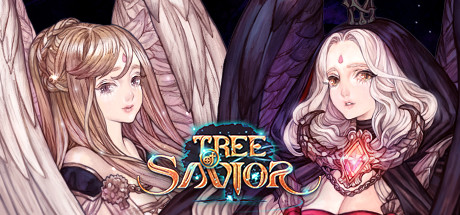
Multi-class MMORPG with beautiful 2D art, 80+ class combinations, and deep build customization. Spiritual successor to Ragnarok Online. Active since May 2016.
Open the Knowledge Base — the game's own numbers in plain EnglishThis knowledge base covers Tree of Savior, a free-to-play Korean MMORPG known for its hand-drawn art and its class system, where you start from a basic class and advance it into many specialised branches. Progression runs through dungeons, boss content and group play, and the class tree is the heart of the build. Every rule and number here is the game's own; where something is live — the current balance, the seasonal content — the page says to check in-game rather than guess.
These are the game's own rules and structure — not live server data. For the current balance, seasonal content or what is live right now, check in-game.
The game in one minute
What Tree of Savior is, at a glance
A free-to-play Korean MMORPG with a hand-drawn art style, a class tree you advance through, and a progression that runs through dungeons, boss content and group play.
Tree of Savior is a free-to-play Korean MMORPG built around a hand-drawn 2D art style and a class system you grow into. You start from one of a few basic classes and advance it into the game's wider class tree, each branch giving the character a different combat feel. Progression runs through dungeons, boss content and group play, and because the class tree is deep, the build you pick is the shape of the character.
The class tree
Start from a basic class, advance into the tree
You begin on one of the game's basic classes and advance it into a wider class tree, where each branch is a different combat style.
The class system is a tree, not a single pick. You start from one of the game's four basic classes and, as you advance, branch out into the wider class roster the game has grown over its updates. Each advanced class is a different combat style, and because the tree keeps growing, the character you pick at creation is the seed, not the final build.
The class tree and the content around it
The combat
The class-driven combat style
Combat is shaped by your class: the skills, the positioning and the rotation are what the class gives you, not a universal kit.
Because the class tree is deep, combat in the game is a class game. The skills you have, the way you position and the rotation you run are all decided by the class you've advanced into, so two characters can play the same dungeon very differently. That is the appeal of the tree: the build you pick is the character, and the combat follows the build.
The group content
Dungeons and boss content
Progression runs through dungeons and boss fights, the group content that puts the class build to work against real targets.
The core loop of progression is the dungeon-and-boss content: you clear the dungeons the game offers and take down the bosses, and that content is where the class build is tested. Because the bosses have their own patterns and mechanics, the group has to coordinate around the class composition, and the dungeon run is the shared endgame of the whole tree.
The late game
Where the build ends up
The late game is the high-end of the class tree plus the top dungeon and boss content, where the build you've grown into matters most.
As the character reaches the top of its class tree, the endgame is the high-end of that same tree: the best gear, the highest-level content and the boss fights that test the full build. It is the part where the class pick, the talent stack and the gear line all come together, and the one that separates the average play from the top of the game.
The game's own numbers, in plain English — start from the Knowledge Base →
No guides yet. Write the first!
Loading news...
Multi-class MMORPG with beautiful 2D art, 80+ class combinations, and deep build customization. Spiritual successor to Ragnarok Online. Active since May 2016.