Action RPG MMO
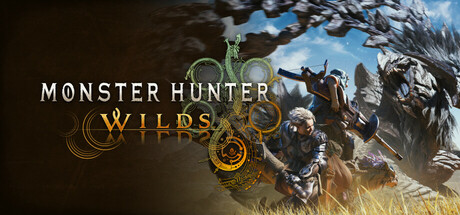
Monster Hunter Wilds
The latest Monster Hunter. Hunt massive monsters, craft gear, and explore a living ecosystem. Massive 2025 release.
Open the Knowledge Base — the game's own numbers in plain EnglishThis knowledge base compiles what a player actually needs to know about Monster Hunter: Wilds — the hunt-and-craft loop at its core, the fourteen weapon types and how they shape a build, the Palico and Paladict that fight and ride alongside you, and the co-op and endgame structure that keeps the loop turning. Every rule and count here is the game's own; nothing here is a live read of the servers. Where something moves — current event quests, weapon balancing from the free updates, ladder-style rankings — the page says to check in-game.
These are the game's own systems and counts — not live data. For the current set of event quests, the latest weapon balance or in-game rankings, check in-game.
The game in one minute
What Monster Hunter: Wilds is, at a glance
A real-time action hunting game set in the hostile forbidden lands: track a monster down, break its parts, out-dodge its biggest hits, and turn what you carve off it into the gear that lets you hunt the next, bigger one.
Monster Hunter: Wilds is the latest mainline entry in a franchise built around one loop: hunt a monster with a weapon, harvest the materials it drops and the parts you broke off it, and use those materials to forge the next tier of armor and weapons — which lets you take on the next, harder monster. The setting is the forbidding Wilds, a region of hostile terrain where the game's biggest new idea is the Paladict, a mountable creature that carries you across the open field and into the thick of a fight. You can play the whole loop solo, and it is designed around four-hunter parties for the tough end.
The fourteen weapons
The weapon types and how a build is made around one
A hunter picks one of fourteen weapons, and the weapon — not a class — is the build. Each one has its own moves, its own damage window and its own armor set, so switching weapons means learning a completely different fighting game.
| Weapon type | Feel of it |
|---|---|
| Great Sword | Slow, huge overhead slashes; charges a mighty finish |
| Long Sword | Fast combos with a spirit gauge that supercharges moves |
| Sword & Shield | Relentless slashing with a ready-aimed shield parry |
| Dual Blades | Frenzy-style dual-wield, all-out damage |
| Hammer | Seismic bashes that stagger monsters on the ground |
| Hunting Horn | Melody-based buffs that help the whole party |
| Lance | Spurs, guards and long thrusts against big beasts |
| Gunlance | Shells, a shield and a loaded-weapon arsenal |
| Switch Axe | Swaps between a fast sword and a heavy axe form |
| Charge Blade | Stores electricity and charges a devastating finisher |
| Insect Glaive | Throws and dashes on a summoned blade companion |
| Bow | Ranged elemental shots and combos on a spirit gauge |
| Light Bowgun | Fast, mobile ranged gunfire; light shell types |
| Heavy Bowgun | Heavy, mobile-less shell types with the biggest payloads |
Four of the fourteen are ranged (the bow and the two bowguns count, plus the glaive's throws), and the rest are melee. The choice of weapon is the first decision of a build: the armor you forge carries skills that multiply what that weapon already does, so a charge-blade build wants a different skill set than a bow build. The game also lets you swap gear mid-hunt, which is how a party can open with a hammer to stagger a monster and hand the fight to a ranged bowgun once the big hits are off its timer.
→ How armor skills turn a weapon into a build→Palico & Paladict
The two creatures that make Wilds its own
Every hunter brings a Palico, the felyne companion that can fight right next to you, and the Wilds add the Paladict — a bigger creature you mount to cross the open field and close in on a fight.
The Palico is a felyne that tags along into every hunt. You equip it with its own weapon, and it swings at monsters, tosses you supplies and can even heal you mid-fight depending on the equipment it carries, so a well-equipped Palico is a second damage dealer and a supply drop in the same slot. The Paladict is the new idea: a larger companion you summon and ride to cross the forbidden lands quickly, reposition mid-hunt, and stay in the fight while on the move. Both companions take on the game's own equipment system — you forge gear for them the same way you do for yourself.
→ The Palico and what its equipment does→→ The Paladict and when to be on it→The hunt loop
How a hunt and a crafting cycle actually run
The loop is the game: read a monster, break its parts, survive the big moves, and carry the materials home. The gear you forge from them is what unlocks the next tier of monsters.
A hunt starts by reading the monster: every one has tells before its biggest attacks, and the fight is mostly about knowing when to strike, when to back off, and which part to break for the best materials. Carving the parts off a downed monster — the carves that are the better drop source — plus the materials it sheds, are the raw stock of the crafting tree. Gear rank gates the progression: the monster for rank N drops the materials for the gear that makes rank N+1 survivable, which is why the loop, not a single boss, is the actual game.
One full cycle
- Pick the monster for your current gear tier
- Hunt it, breaking the parts that drop the best materials
- Carve the carcass and collect what it sheds
- Forge the next armor/weapon tier from the materials
- Take on the next, harder monster with the new build
Co-op
Hunting with three other players
The game is built around a four-hunter party: the harder the monster, the more the party divides the fight — one breaks, one keeps the range, one buffers, one picks off the parts.
The co-op structure is the game's real endgame. In a four-hunter party, the party divides the monster's attention: a hammer or lance holder breaks parts and staggers, the ranged types (bow or bowgun) keep the pressure up from distance, and the horn holder keeps the whole group buffed. Because the monster's biggest moves are timed, the party's skill is calling the big attack out loud — in voice or pings — so the group is out of the danger window when it lands. Solo hunts are always an option, and the game keeps the same material loop in single-player, just without the role split.
Where a full four-party is expected→
Loading news...
The latest Monster Hunter. Hunt massive monsters, craft gear, and explore a living ecosystem. Massive 2025 release.