Co-op Action
Ghost of Tsushima: Legends
Standalone co-op multiplayer mode of Ghost of Tsushima. Four classes, survival waves, and story missions.
Open the Knowledge Base — the game's own numbers in plain EnglishThis knowledge base compiles what a player actually needs to know about Ghost of Tsushima: Legends — the free co-op component of the open world, its four classes and how their playstyles differ, the mission shapes a party runs, and the gear and progression that carries a character up the ladder. Every rule and number here is the game's own. Where something is live — the current event, a season pass or who is topping the rival ladders — the page says to check in-game rather than guess. Nothing in this reference is a live read of the servers.
These are the game's own rules and constants — not live server data. For current events, season content or rival ladders, check in-game.
The game in one minute
What Ghost of Tsushima: Legends is, at a glance
The free-to-play co-op component of Ghost of Tsushima: pick one of four classes and run the island's missions and ladders with up to a party of four — no new purchase for owners of the base game.
Legends is the multiplayer half of the Ghost of Tsushima world, and it is free to play for anyone who owns the base game. You choose one of four classes — the Samurai, the Hunter, the Ronin or the Assassin — and the class is the role: it decides your weapon set, your playstyle and the shape of the party you fit into. Missions run solo or with a full party of four, and the PVP side, Rivals, is a two-against-two duel on a dedicated ladder. The progression is the gear: every character builds a kit from the weapons, gear and legendary artefacts the missions and the ladder hand out.
The four classes
The classes and the role each plays in a party
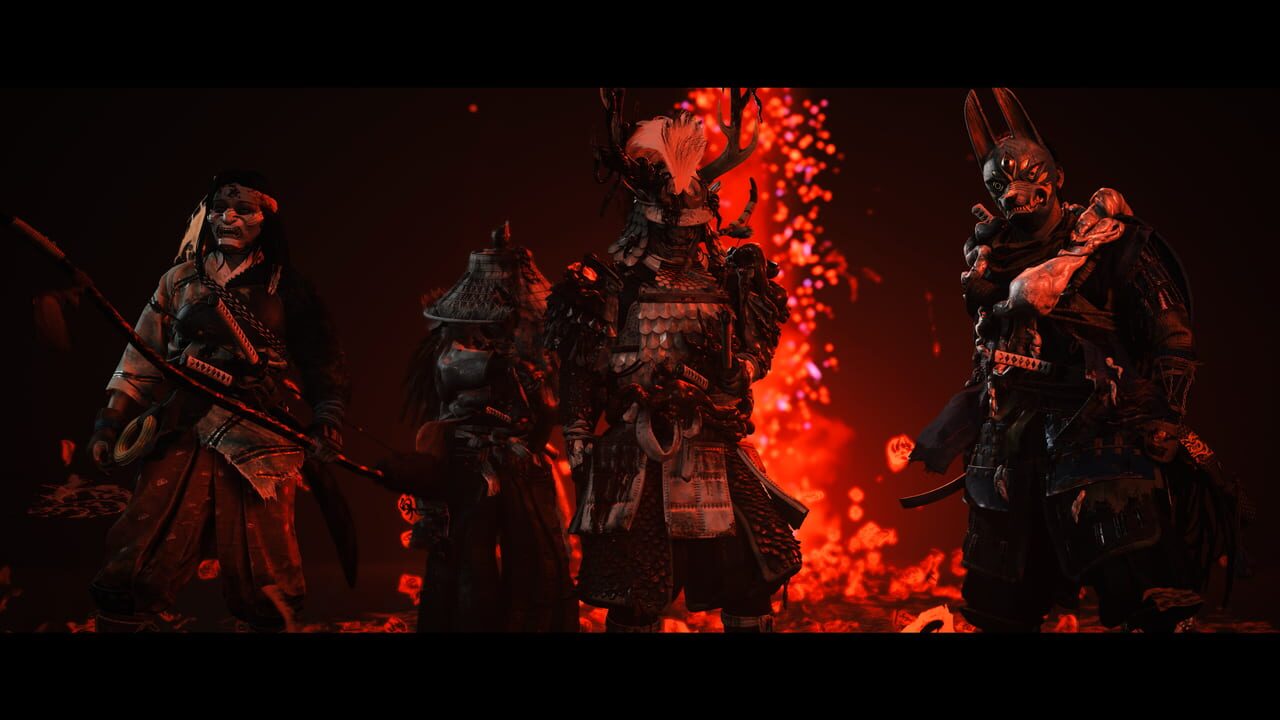
Four classes, four playstyles — and the choice is the role, because each one carries a different weapon set and a different way to fight.
| Class | Playstyle | What it brings to a party |
|---|---|---|
| Samurai | Front-line, sword-based | The straight fighter; holds the front and trades blows. |
| Hunter | Ranged, archery and tools | Distance and utility; keeps the party supplied from range. |
| Ronin | Aggressive, high damage | The burst — the character built for the hard hit. |
| Assassin | Stealth, high single-target damage | The stealth pick; removes a target before the fight becomes a fight. |
A party of four is a full composition when the four classes sit in the slot the fight needs: the Samurai up front, the Hunter keeping distance and utility up, the Ronin landing the burst, and the Assassin taking out the target that needs to stop. In practice the roster is the role, because the class you choose is the way you fight — you do not pick a role and then build it out, you pick the way and the role follows. A party that stacks two Assassins is a party that has decided to take everything out before the fight, and a party that stacks two Samurais is a party that is here to trade blows.
Each class on its own page
The mission shapes
The co-op missions and their ladders
The PvE side of the game runs on the mission: the story content, the survival runs and the raids — each with its own ladder of difficulty.
The PvE side of the game is the mission, and the mission has shapes. The story content is the one the party runs as a narrative — it carries the Legends' own line, the one that runs the world of the base game. The survival missions are the ladder of the fight: the waves come in, the party holds, and the difficulty climbs the ladder. And the raids are the boss room the party is built for — the single fight the whole composition is tuned for, with a party size of up to four. The gear the mission hands out is the gear the next one is built on: every ladder you clear is the kit you bring into the next.
The mission shapes
- Story missions — the Legends' own narrative
- Survival missions — the waves, the hold, the ladder
- Raids — the boss room the party is tuned for
Rivals (PvP)
The rival ladders and the duel
The PVP side of the game is Rivals: two-against-two, the duel on the dedicated ladder, where the class is the build and the build is the play.
Rivals is the PVP side of the game, and it runs on the duel: two-against-two, the match on a dedicated ladder where the class is the build and the build is the play. What separates the PVP from the PvE missions is that the gear you bring is the fight — the legendary artefacts and the weapon set are what you take into the duel, and the ladder is where the composition of the two-against-two is decided. The rival ladder is the standing: who is on top of it, who is climbing, is the data the game keeps on the players who run it.
→ The kit you bring into the duel→Gear & progression
The gear the ladders hand out
The progression of a character is the gear: the weapons, the equipment and the legendary artefacts the missions and the ladder hand back, and the way you build the kit.
The progression of the character is the gear, and the gear is what the game hands back out of the mission and the ladder. The weapons and the equipment come in tiers, and the legendary artefacts are the ones that are the build: the powerful items that let you re-roll stats and traits to fit the class you are running and the playstyle you want. So the work of the character is the work of the kit — what gear, what legendary, and the traits you re-roll to the build you are running. Every ladder you clear is the kit for the next one.
→ A kit for the front-line build→The game's own numbers, in plain English — start from the Knowledge Base →
🔄 Updated this fortnight
Loading news...
Standalone co-op multiplayer mode of Ghost of Tsushima. Four classes, survival waves, and story missions.