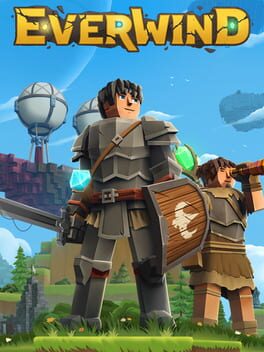
This knowledge base compiles what a player actually needs to know about Everwind — a first-person voxel sandbox survival RPG set among procedurally generated floating islands, where you build a base on your own flying island-ship, gather, craft, and delve into dungeons for skeletons, bosses and treasure, alone or with friends — in plain English. The game is in early access, so the structure is stable but the tuning is not: this reference keeps to the shapes the game is built from, and points you to check in-game for anything that moves.
These are the game's own systems — not live data. For current recipe values, dungeon layouts and what an early-access update just changed, check in-game.
The game in one minute
What Everwind is, at a glance
A first-person, voxel sandbox survival RPG among floating islands. You start with nothing, build your base on a flying island-ship, and run the gather–craft–delve loop against a world that generates itself around you.
Everwind is a survival RPG that plays in the first person, on a voxel world of floating islands. The world is generated, so the layout is not fixed from island to island, and the loop is the survival one: gather what the islands offer, turn it into gear and building materials on your ship, and drop into the dungeons that hold the better loot. The ship is the whole of the base game — it is where you craft, store and build, and where the session starts and ends. Early access is the state the structure has to be read in: the shapes are set, the tuning is still moving.
The ship, your base
The flying island-ship and what it is for
You start with nothing and build on your own flying island-ship: it is the crafting space, the storage and the home base the whole loop runs through.
The ship is the part of the game that is yours, not the world's. Every session runs through it: you set out from it to gather and delve, and you return to it to work the materials into gear. The build-out is the progression — the ship you start with and the ship you finish with are not the same object, and the work you do on it is the work that outlasts any single dungeon run. Because the world around it is generated, the ship is the one thing in the game that does not change when it does.
→ The airship build-out, on its own page→Gather · craft · delve
The survival loop, and the skill trees that shape it
The loop is the survival one — gather resources, craft gear, delve into dungeons for better ones — and the skill trees are where the loop bends toward the playstyle you want.
The three beats of the game are the ones a survival loop runs on: the gathering that fills the ship, the crafting that turns it into gear, and the delving that brings back what the islands alone will not. The skill trees sit on top of those beats — they are the shape you choose to give the loop, and where the game lets a player stop playing 'the default survivor' and start playing the survivor they want to be. The trees are part of the early-access structure, so what a branch of the tree does is the kind of thing to read in-game rather than to trust to a page.
→ The skill trees, on their own page→→ The delve half of the loop→The altitude zones
The world is layered, and the layers matter
The floating-islands world is not one flat place: it is layered by altitude, and which layer you are on decides what you meet and what you can reach.
Because the world is made of floating islands, height is a real part of the map, not just a number on a HUD. The game organises the world into altitude zones, and each zone is its own piece of the surface: what grows there, what lives there and what the weather does to it are the things that change with the layer you are standing on. Reaching a higher layer is part of the progression, because the loop rewards the material and the dungeon access that live up there.
→ The altitude zones, on their own page→Playing with friends
The co-op shape of a solo game
The loop is built to run solo, and the game gives it a co-op shape on top: run the same gather–craft–delve loop with friends, and the ship and the dungeons scale to more than one survivor.
The game is a co-op first, even though the loop reads solo. A group runs the same three beats together — the gathering splits up, the crafting pool is shared, the delving gets safer and faster — and the early-access structure is built so that the ship and the dungeons hold more than one person's worth of play. The exact party size the game supports is one of the details the early-access state keeps changing, so it is the number to check in-game rather than to trust here.
→ The part of the loop that benefits most from a group→
Loading news...
Everwind is a co-op first-person airship survival RPG (formerly SkyVerse), Steam Early Access March 17, 2026.