Tactical FPS
Counter-Strike 2
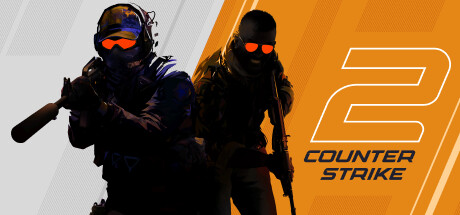
The most popular tactical FPS in the world. Competitive 5v5 bomb defusal, premier ranking, and massive esports scene. Free-to-play on Steam. Active since Sep 2023.
Open the Knowledge Base — the game's own numbers in plain EnglishThis knowledge base compiles the numbers that matter for Counter-Strike 2 — how a match runs, how the economy carries between rounds, the weapons and how they're priced, the map pool, and how the skin market works — into plain English you can actually read. Every figure is the game's own. Where the reference is thin — live skin prices, the current active-duty map rotation, your own rank or match results — it says 'check in-game' instead of guessing. The money, bonus and weapon-cost numbers below are the game's constants; the map pool and skin values move, so those are the ones to verify in-game.
These are the game's own rules and constants — not live server data. For current skin prices, the active-duty map rotation or your match standing, check in-game.
The game in one minute
What Counter-Strike 2 is, at a glance
A 5v5 tactical shooter: two teams of five, the Counter-Terrosists (CT) and the Terrorists (T), play to 13 rounds. CS2 is a free upgrade to CS:GO, rebuilt on the Source 2 engine with physically-based rendering and sub-tick netcode.
Counter-Strike 2 is a free-to-play, 5v5 competitive shooter on the Source 2 engine. The match is round-based: the CTs defend, the Ts plant the bomb, and the side that wins enough rounds in the MR12 format takes the map. No respawns mid-round — you plan, buy, and commit to the round. The numbers above are the game's own constants, not a community estimate.
Each system, on its own page
How a match runs
Sides, rounds and the MR12 format
A map is split into two 12-round halves. The first to 13 wins takes it; if the halves end level at 12-12, the match goes to overtime. The two sides play different jobs: CTs defuse or kill, Ts plant the bomb and win by detonation or a kill round.
| Element | Rule |
|---|---|
| Match format | MR12 — 12 rounds per half, 24 regulation rounds total. |
| Win a map | First to 13 rounds. |
| Sides | Counter-Terrorists defend; Terrorists plant the C4 bomb. |
| CT win | Kill all Ts, or defuse a planted bomb. |
| T win | Plant and detonate the bomb, or kill the CTs. |
| Time-out | One timeout per team per half (30 seconds). |
The first round is a pistol round — both sides open with pistols and a cheap knife, no rifles yet. Rounds 2 through 12 of each half are the buy and eco structure. If no side has reached 13 by the end of regulation, the score is 12-12 and the match heads to overtime, played in blocks of 6 rounds. The MR12 rhythm is what makes the second-half economy reset below matter so much.
The money
How the economy carries between rounds
Money is the game's hidden weapon. Each player carries a balance into the next round, and what you saved or won decides whether you can field rifles. The win/loss bonuses and the second-half reset are the rules the whole strategy turns on.
| Event | Award |
|---|---|
| CT win | $3,250 |
| T win — bomb detonates | $3,500 |
| T win — no bomb planted (kill round) | $3,250 |
| Loss, round 1 | $1,400 |
| Loss, round 2 | $1,900 |
| Loss, round 3 | $2,400 |
| Loss, round 4 | $2,900 |
| Loss, round 5+ (cap) | $3,400 |
| Kill reward | $300 (+$150 for a CT headshot on a T) |
The loss bonus climbs by $500 every consecutive round you lose, from $1,400 up to a $3,400 cap — that ladder is what keeps a losing team solvent enough to hit a buy eventually. Winning resets the ladder: if you win while sitting on the maximum bonus, your next loss pays the next rung down, not the full $1,400 again. That's the +$3,000 loss/round ceiling the whole eco system hangs on.
Then there's the second-half reset: when a side leads by 5 or more in the second half, its economy is set 'down' so both teams can realistically field buys on the reset rounds instead of one side snowballing from an earlier economy advantage. This is the MR12 economy realignment that decides whether a lost first half is recoverable. All of this is why 'half the rounds are lost in the buy menu, before anyone fires' — the number you walk into the round with is the round itself.
Weapons & skins
The buy menu and the skin tiers
Each side gets a different buy menu — CTs and Ts share some rifles but the pistols and heavies differ. Every weapon in the game has a fixed in-game price, and every skin sits in one of six rarity tiers, which is what the Trade-Up system is built on.
| Class | Examples (in-game price) |
|---|---|
| Rifles | AK-47 $2,700 · M4A4 $3,100 · M4A1-S $2,900 · AWP $4,750 · Galil AR $1,800 · FAMAS $2,050 · SSG 08 $1,350 · SG 553 $3,000 · SCAR-S $2,750 |
| SMGs | P90 $2,350 · MAC-10 $1,500 · MP5-SD $1,500 · MP7 $1,500 · MP9 $1,250 · UMP-45 $1,200 · PP-Bizon $1,450 |
| Pistols (T) | Glock-18 $200 · Tec-9 $500 · CZ75-Auto $500 · Dual Berettas $600 · R8 Revolver $650 · Desert Eagle $700 |
| Pistols (CT) | USP-S $200 · P250 $300 · Glock-18 $200 · Desert Eagle $700 · R8 Revolver $650 |
| Heavy | Negev $1,700 · M249 $2,050 |
| Melee / utility | Knife $500 (free in your first round) · Gloves |
The buy menu splits by weapon class, and the prices above are the game's own fixed costs — the difference between a $2,700 AK-47 and a $1,400 loss bonus is the whole economic decision of the round. Rifles dominate full-buy rounds, SMGs carry force-buys, and the pistol round is where the $700 Desert Eagle is the star buy. A full buy for a five-man team (five rifles + two AWP/SG slots) is roughly $15,000+ in game money, which is why an eco decision is a real team decision, not a button.
Skins sit in six rarity tiers — Consumer, Industrial, Mil-Spec, Restricted, Classified and Covert — with knives and gloves above Covert. The Trade-Up system is the bridge up the ladder: feed ten same-rarity skins and the game hands back one random skin of the next tier; feed five Covert skins and you get a knife or a pair of gloves. That's the mechanic the Trade-Up Calculator below runs, and it's why the whole skin economy is a math problem, not a slot machine.
→ the six rarity tiers, in detail→→ how the buy-menu prices decide a round→The map pool
Where you play: the active-duty set
The competitive (Premier) rotation cycles through a pool of bomb-defusal maps. The active-duty set is seven; the wider pool adds a few more for casual and other modes.
The active-duty map pool (Premier / top-tier)
- Anubis
- Ancient
- Dust 2
- Inferno
- Mirage
- Nuke
- Overpass
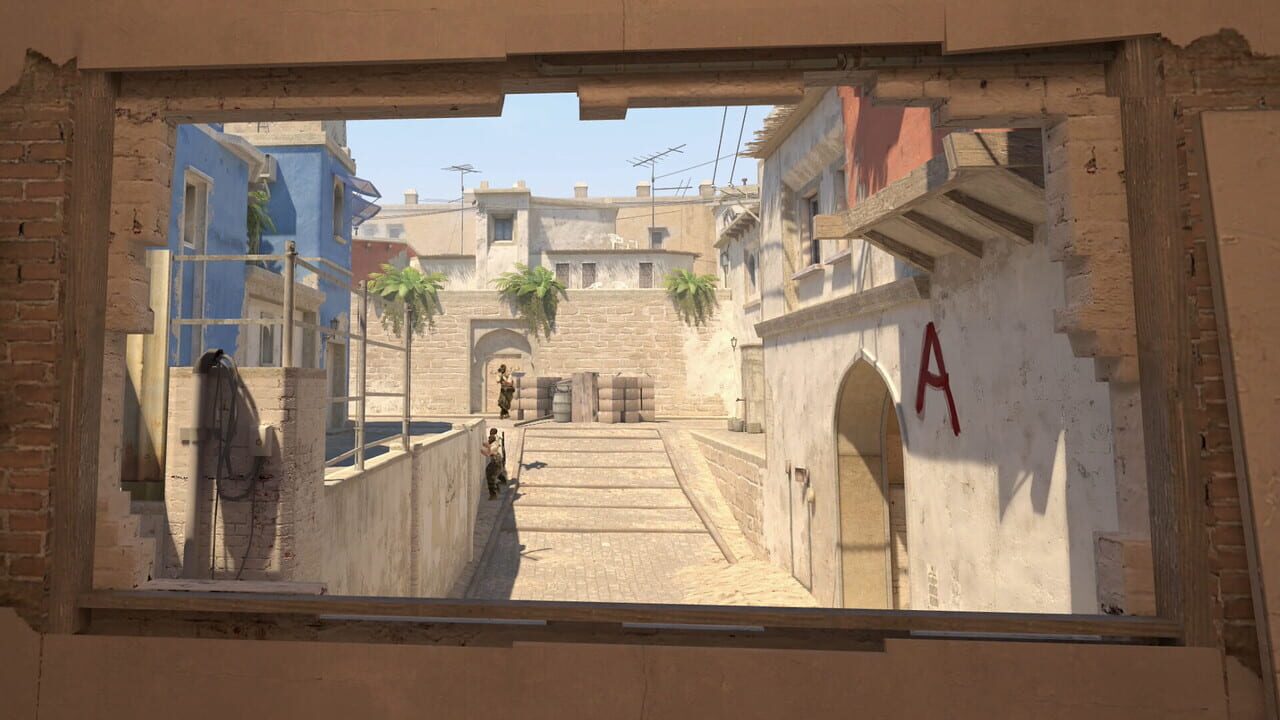
Dust 2 is the map everyone knows — long A, catwalk B, the mid, and two bomb sites. Ancient and Anubis trade on utility and mid control, Inferno on smokes and B-lane, Mirage on its open mid and the double-doors, Nuke on verticality, and Overpass on its three-lane layout. A typical competitive map ban/pick dance removes two, then the remaining two are played — so you'll usually see a best-of-three settle on two of these seven. The pool rotates on a schedule, so the exact seven are live data; check the in-game map picker for the current rotation.
Where to go next
The Counter-Strike 2 tool on MMOKB
The knowledge base is the read-only reference. This tool turns the trade-up rules above into something you can actually price out before you commit ten skins.
The game's own numbers, in plain English — start from the Knowledge Base →
🔄 Updated this fortnight
Loading news...
Free Tools — Counter-Strike 2
Calculators, checkers and planners for Counter-Strike 2 — free, no login. The rules behind every one live in the Knowledge Base →
The most popular tactical FPS in the world. Competitive 5v5 bomb defusal, premier ranking, and massive esports scene. Free-to-play on Steam. Active since Sep 2023.