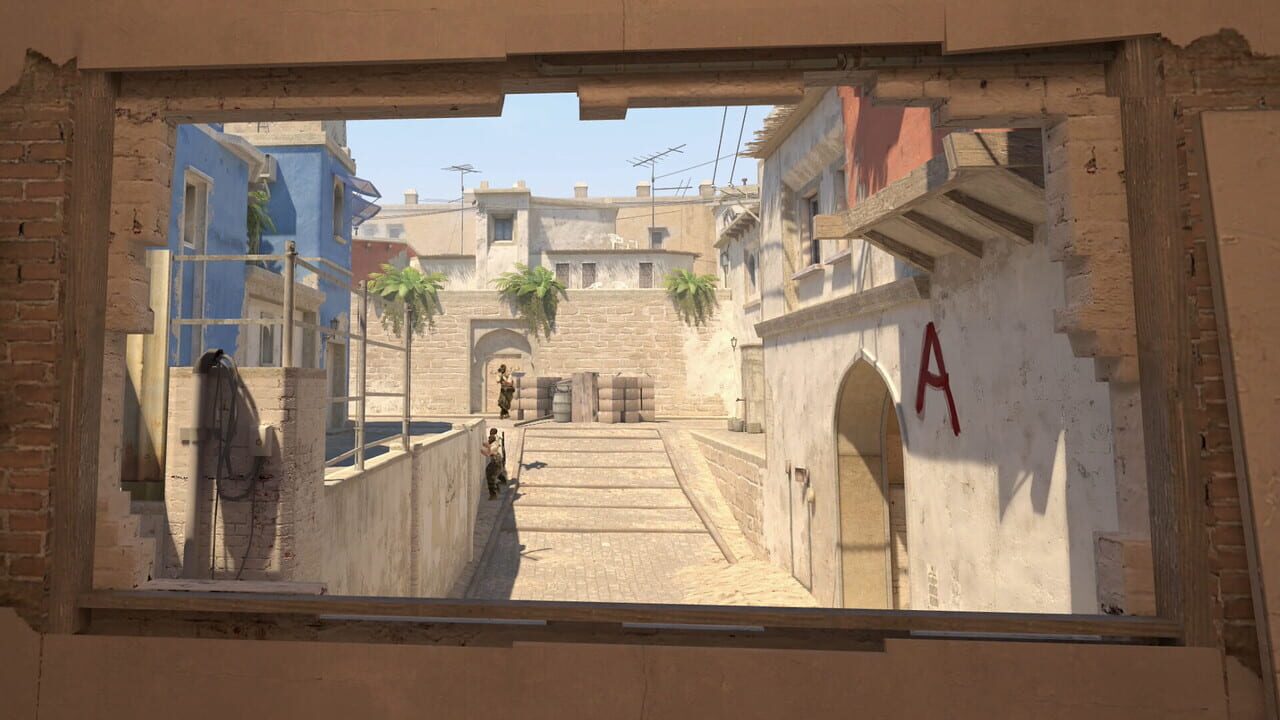
Counter-Strike 2 is Valve’s free-to-play FPS that replaced CS:GO in 2023, built on the updated Source 2 engine with subtick netcode, remastered maps, and a reworked economy system. The core of the game has not changed: two teams, one bomb, and a race to win rounds through gunfights and map control. This guide covers the fundamentals that matter in 2026, whether you are coming from CS:GO or starting fresh.
The round structure
Every round is a fixed-time battle between the Terrorists (planting the bomb) and the Counter-Terrorists (preventing it). The round timer is typically 1:55 for bomb sites and 1:45 for the defuse. The economy is the meta-layer: every round you earn money from wins, kills, and objectives, and you spend it on weapons before the next round. Understanding the economy is 50 percent of the game; a player who buys the right weapon at the right time will outplay a player with better aim who is under-armed.
The round structure is where the game is won: the first 30 seconds are about information (who is where, what weapons do they have), the middle of the round is about positioning (holding the angles, waiting for the enemy to commit), and the final 30 seconds are about the gunfight. As a beginner, focus on the information layer: the crosshair placement, the pre-aim angles, and the utility usage are the three skills that separate a player who wins from one who dies. The round timer is the cap: you cannot win a round that you do not have enough time to execute, so the timing of your engagement is as important as the aim.
Map control and positioning
The current official map pool rotates with Valve’s competitive calendar. Each map has set bomb sites, common angles, and utility paths. As a beginner, learn one map deeply before moving to another: know the common crossfire positions, the utility spots, and the safe angles. The subtick netcode in CS2 means your shots are registered more accurately than in CS:GO, which rewards players who pre-aim angles rather than tracking targets. Pre-aim the common entry points and hold your angles until the enemy commits.
The map layout is the core of the game: each map has a set of common angles, a set of utility spots, and a set of safe positions. The player who knows the map layout wins the engagement: they are already on the angle when the enemy peeks, and the time-to-kill is faster. As a beginner, learn one map deeply before moving to another: the common crossfire positions, the utility spots, and the safe angles are the three things you need to know. The in-game map guide and the competitive calendar are the resources that tell you which maps are in the current pool.
Utility and the new systems
Counter-Strike 2 introduced a new utility system where grenades and smoke effects have updated behavior and timing. Smokes now block the entire line of sight when properly placed, and the flashbang mechanics are different from CS:GO. Learn the standard utility lines for your map: the common smoke, the flash angle, and the molly positions. Check the in-game map guide for the current utility lines, as Valve updates the map pool and the recommended utility between competitive seasons.
Aiming and mechanics
The crosshair placement habit is the most important mechanical skill in CS2. Your crosshair should be at head height on common angles; when the enemy peeks, you are already on target and the time-to-kill is faster. Practice in the aim trainer or the in-game deathmatch: hold angles, pre-aim the common spots, and track targets across the screen. The recoil patterns on the primary rifles are a learnable mechanic; the first 10-15 bullets have a predictable pattern that you can control with practice. The subtick netcode means that a controlled spray is more accurate than in CS:GO, so the skill ceiling is higher.
Economy decisions
The economy is where new players lose rounds. The core rules: after a loss, do not full-buy until you have enough to survive two rounds. After a win, save for the next full-buy round. A “force buy” round (when you cannot full-buy) is a controlled loss: buy pistols and light armor, play for the kill count, and accept that you are not winning that round. The economy is a team decision: if your team is under-armed, do not spend your last money on a rifle you cannot use. Check the in-game economy guide for the current weapon prices, as Valve adjusts the economy with each update.
Competitive modes and progression
Counter-Strike 2 has multiple modes: Competitive (the ranked ladder), Casual, Deathmatch, and Arm Race. For a new player, Deathmatch is the best way to learn aiming and recoil without the pressure of the economy. Once you are comfortable, move to Competitive and focus on the fundamentals: utility, economy, and map awareness. The ranked system uses a skill rating; your first few competitive matches set your starting rating, so play your best in the first week. Check in-game for the current ranked season and competitive calendar.
FAQ
Is Counter-Strike 2 free to play?
Yes. Counter-Strike 2 is free on Steam for PC. The game is free-to-play with optional premium content through the Steam store; no weapon or competitive advantage is pay-to-win. The game replaced CS:GO and existing CS:GO accounts carry over to CS2. The premium layer is the cosmetic content and the convenience items; the core game is fully accessible without spending.
What is the biggest difference between CS:GO and Counter-Strike 2?
The subtick netcode, the updated Source 2 engine, the remastered map pool, and the reworked utility and economy systems. The core gameplay is the same, but the mechanical feel is sharper: recoil is more controllable, smokes are more reliable, and the economy is slightly adjusted. If you played CS:GO, the transition is smooth but the meta has shifted. The subtick netcode is the biggest change: your shots are registered more accurately, and the timing of your engagement matters more than in CS:GO.
How do I improve my aim in Counter-Strike 2?
Pre-aim common angles in deathmatch and practice the crosshair placement habit. Use the in-game aim settings: a lower sensitivity is more forgiving for new players. Practice the recoil patterns on the primary rifles in a controlled environment. The subtick netcode rewards consistency over raw tracking; a player who holds their angles will outperform a player who is spraying. The recoil pattern is a learnable mechanic: the first 10-15 bullets have a predictable pattern that you can control with practice.
What are the main game modes in Counter-Strike 2?
The main modes are Competitive (the ranked ladder), Casual, Deathmatch, and Arm Race. The Competitive mode is where the competitive community lives; the Casual mode is where you practice without the pressure of the ladder. The Deathmatch mode is the best way to learn aiming and recoil without the economy pressure. The Arm Race mode is the fastest way to test weapons: you race to buy the most weapons before the timer runs out.
Keep exploring
- Counter-Strike 2 on MMOKB — the Counter-Strike 2 game hub has the full knowledge base, tools and guides.
- Browse the full library — all MMOKB guides
Reviewed & verified
| Covers | Counter-Strike 2 |
| Last verified | November 24, 2026 |
| Accuracy | The game’s own numbers and rules — they change with patches; check in-game for live values. |
Discussion
0 commentsNo comments yet. Be the first!