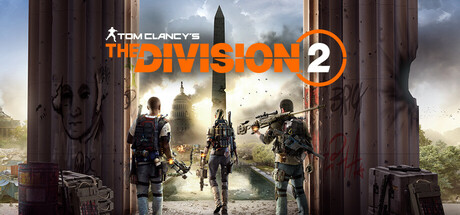
Looter Shooter MMO
The Division 2
Third-person looter shooter set in post-pandemic Washington DC. Co-op missions, Dark Zone PvPvE, and seasonal content. Active since Mar 2019.
Open the Knowledge Base — the game's own numbers in plain EnglishVerified November 7, 2026. Tom Clancy's The Division 2 is a shooter-RPG MMO by Massive Entertainment and Ubisoft where you gear up a customizable agent to clear D.C.'s dark zones in co-op or PvP, with 6 endgame specializations to master. This knowledge base covers what a player actually needs to know about The Division 2 — the co-op shooter loop of playing as an Agent in a ruined Washington D.C., the agent specializations that shape a loadout, the Dark Zone and its rulesets, the strikes that cap the PvE, and the seasonal content cycle that keeps the game moving. It is a plain-English reference to the game's own rules and structure. Where something is live — the current season name, which exotic is the reward, ladder state — the page says to check in-game rather than guess.
These are the game's own rules and structure — not live data. For the current season, its reward line and the live Dark Zone ruleset, check in-game.
The game in one minute
What The Division 2 is, at a glance
A free-to-play third-person co-op shooter: you play an Agent in a ruined Washington D.C., build a loadout around a specialization, and run the PvE and PvP loops the game's own season cycle pushes.
The Division 2 is a third-person co-op shooter built around the Agent you run: you build the character, pick the specialization that shapes the kit, and run the content — the campaign, the shared world and the strikes, the named PvE boss content, in a party of up to four. The Dark Zone is the shared layer where up to a dozen Agents fight over the same space, and the game's season cycle is the structure that keeps it moving: a season is the game's own content unit, with its own rules, its own reward and its own new pieces. The game is free to play, so the loop is the content, not the buy-in.
The core systems, each on its own page
The single-player spine
The campaign and the shared world
The campaign is the single-player story, and past it the shared world keeps running: a map that is always online, with the same rules for everyone on it.
The game's spine is the campaign: a single-player story through a ruined Washington D.C., and the story is where an Agent earns the world. Past the campaign, the map becomes the shared world: a persistent map that is online whether or not a party is on it, and the rules on it are the same for everyone who is there. The shared world is where the co-op layer lives — you run it alone or in a party of up to four, and the content on it is the same either way, with the difficulty reading your level.
→ The shared layer that is always on→The loadout model
The Agent, the specialization and the gear
A loadout is the build: the specialization you run, the skill points you pour into it, and the gear that carries the numbers.
An Agent is the character you build: the specialization is the kit, the skill tree is where the skill points go, and the gear is the numbers the build carries. The specialization is the choice that shapes everything else — the skill tree, the gear slots, the role in the party — and a loadout is the result of all three working together. Because the game's own progression is the skill points you have earned, a loadout is a function of the points available, and the same specialization at a later point is a different build than the early one.
→ The specializations and their roles→How you get in
Free-to-play and the content boundary
The game is free to play, so the loop is the content, not the buy-in — the structure of the season and the shared world is open to everyone who logs in.
The Division 2 runs free to play: the campaign, the shared world, the strikes and the Dark Zone are the content everyone gets, and the season cycle is what moves the game forward for all of it. The free layer is the structure the game's own content runs on — a season, its rules and its reward, the Dark Zone's rulesets and the strike list — and the loop is what you play, not what you pay. Where a season or a ruleset is live is the question the game answers in-game, and the structure above is the shape the answer sits in.
→ The content cycle the access runs on→The game's own numbers, in plain English — start from the Knowledge Base →
No guides yet. Write the first!
Loading news...
Third-person looter shooter set in post-pandemic Washington DC. Co-op missions, Dark Zone PvPvE, and seasonal content. Active since Mar 2019.