Gacha RPG
Summoners War
Classic turn-based gacha RPG with 1000+ collectible monsters, dungeons, and PvP arena. Active since Jun 2014.
Open the Knowledge Base — the game's own numbers in plain EnglishThis knowledge base covers what a player actually needs to know about Summoners War — the five-element matchup logic, the three jobs a unit can fill in a party, how the summoning and shard economy works, and the dungeon, co-op and arena loops that make up the endgame. It is a plain-English reference to the game's own rules and structure. Where something is live — current rarity rotations, ladder standings, which awakened versions are in the pool right now — the page says to check in-game rather than guess.
These are the game's own rules and constants — not live data. For current summon rotations, ladder standings and which units are in the pool, check in-game.
The game in one minute
What Summoners War is, at a glance
A long-running mobile MMORPG: you collect summoned units, build a party of four, and clear dungeons and arenas with turn-based auto-combat decided by elements, jobs and team composition.
Summoners War is a mobile MMORPG that has run for many years with regular content and summon rotations. You summon units, raise them through experience, level and enhancement, and field a party of four against the game's many dungeon types. Battles resolve themselves in turn order: elements decide who hits hard, jobs decide who survives, and the items and augments you feed the team decide how fast. The loop is collection and composition, not your own character moving around a map.
The core systems, each on its own page
The element system
Five elements, one matchup wheel
Every unit carries one of five elements, and the wheel decides which side of a fight takes extra damage before any unit card is even a factor.
| Element | Strong against | Weak against |
|---|---|---|
| Fire | Wood | Water |
| Water | Fire | Wood |
| Wood | Water | Fire |
| Light | Dark | — (resisted by Dark) |
| Dark | Light | — (resisted by Light) |
Fire, Water and Wood form a triangle: Fire beats Wood, Wood beats Water, Water beats Fire. Light and Dark are the opposing pair — they trade into each other and both resist the three-element triangle on their side of the board. A unit fighting into its weakness takes visibly more damage and often loses the initiative race, so a team built around the right element against the dungeon's bosses is always ahead of a raw team of the wrong element.
The practical rule: dungeons and co-op bosses have declared elements, so you build the party around the counter. A four-odd team of one element, mixed with what the fight demands, is the baseline of every clear.
→ How element reads pay off in the dungeon content→The three jobs
Tank, Attacker and Support — the roles a party is built from
Unit cards declare a job, and the jobs are how a four-slot party divides the work of surviving, dealing damage and keeping the team in the fight.
The jobs
- Tank — holds the front line and soaks damage so the back does not fall
- Attacker — the damage: physical or magical burst and sustained output
- Support — heals, debuffs enemies, cleanses and sets up the team's tempo
A clean party usually reads one tank, one or two attackers and one support, with the remaining slot flexing to the fight. The jobs are not locked to elements — a tank can be any of the five — so you build the job spread you want and pick elements to match the dungeon. When a unit advances past the base game, it can also change jobs on re-awakening, which is how the same card gets a second or third build.
Each job on its own page
The collection economy
Summoning, shards and the rarity ladder
New units come from the summoning system: the game's own currency drops, summon gems, and shards that complete specific units are the ways units actually reach your roster.
The roster grows through summoning. You spend the summoning currency the game's systems pay out, and rotations shape which units are in the pool at a given time. Shards of a specific unit let you complete or level one unit instead of leaving it to a roll, and the rarity ladder climbs from the ordinary summoned rarities up to a handful of top-tier summonable rarities. A unit you complete through shards is the one you plan a party around.
Because rotations come and go, the economy question is always 'which of what I want is still summonable or shard-completeable' — and that is a live question, not a static one. The rules are stable; the pool is not.
→ The summoning and shard system, on its own page→The content loops
Dungeons, co-op and the endgame loops
Once the party is built, the day-to-day is a set of content loops — regular dungeons, a shared co-op raid, and the boss rush — each paying out the shards and currency the summoning economy runs on.
The game's PvE content is a stack of dungeon types: the daily loop, harder variants that demand a sharper build, and a boss rush that tests composition against a named list of bosses. The co-op dungeon is the shared one — a team of players clears a boss together and splits the reward pool, which is where endgame units and their upgrades mostly come from.
→ The dungeon and co-op loop, on its own page→PvP & competition
The arena and the competitive layer
Beyond the PvE loops, the competitive layer is the arena: you set a defensive party, face other players' parties, and climb a ranked ladder that resets on the game's own schedule.
The arena is the game's PvP core. You field a fixed defensive team, other players attack it with their own, and the ladder positions you against the server. Because parties are pre-set and battles resolve automatically, the arena rewards the same composition thinking as the co-op dungeon — the right elements against the meta, the right job spread, the right sustain — and punishes a team that only wins against one specific enemy.
→ The arena ladder, on its own page→The game's own numbers, in plain English — start from the Knowledge Base →
🔄 Updated this fortnight
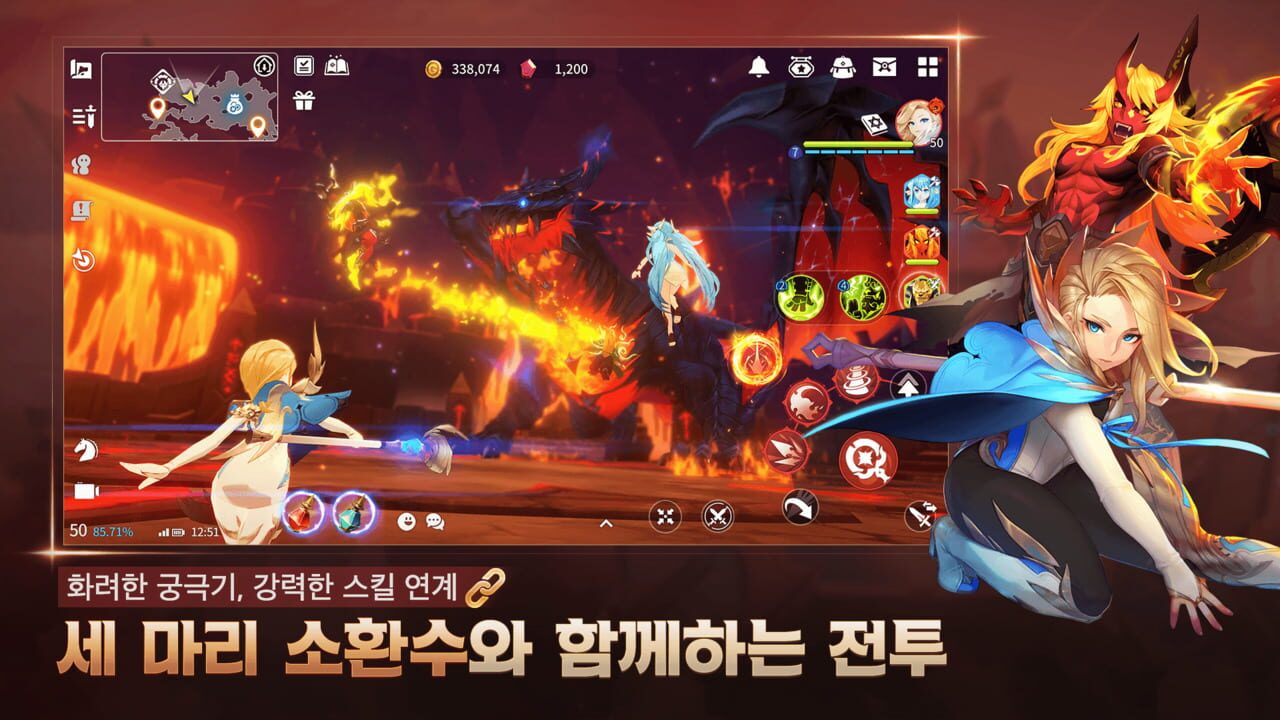
Loading news...
Classic turn-based gacha RPG with 1000+ collectible monsters, dungeons, and PvP arena. Active since Jun 2014.