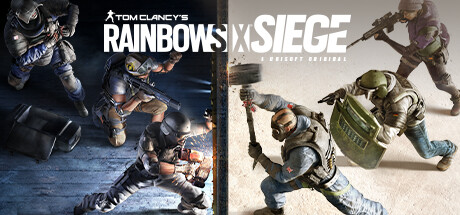
Tactical FPS
Rainbow Six Siege
5v5 tactical shooter with destructible environments, unique Operators, and strategic gameplay. Active since Dec 2015.
Open the Knowledge Base — the game's own numbers in plain EnglishThis knowledge base compiles what a player actually needs to know about Tom Clancy's Rainbow Six Siege — the two sides a match is built on, the ability layer that defines every operator, the room-control shape of a match, and the ranked season loop that drives the competitive play — in plain English. Everything here is the game's own structure. Where something is live — the current operator roster count, the season running in your region — the page says to check in-game rather than guess. Nothing in this reference is a live read of the servers.
These are the game's own rules and structure — not live server data. For the current operator roster, season state or mode line-up, check in-game.
The game in one minute
What Rainbow Six Siege is, at a glance
A tactical, room-based shooter built on two sides: attackers breach a held building, defenders hold it — and every operator the match runs on carries a defining ability.
Rainbow Six Siege is a tactical, room-based shooter. A match is two squads of five — the attackers, who breach into the building and complete the objective, and the defenders, who hold it. The defining layer is the operator: every one is a specialist from a named counter-terrorist unit, and every one carries a signature ability that changes how the player uses them, from the entry fraggers to the support and recon. The roster grows every season, and the count above is where it stood in late 2026 — the live number is whatever the in-game roster screen shows. The structure — the two sides, the ability layer, the room-based match — is the stable core the rest of the game builds on.
The two sides
Attack and Defense, and how a match is won
The match is built on two opposing jobs: the attackers breach and complete the objective, the defenders hold the building and stop them.
The two sides have two opposing jobs, and the win condition is set by which objective the match runs on. The attackers move into the building, breach through the walls and take the point — the objective the match is set on — before the defenders stop them. The defenders read the attackers' entry, hold the rooms and deny the breach, and win by running down the timer with the objective intact. Neither side has a hard numerical advantage: the attackers have the initiative and the breach tools, the defenders have the map knowledge and the time, and the match is won by the side that out-plays its job. The sides are the frame; the operators on each side are the tools inside it.
| Side | The job | The win |
|---|---|---|
| Attackers | Breach the building and take the objective | Complete the objective before the defenders stop it. |
| Defenders | Hold the rooms and deny the breach | Run the timer down with the objective intact. |
The ability layer
Operator abilities and the gadget economy
Every operator carries a signature ability, and the match runs on the economy of gadgets — the tools each side fields and how they spend them.
The ability layer is what makes an operator an operator: each one has a signature gadget — a breach tool, a recon tool, a hard-point tool — that defines how the player uses them in a match. The economy that runs on top of it is the gadget count a side fields: the attackers field a set of gadgets across their five, and the defenders field theirs, and the match is as much about spending those tools in the right order as it is about the shooting. A side that spends its gadgets early and flat is a side that has run out of tools before the objective is taken. The ability set is the game's own per operator; the live meta of which abilities are the current picks is the part this reference leaves to the in-game roster.
The tool classes, in one line each
- Breach tools — open the wall the defenders have held
- Recon tools — read the enemy before the engagement
- Hard-point tools — the one-shots that win the room
- Support tools — the utility that keeps the side's tools up
The match shape
Room control and how a match is played
The match runs on room control: who holds which room, who breaches through which wall, and who reads the enemy before the engagement.
The match is played in rooms, and the whole game is about who controls which room and who moves between them first. The defenders hold the rooms and read the attackers' entry — where they will breach, which gadget they will spend — and the attackers plan the entry around what the defenders have set up. The wall is the unit of the match: it is what the attackers breach through, what the defenders hold, and what the recon tools are spent to read. A match is a sequence of room calls, and the side that out-reads the other's rooms takes the building. The room-control structure is the game's own; the live map set and which rooms the current maps carry are the part this reference leaves to the in-game lobby.
→ Room control in more detail, on its own page→The competitive loop
Ranked and the season cycle
The competitive loop runs on the ranked seasons: the tiers, the operator rotation, and the season that resets the standings.
The competitive loop is the ranked mode, and it runs on a season cycle. Each season the standings reset and the operator rotation turns over — the active roster is a subset of the full roster, and the rotation is what the competitive matches are built on. The tiers climb inside the season, and the season's end is where the standing is measured and the season's rewards issue. The season the game is on — the year and the season number, the rotation it is running, the reward set — is the live part of the loop, and it is the part this reference leaves to the in-game season screen.
→ Ranked and the season cycle in more detail, on its own page→Where the game stands
The current state of the game
Rainbow Six Siege is in active development on a yearly season cycle; the live part is what the current season is running.
The game is developed on a yearly cycle, and each year is made of the seasons that run inside it — the operator rotation, the competitive loop and the content additions all run on the season cadence. The structure above — the two sides, the ability layer, the room-based match — is the stable core; what a player reads off the current year is the live operator roster, the active rotation and the season state. That is the live half of the game, and it is the half this reference leaves to the in-game screens. The studio has also published a forward roadmap for the coming year, which is where the next content cycle is stated.
The game's own numbers, in plain English — start from the Knowledge Base →
No guides yet. Write the first!
Loading news...
5v5 tactical shooter with destructible environments, unique Operators, and strategic gameplay. Active since Dec 2015.