Gacha ARPG
Punishing Gray Raven
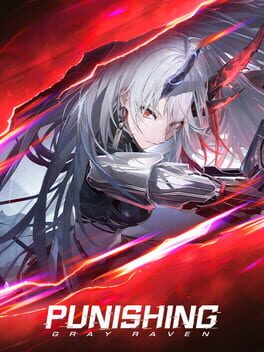
Fast-paced action gacha RPG with sci-fi themes. Combo-heavy combat and stunning animations. Active since 2021.
Open the Knowledge Base — the game's own numbers in plain EnglishThis knowledge base compiles what a player actually needs to know about Punishing: Gray Raven — the character roles and the six energy types that define how teams are built, the memory system that carries gear progression, the core content loop of main story and interludes, and the combat structure that the whole game runs on — in plain English. Everything here is the game's own structure and vocabulary. Where something is live — current character line-up, interlude rewards, version event state — the page says to check in-game rather than guess. Nothing in this reference is a live read of the servers.
These are the game's own rules and systems — not live server data. For the current character roster, event rewards or version state, check in-game.
The game in one minute
What Punishing: Gray Raven is, at a glance
A team-based action RPG where you build squads of Constructs around the six energy types, push the story, and clear content with the right team for the fight.
Punishing: Gray Raven is a 3D post-apocalyptic action RPG. You command small teams of Constructs — three at a time — in real-time combat, and the teams are built around the game's energy system: each construct leans into one of six energy types, and buffs and debuffs only land on the energy type they belong to, so a team is as much about energy coverage as about the roles. Progression runs on memories, the gear system that carries your stats and set bonuses, alongside character levels, awakenings and a trainer (the Compositers) who tunes the team. The counts above are the game's own squad and gear structure, not a community estimate.
The energy types
The six energies that build teams
The core of team building: each construct leans into one of six energies, and the buffs and debuffs in a fight are tied to the energy they belong to.
The six energy types
- Physical
- Fire
- Ice
- Lightning
- Dark
- Nihil
The energy system is what makes a team a team. Each construct deals damage that is mainly one energy type, and the fight's buffs and debuffs — the crowd control, the damage amplifiers, the shields — only apply to the energy type they are tied to. That means a team is planned around energy coverage: which energies you hit with, and which debuffs you can actually land on the enemy you face. A team that carries two constructs of the same energy is a team that has one less debuff source than it thinks it does.
| Energy | What it does in a team |
|---|---|
| Physical | The baseline damage type; the energy every team starts from. |
| Fire | Burning and the burn-linked effects that stack on it. |
| Ice | Slowing and the freeze-adjacent effects; the control side of the field. |
| Lightning | The chain and the fast-hit play; the energy that rewards uptime. |
| Dark | The draining and the debuff-adjacent play; pairs with the team's own status tools. |
| Nihil | The newest energy in the system; the newest debuff coverage it brings with it. |
Roles & the squad
The roles a squad of three carries
Constructs sit in the roles — attacker, tank, support — and the squad is built so the three together cover the fight.
Every construct the game ships lands in one of the roles the team is built around: the attacker carries the damage, the tank holds the line and breaks the enemy's defense, and the support heals and buffs the team. A squad is three slots, and the slot you fill determines what the other two are doing — a squad with no tank is a squad that has to outrun the damage it takes, and a squad with two supports has no one to deal the damage the content expects. The energy coverage above sits on top of the role coverage: the two systems are checked at the same time, not one after the other.
The build layers, on their own pages
The gear system
Memories and the gear progression
Memories are the gear layer: six slots, two set bonuses each, and the stat slots split by where they sit on the grid.
Each construct equips six memories, called consciousness chips in the game's own language. The grid splits by row: the top row's slots carry health and critical stat boosts, the bottom row's slots carry attack and defense boosts, so where a memory sits changes what it is worth to the character. Each memory type carries two set bonuses — one at two pieces, one at four — and the build aim is usually a four-piece main set plus a two-piece secondary set. Memories can also be enhanced, and 5- and 6-star memories carry resonance slots that add one more layer of stat.
| Layer | What it does |
|---|---|
| Memory grid | Six slots; top row stats are health/critical, bottom row stats are attack/defense. |
| Set bonuses | Two per memory type, at two and four pieces of the same type. |
| Enhancement | Raises the memory's base stats; the set bonus values stay. |
| Resonance | Two slots per memory; the 6-star resonances are character-specific. |
Content & the loop
The story, the interludes and the loop
The main story and its interlude segments are the content backbone, and the loop is the team built for the fight you are about to face.
The game's content runs on the main story and its interlude segments: the interludes are the side-chapter content that sits between the story chapters and where the character-specific and faction-specific progression lives. The combat loop inside them is the same every time: read the energy types of the fight, check which debuffs your team can actually land on it, field the team, and rotate the three slots so the buff and the shield coverage stays up through the fight. When the team is not winning, the fix is usually in the build — the energy coverage, the role coverage, or the memory sets — not in grinding a higher level.
→ The combat loop, on its own page→→ The content structure, on its own page→Where the game stands
The current state of the game
Punishing: Gray Raven is in active development with a regular release cadence; the live part is what that cadence is adding and changing.
The game is developed on a regular version cycle, and each version adds characters, tunes the content and reworks the event line-up. The structure above — the energies, the roles, the memory system — is the stable part; what a player reads off the current version is the character roster, the newest energy's tools, and which content is open right now. That is the live half of the game, and it is the half this reference leaves to the in-game screens.
Loading news...
Fast-paced action gacha RPG with sci-fi themes. Combo-heavy combat and stunning animations. Active since 2021.