MMORPG
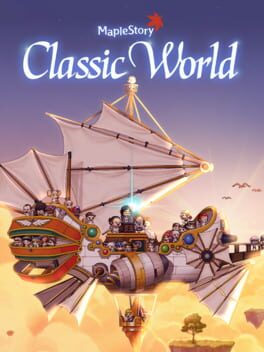
MapleStory Classic World
Pre-Big Bang MapleStory revival - Founder Oct 6, Grand Launch Oct 21, 2026.
Open the Knowledge Base — the game's own numbers in plain EnglishThis knowledge base covers MapleStory Classic World — the classic 2D MapleStory experience that players come back to for its slower pacing, its original maps and its original job lines. It covers what the game is, the five base classes and the ten second jobs each family reaches, the leveling and grinding habits the classic format rewards, and the mesos economy. The game's own job structure and rules are what's here; where a rate is live or the shop is moving, the page says to check in-game.
Classic World is a slower, closer-to-original version of MapleStory. Not every system matches the current version of MapleStory — the lineup here is what the classic format ships, and live details (rates, events, shop) you confirm in-game.
The game in one minute
What MapleStory Classic World is, at a glance
The classic 2D MapleStory: side-scrolling maps, a job family you pick at low level, grinding and gear loops, and a pacing that leaves the modern version's systems behind.
MapleStory Classic World is the classic 2D version of MapleStory: you start as the plain Beginner on the forest and Henesys maps, take your first job at level 10, run up through the original zones, hit the second-job advancement quest at level 30, and build the grind-and-gear loop that made the original famous. The classic format is deliberately behind the current version — it has the original maps, the original job lineup and the slower economy. If you are here for the nostalgia of where MapleStory started, that is exactly the point: the game keeps the old feel instead of chasing the new systems.
The job lines
Five base classes, ten second jobs
Everyone starts as the Beginner. At level 10 you take a first job — Warrior, Magician, Bowman or Thief — and at level 30 you advance into one of the ten second-job lines that define your character.
| First job | Play style | Second jobs at level 30 |
|---|---|---|
| Warrior | Melee, tank-leaning; the classic front line | Fighter, Page |
| Magician | Ranged magic; spell damage and utility | Fire/Poison Wizard, Ice/Lightning Wizard, Cleric |
| Bowman | Ranged physical; arrows from a distance | Hunter, Crossbowman |
| Thief | Fast, mobility-first; the dual path of knife or bow | Assassin, Bandit |
The Beginner is the placeholder every character starts as; the first-job pick at level 10 is the real fork, and the second job at level 30 is the one that sets your whole gear and grind path. The Warrior line goes into Fighter (the two-handed bruiser) or Page (the lighter, faster sword line). The Magician line splits into Fire/Poison Wizard, Ice/Linzing Wizard or the Cleric — the only second job in the game that leans into healing and party support instead of damage. The Bowman line goes into Hunter (bow, the kiting ranged physical) or Crossbowman (crossbow and bolt, the faster-firing variant). The Thief line is the dual one: Assassin keeps the fast melee knife path, Bandit takes the thief's roots onto the ranged crossbow. Pick by how you want the grind to feel — the classic maps reward the build that keeps you alive while the loop runs.
Each family, on its own page
The core loop
Grinding, AFK spots and the classic pace
Progression in the classic format is the old loop: find a spot, run it down, get gear off the drops, move to the next map. There is no meta to chase — the spot list is the game.
The classic experience is built around hunting spots: a map or area that gives good XP per hour at your level, with drops that fund the next gear tier. The pacing rewards patience over optimization — fewer daily dailies to check, less content pressure than the current version, and a gear progression you read off the drop table. A lot of the classic play is simply: pick your spot, let the character run the loop, and spend your drops on the next piece of kit. AFK-friendly builds — a fighter on a loop, a wizard on a tight spawn area — are where the classic game shines.
→ The spot-finding habit, on its own page→Money & items
Mesos, drops and how the economy moves
Everything is bought and sold in mesos, the drop table funds gear, and the classic economy is slower than the current version — which is why a bank of mesos matters more, not less.
The currency is mesos: monsters drop them, you spend them on repairs, stat boosts and consumables, and they are the only bridge between your time and your gear. In the classic format the economy moves slower than the modern game, so meso reserves matter more: save for the big stat boost or the key piece instead of spending it daily. Trading and storage are the usual MapleStory habits, and the shops in each town do the usual resale. The slower the economy, the more a saved mesos bank carries — that is the classic version's relationship with money.

Loading news...
MapleStory Classic World is Nexon's free-to-play pre-Big Bang revival of MapleStory. Founder's Pack sale begins September 2, 2026, Founder's Access opens October 6 with carryover progression, Grand Launch opens to everyone October 21. Ossyria/El Nath/Third Job reworked post-launch. No XP boost cash shop, new stories planned.