
Mobile Strategy
Clash Royale
Real-time card battle game from Supercell. Collect cards, build decks, and climb trophies. Active esports scene in 2026.
Open the Knowledge Base — the game's own numbers in plain EnglishThis knowledge base compiles what a player actually needs to know about Clash Royale — the card and deck system, elixir management, the trophy road of arenas, and the seasonal loop — in plain English. Every rule and number here is the game's own. Where something is live — win rates, meta decks, event rewards — the page says to check in-game rather than guess.
These are the game's own rules and constants — not live data. The meta shifts every card rotation; check the in-game deck screen for current play.
The game in one minute
What Clash Royale is, at a glance
A fast, real-time card battler by Supercell: two players, one arena, an elixir economy, and a deck of eight.
Clash Royale is Supercell's free-to-play real-time card battler for phones. Each match is a short duel on a bridge arena: you pull cards from an 8-card deck to deploy troops, spells and buildings, you buy them with elixir that regenerates over time, and you win by destroying the enemy's royal tower. The two buildings cost more elixir, so a match is less about card power and more about spending elixir better than the other player over a few minutes.
Cards & decks
The card system and how a deck is built
A deck is eight cards of mixed roles, and the build is as much about elixir cost as about what each card does.
Every card is one of a few types: troops that fight, spells that hit an area, buildings that defend and regenerate troops, and the occasional character that supports the deck. A deck holds eight, and the practical constraint is elixir — the cost of the deck as a whole, and the cost curve of any two-card combo, has to be spendable against your income. So a deck is built from its core (the troops and spells you cycle) plus its support (the cheap defensive card, the building, the heavy). The build you run is what you test every match.
→ Why elixir is the real constraint→Elixir
Elixir management and the match economy
Elixir is the resource every card is bought with, and it regenerates — so the match is a race to spend better.
Elixir is the in-match currency: you start each duel with an empty bar, it fills over time, and every card you pull has a cost. Cheap cards let you respond instantly; expensive cards swing the match when you land them. The game gives both players the same income, so the skill is reading when the opponent is dry and when they have the swing play coming, and positioning your cards so they trade at the right moment.
The match flow, in order
- Early — cheap cycle, build elixir, defend
- Mid — first push, land the heavy on timing
- Overtime — both sides on max elixir; the swing is decided
The trophy road
Arenas, trophies and card unlocks
The trophy road runs from Goblin Stadium to Spirit Square across 32 arenas; each arena opens new cards and a new trophy band.
Trophies are the long-term currency: win a match, gain trophies, and each arena on the trophy road has a trophy band where it opens. There are 32 arenas, from Goblin Stadium at the bottom to Spirit Square at the top of the road, and each arena unlocks new cards as you pass through it. So the early game is narrow — few cards, few choices — and the late game is deep, with the full card pool open. A new arena is the moment the meta reshapes: new cards, new deck shapes.
Because the road is also where you meet the card pool, the practical skill is not just winning matches but playing the cards the arena hands you. An early-arena deck is built from what the trophy band has already unlocked, not from what the top of the road plays.
How card levels and collection level interact with unlocks→Card levels
Card levels, collection level and the long grind
Cards have levels, and the collection is tracked as its own meter — the slow work of the game.
Every card in your collection has a level, and leveling a card up is the long work of the game: you spend duplicate cards (and sometimes gold) to raise its level, and a higher-level card is a stronger version of the same card. The collection as a whole is tracked by a collection level — the sum of all card levels — and that number is what gates some of the better cards from unlocking. So the meta is not just about the deck; it is about which cards you have at which level.
The trophy road that opens the card pool→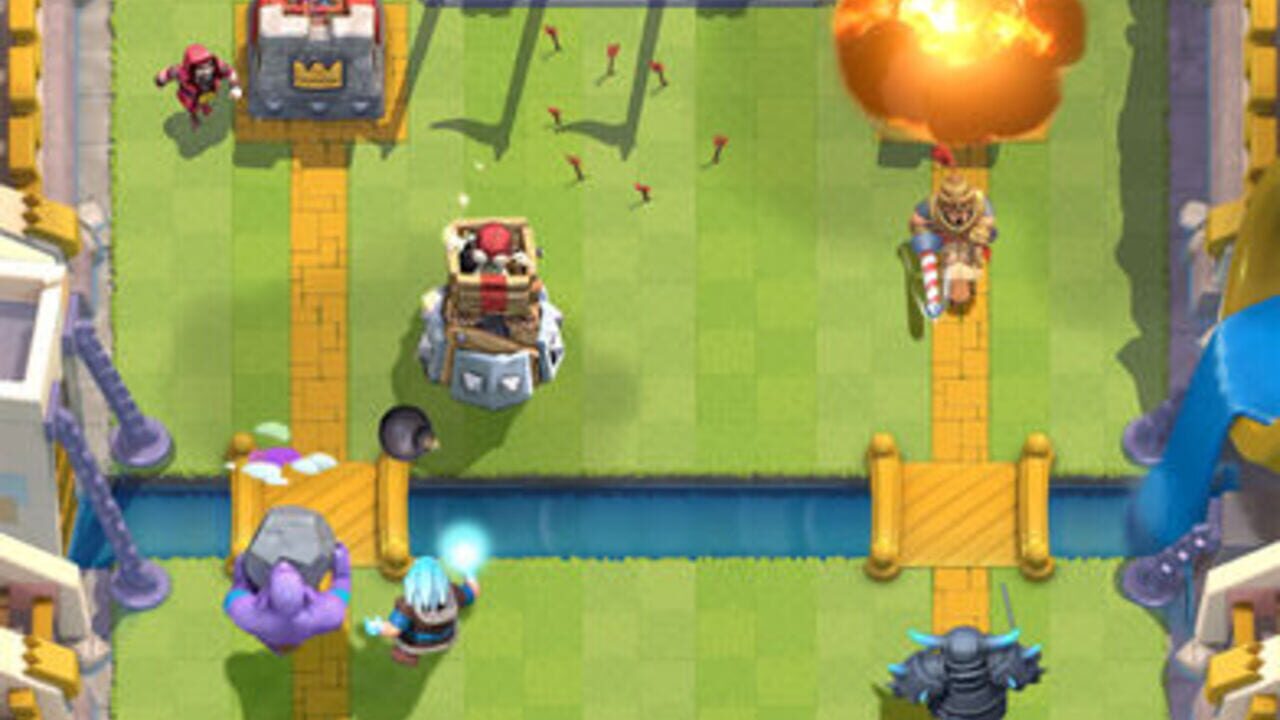
Loading news...
Real-time card battle game from Supercell. Collect cards, build decks, and climb trophies. Active esports scene in 2026.