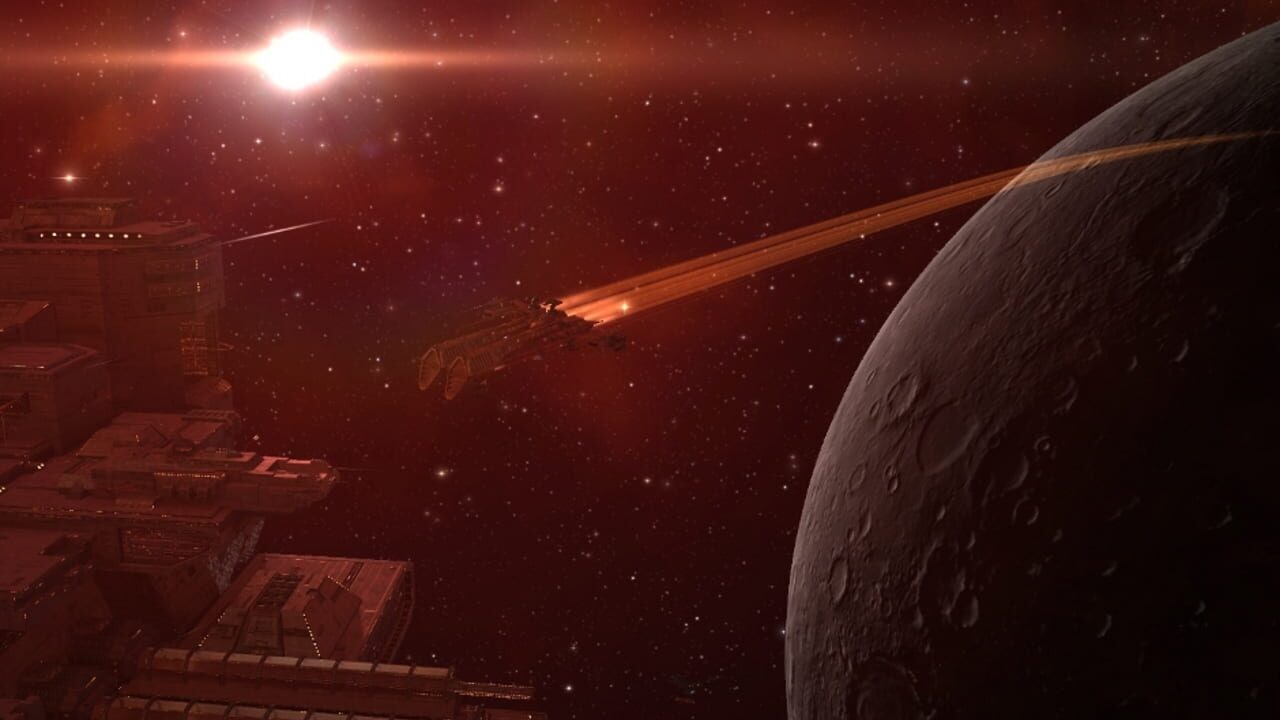
Eve Online Combat Guide
This Eve Online combat guide covers the essential mechanics, ship fitting principles, and tactical strategies that define warfare in New Eden. From solo frigate skirmishes to massive fleet engagements spanning billions of square kilometers, EVE’s combat system rewards knowledge, preparation, and smart decision-making. This guide gives you the foundation to fight effectively at every tier of play.
Core Combat Mechanics
| Mechanic | Description |
|---|---|
| Ship Fitting | Every vessel requires balancing tank, weapons, and utility modules within power grid and CPU limits |
| Damage Types | Kinetic, explosive, thermal, and EM each interact differently with armor and shield layers |
| Armor Repair Systems | Active armor repair and hull replating provide primary survivability in sustained engagements |
| Shield Boosters & Hardeners | Shield tank builds rely on boosters for regeneration and hardeners for mitigation per damage type |
| Drone Combat | Light, medium, heavy, and siege drones deal independent damage and provide scouting support |
| Missile Locking | Missiles track targets independently and can lock multiple enemies simultaneously |
| Warp Disrupt/Scramble | Counter-warp tools deny enemy escape and enable fleet engagements |
| Skill Training | All pilot abilities use a continuous real-time skill queue system |
| Capacitor Management | Modules draw from capacitor; running out mid-fight disables your tank and weapons |
| Target Locking | You must lock a target to fire most weapons; scan resolution determines minimum range |
| Distance & Tracking | Engagement range, tracking speed, and projectile velocity dictate accuracy |
| Electronic Warfare | jams, scrambles, disrupts, and debuffs alter enemy performance in real time |
Faction Combat Profiles
Your faction shapes your entire combat identity. Choose wisely based on playstyle preference and investment path.
-
Minmatar: Ballistic weapons and rugged hulls. Minmatar ships excel at close-range brawls with high structural integrity. Armor tanking is natural here. Frigates like the Purifier and cruisers like the Thrasher are classic examples. Minmatar pilots often favor aggressive, fast-closing engagement patterns.
-
Gallente: Shield-based durability and electronic warfare dominance. Gallente ships feature strong shields, high capacitor output, and access to powerful jamming tools. Battleships like the Dominix bring devastating drone swarms, while the Rattlesnake offers reliable shield DPS. Gallente is ideal for players who value sustained fights and control.
-
Caldari: Energy weapon precision and long-range superiority. Caldari ships pair energy weapons with electronic warfare and strong shield tanks. The Caldari lineage provides some of the best sniper support in the game. Cruisers like the Pith C. X5 and battleships like the Raven are staples in fleet warfare. Precision locking and range management reward careful pilots.
-
Amarr: Laser DPS and armor repair synergy. Amarr ships deliver high single-target damage through lasers and photons, supported by robust armor repair systems. The Caldari-style electron cutting is complemented by Amarr laser specialization. Battleships like the Magnate and Caracal cruisers are iconic picks for pilots who prefer consistent, methodical damage output over burst.
Pick a faction you enjoy and build your skill plan around it before spending ISK. Jumping factions later is possible but inefficient for new pilots.
Step-by-Step Combat Readiness
Step 1: Choose Your Entry Ship Class
Frigates, cruisers, and battlecruisers are the ideal starting tiers. Frigates cost relatively little ISK to fit and lose, making them perfect for learning combat fundamentals. Cruisers offer more module slots and better survivability as you grow. Avoid capital ships until you understand fitting economics and engagement patterns at lower tiers.
Consider your preferred role:
- DPS ship for dealing damage
- Tanky ship for surviving longer fights
- EWAR ship for disrupting enemies
- Drone ship for independent damage contribution
Step 2: Fit a Combat Ship
Every ship uses a fitting window that shows your power grid, CPU, and module slot utilization. Start with a proven fit from a trusted source. Community resources like Eve University fit library and evewho.com provide tested templates for every skill bracket.
Prioritize three pillars:
- Survivability first. Fit a tank that holds damage for at least 30 seconds before your ship breaks apart. For shield tanks, balance boosters and hardeners. For armor tanks, prioritize repair units and plating.
- Consistent damage output. Balance your main weapon type with secondary support weapons. Hybrid or missile ships offer more flexibility for beginners than pure energy or pure projectile builds.
- Utility modules. Microjump drives, sensor boosters, and cloak projectors dramatically change engagement outcomes. A well-utilized utility loadout can win fights that raw DPS cannot.
Always run your fit through a fitting tool before equipping it. Miscalculations waste ISK and leave you dead in space.
Step 3: Understand Engagement Distances
Combat range defines nearly every encounter:
- Frigate duels typically occur at point-blank to short range. Speed and burst damage decide outcomes.
- Cruiser combat often unfolds at medium ranges where tracking and projectile velocity matter most.
- Capital fleet battles span kilometers and rely on positioning, focalization, and sustained DPS over minutes.
Know your fit range, know your enemy fit range, and never engage outside your effective envelope unless you have a retreat plan.
Step 4: Master Post-Dock Strategy
Leaving a station is where inexperienced pilots make costly mistakes. Always execute this pre-warp checklist:
- Confirm your fit matches the expected encounter type.
- Check local chat for hostile presence and scan for signature signatures near your exit vector.
- Equip a probe launcher or smartbomb for situational awareness in wormhole or nullsec space.
- Save your fitting so you can reload it if your ship is destroyed.
- Align your ship toward your intended exit direction before initiating the jump. Reactive alignment loses fights.
Step 5: Build Your Skill Queue
EVE uses a real-time skill training system. Your skills train continuously, even while logged off. Never let the queue idle.
Priority order for new combat pilots:
- Ship-specific flying skills for your chosen class
- Drone skills if flying drone ships
- Weapon upgrade skills for your primary damage type
- Shield or armor integrity skills as your primary tanking path
- Capacitor management and power grid skills to support your module choices
Use implant slots for temporary attribute boosts while grinding key combat skills. Implants are consumable but provide significant short-term gains.
Combat Roles in Fleet Warfare
EVE fleet engagements divide pilots into specialized roles:
- Fighter: Close-range DPS ships engaging enemy frontline vessels. Often frigates and cruisers packed with damage modules.
- Sniper: Long-range energy or hybrid weapon platforms that pick apart enemy fleets from extreme distance. Requires precise locking and range discipline.
- Tanking support: Ships carrying large shields or armor repair to sustain frontline vessels through sustained fire.
- Electronic warfare: Ships deploying scramblers, disruptors, and jammers to disable enemy movement and weapon performance.
- Logistics: Heavily specialized support ships that repair distant friendly vessels during active combat. Logistic captains are high-value targets.
- Interceptor: Fast ships that scout, disrupt wormholes, and hunt enemy logistics or strategic assets.
Coordination between roles separates organized alliances from chaotic free-for-alls. Communication through in-game fleet channels is mandatory for success.
Tips for Surviving New Eden
- Invest in scan resolution early. Locking targets determines whether you hit or shoot empty space. Low scan resolution means wasted shots and missed damage windows.
- Never fight above your weight class without support. A properly fitted frigate can challenge a larger ship in controlled conditions, but unassisted duels against superior hulls are usually fatal.
- Save your expensive fittings. Dying in nullsec or high-risk wormhole space with a valuable fit costs thousands of ISK and hours of fitting time. Practice in lower-risk environments first.
- Use directional alignment proactively. Always align away from threats before they appear. Waiting until you see an enemy to align means you are already behind.
- Monitor local chat constantly. It is your earliest warning system. One unread second can determine whether you escape or become a wreckeru2019s salvage claim.
- Watch killmail replays. Understanding what killed you teaches you more than any guide. Replays reveal range, timing, and fit weaknesses you can exploit next time.
- Fly what you can afford to lose. Consistency beats heroics. The best pilots are the ones who stay in the game long enough to improve. Risk management matters more than bold plays.
- Learn capacitor budgeting. Running out of capacitor mid-fight disables your tank and your weapons simultaneously. Never fit beyond your grid and CPU capacity.
Common Fitting Mistakes
- Over-fitting modules beyond power grid or CPU. Your ship cannot activate modules that exceed its grid or CPU limits. Always check the fitting preview.
- Ignoring scan resolution. Fitting maximum damage without scan upgrades leaves you unable to lock targets at optimal range.
- Neglecting armor/layer hardening. Fitting generic shield hardeners when the enemy deals mostly kinetic damage wastes mitigation potential.
- Running a DPS-only fit without a tank. High damage means nothing if you die in five seconds. Survivability comes first.
- Skipping drone skills. Drone pilots who neglect drone linking and control range skills perform far below their shipu2019s potential.
Related Guides
FAQ
Q1: What is the best ship class for beginners in Eve Online combat?
A: Frigates and cruisers are the most beginner-friendly options. They are inexpensive to fit, forgiving in pilot error, and expose you to multiple combat styles before you invest in capital ships.
Q2: Do I need to join a corporation to play PvP in Eve Online?
A: No, but it is highly recommended. Solo PvP is possible, but fleet support, shared intelligence, and coordinated tactics make engagement success far more likely. Many large alliances recruit actively in low-security space.
Q3: How does damage work against armor in Eve Online?
A: Armor has four resistive layers u2014 kinetic, explosive, thermal, and electromagnetic. Matching your weapon damage type to the targetu2019s weakest armor layer increases your effective DPS significantly. Use the in-game fitting window to preview damage penetration.
Q4: Can I fly both PvP and PvE content with one fit?
A: Most pilots maintain separate fits for different roles. A dedicated PvP fit often sacrifices tank for speed or EWAR, while PvE fits prioritize survivability and sustained DPS. Keep at least one fit for each environment you frequent.
Good luck out there, capsuleer. The void awaits.
Keep exploring
- EVE Online on MMOKB — the EVE Online game hub has the full knowledge base, tools and guides.
- Read the EVE Online knowledge base — Fragger Role, Tank Role, Dps Role, Skill Training, The Industry.
- Use the EVE Online tools — Industry Calc.
- More EVE Online guides — EVE Online Alpha Mining 2026: Best Starter Ships & Fits, Eve Online Guide (beginner/2026), EVE Online Farming Builds 2026: Max ISK Guide, Eve Online Controller Guide 2026, EVE Online Cradle of War Guide: 8 Ships, Exordium & Military, EVE Online Crafting ISK Guide: Profit with BPO/BPC (2026).
- Browse the full library — all MMOKB guides
Reviewed & verified
| Covers | eve-online |
| Last verified | November 4, 2026 |
| Accuracy | The game’s own numbers and rules — they change with patches; check in-game for live values. |
Discussion
0 commentsNo comments yet. Be the first!