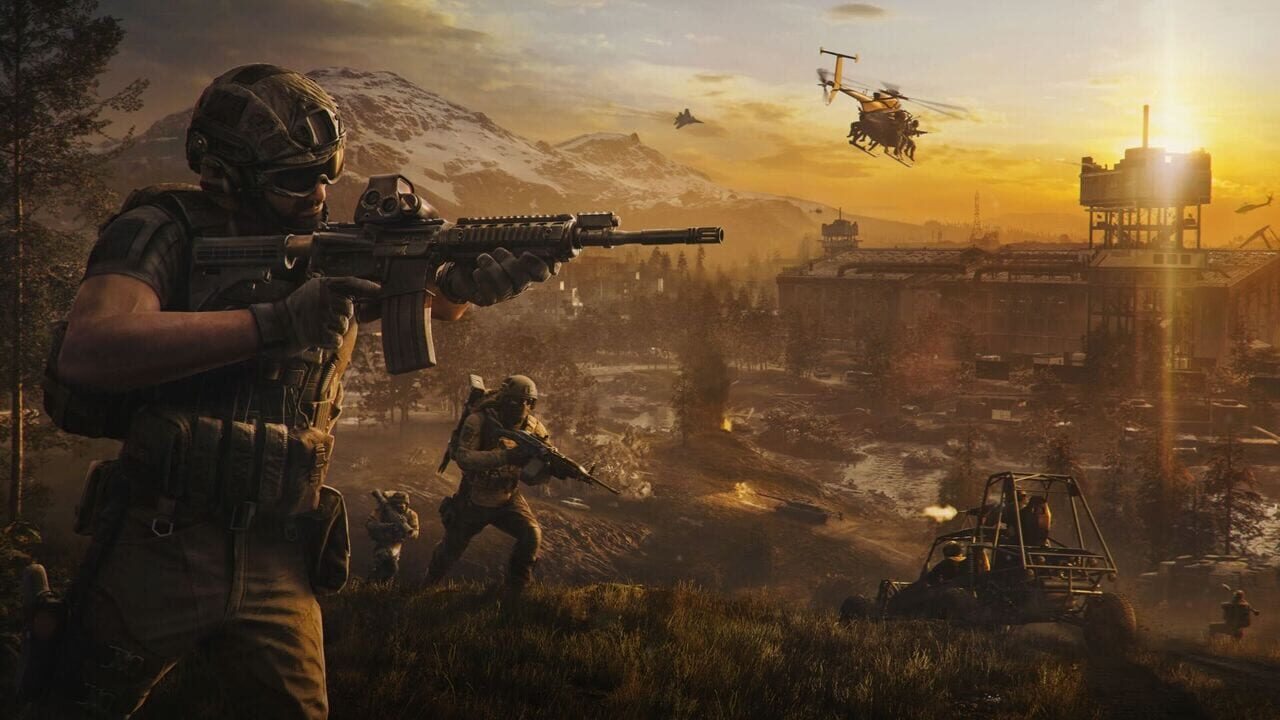
Wardogs Skills Guide 2026: Best Builds & Tactics
Intro
Welcome to the Wardogs 2026 Skills Guide — your playbook for mastering the skill system and building effective loadouts. Whether you run recon, hold the line with automated defense, or support your squad from the shadows, knowing how to combine gear and positioning is what separates veterans from rookies. This guide covers every core skill tied to Wardogs equipment, including the IR Rangefinder, IR Goggles, and the Close-In Weapon System (CWIS), along with deployment advice, tactical pairings, and answers to the most asked questions. Let’s get into it.
Core Mechanics
| Skill / System | Role | Primary Use | Key Detail |
|---|---|---|---|
| IR Rangefinder | Recon & Targeting | Measure distances via IR spectrum for accurate fire | Feeds range data to your squad’s targeting |
| IR Goggles | Vision & Detection | Enhanced low-light/night vision for spotting enemies | Detection-focused, distinct from rangefinder |
| CWIS (Close-In Weapon System) | Defensive Turret | Automated point-defense against incoming threats | Key team-defense tool for area denial |
| Base Station Skills | Deployment & Sustain | Set up and maintain forward positions | Supports base-heavy strategic gameplay |
Step-by-Step
1. Pick Your Core Skill Focus
Wardogs does not lock you into a single role, but efficiency demands commitment. Decide what you bring to the team: scout calling distances, eyes on the squad at night, or the anchor holding a position with automated defense.
- Scout-oriented → Prioritize IR Rangefinder builds. Your value is feeding targeting data to your squad.
- Vision-oriented → Go all-in on IR Goggles. You become the night-shift specialist, spotting enemies before they spot you.
- Defense-oriented → CWIS is your bread and butter. Plant it, maintain it, and let it do the work while you reposition.
2. Load Out Your IR Rangefinder
The IR Rangefinder’s performance envelope depends on calibration and coordination. Here’s what matters:
- Calibrate before engagements. A misaligned rangefinder gives false distance reads, which translates directly to missed shots from your team.
- Pair it with a spotter. Your range data is only as good as the person acting on it. Coordinate with an ally carrying heavy firepower and trust their callouts.
- Keep it mobile. Don’t dig in behind a rangefinder — you’re a recon asset, not a bunker. Move, call range, reposition, repeat.
3. Master IR Goggles for Night Ops
IR Goggles complement the rangefinder but serve a different purpose: detection.
- Scan before committing. Sweep the area with IR active before moving in. Enemy heat signatures will pop if they’re unaware.
- Conserve power. IR systems drain battery. Plan your cycles — short bursts of IR observation followed by passive vision periods.
- Communicate calls. “Two hostiles, 40 meters northeast, behind the ridge” beats silent spotting. Your team needs verbal or ping confirmation.
4. Deploy and Manage CWIS
CWIS is your area-denial tool. It requires positioning and attention — not set-it-and-forget-it.
- Place it at choke points. Doors, narrow corridors, bridge approaches — anywhere enemies funnel through a tight space.
- Don’t cluster turrets. One CWIS per critical entry point. Stacking two in the same lane wastes potential; spread them to cover multiple approaches.
- Monitor ammo and heat. CWIS can overheat or run dry. Have a plan for swapping or retreating when yours goes dormant.
- Use it as a distraction. An active CWIS draws enemy fire and attention, creating openings for flanking maneuvers.
5. Combine Skills for Maximum Impact
Top players chain skills together rather than relying on one in isolation:
- IR Rangefinder + CWIS — You call ranges on approaching enemies; CWIS engages at the distances you identify. The scout-to-defense pipeline.
- IR Goggles + Flanking Team — You spot enemies at night; your movement squad rotates in and eliminates the targets you revealed.
- IR Rangefinder + IR Goggles — Stack both for superior recon. Rangefinder gives distance; goggles give detection. Together, you’re the most dangerous information node on the map.
6. Adapt After Updates
The community has seen balance adjustments recently. Always test new setups in practice or casual matches before committing in ranked play. Skill viability can change, and adapting fast is part of being a top-tier Wardogs player.
Always check patch notes after updates. What was strong last month may shift, so stay flexible with your builds.
Combat Roles
Recon / Scout Role
Your job is information. IR Rangefinder and IR Goggles are your tools. Stay mobile, stay hidden, and feed your team everything you see. You’re the eyes — don’t trade that for a turret.
Defense / Anchor Role
CWIS is your anchor. Pick positions with natural choke points and multiple angles. A well-placed CWIS can control an entire lane. Cover your blind spots with a teammate or a secondary turret.
Support Role
Hybrid builds work here. Carry IR Rangefinder for your team’s accuracy and IR Goggles for night ops support. You enable everyone else on the squad while staying useful across all scenarios.
Advanced Tactics
Positioning With IR Systems
IR equipment is most effective with smart positioning. Never stand in the open while using your rangefinder — you’re a high-value target the moment you reveal your location. Use terrain: hide behind cover, peek out only when you need a reading, then relocate. The same applies to IR Goggles — deploy from concealed positions where enemies can’t target you back.
Resource Management
IR Rangefinders and Goggles both consume power. Track remaining capacity during matches and know when to cycle back to passive vision. Running out of IR mid-fight leaves your team blind. Carry spare batteries or schedule deliberate retreats to recharge. CWIS turrets have ammo limits — disengage and redeploy rather than firing until empty.
Communication Discipline
Your skill value is only as good as your ability to relay information. Practice short, clear callouts: distance, direction, number of hostiles, cover status. Avoid long sentences during active firefights. Use the ping system if voice chat isn’t available, but don’t spam pings — economy matters.
Tips
- IR Rangefinder is a team skill, not a solo skill. Its value multiplies when someone acts on your data. Solo rangefinding without a partner is just expensive target practice.
- CWIS has a blind spot directly underneath it. Don’t place it in the middle of an open room with no walls — enemies will close the distance and destroy it before it tracks them.
- IR Goggles reveal movement, not intent. Just because you see a heat signature doesn’t mean you know what that enemy is doing. Watch for patterns — a static signature is different from a pacing one.
- Skill synergy beats skill quantity. Two well-combined skills beat three unrelated ones. Build interconnected loadouts.
- Save your cooldowns for objective moments. Don’t burn your IR scan or CWIS deployment on a minor skirmish. Hold skills for pushes on objectives or last-stand defenses.
- Voice or ping discipline matters. “Contact, left, IR” wins fights. Clarity beats volume every time.
- Re-evaluate after every match. What worked? What got you killed? Adjust your skill choices based on actual performance, not theory.
- Watch the meta, don’t chase it blindly. Updates may push certain builds to the top, but the best counter to a popular skill is a well-timed flank.
Game Overview
Wardogs is a squad-based tactical shooter inspired by the cult film, featuring anthropomorphic canine warriors in a gritty dystopian battlefield. Players choose from a roster of roles — recon, defense, and support — each equipped with unique gear and abilities. The game rewards coordinated plays over individual heroics, emphasizing positioning, teamwork, and skill synergy. Battle across destructible environments with vehicles, turrets, and deployable equipment. IR Rangefinder, IR Goggles, and CWIS are core systems that define loadout strategy. Whether you’re calling fire missions or holding a choke point, every decision ripples through your squad’s effectiveness. Regular updates refine balance, keep the meta fresh, and reward players who adapt quickly.
Related Guides
FAQ
What is the best skill build in Wardogs 2026?
The top build pairs IR Rangefinder with CWIS for a recon-to-defense pipeline, feeding range data directly into automated turret coverage.
How do IR Rangefinder and IR Goggles differ in Wardogs?
IR Rangefinder measures precise distances for targeting; IR Goggles detect heat signatures in low light. They complement each other but serve separate roles.
Where should you place CWIS in Wardogs?
Place CWIS at choke points like doorways, narrow corridors, and bridge approaches where enemies are forced through a tight path.
Can you play Wardogs solo with IR skills?
Yes, but IR Rangefinder is significantly weaker alone since its value multiplies when a teammate acts on your range data. Solo IR Goggles work fine for survival and spotting.
Reviewed & verified
| Covers | wardogs |
| Last verified | October 8, 2026 |
| Accuracy | The game’s own numbers and rules — they change with patches; check in-game for live values. |
Discussion
0 commentsNo comments yet. Be the first!