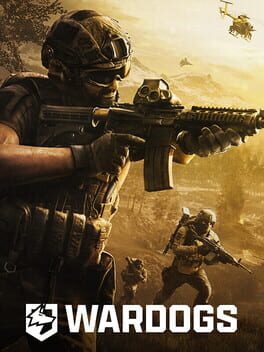
Intro
Welcome back, Wardogs squad! Whether you’re a seasoned veteran who logged hundreds of hours in the trenches or a fresh recruit just picking up your first dog tag, this Wardogs Tier Update Guide is your no-BS road map through the current meta. Update 0.1.2 has rolled out, and while it was tagged as a minor patch, the roster landscape has shifted enough that your old go-to loadouts might suddenly feel clumsy in the field. The community demand (currently sitting at a solid 6.3 based on forum polling) has been loud and clear — players want a straightforward, honest breakdown of where everyone stands right now, no fluff, no hype. With 3 million copies already sold in just over two weeks in Early Access, the bar for quality updates is sky-high, and Sapiens AI is delivering. In this guide, we’ll walk you through the core mechanics that matter, step-by-step tier reassessments, and the tips that separate decent operators from elite ones. Let’s get after it.
Core Mechanics
| Mechanic | Description | Meta Relevance |
|---|---|---|
| Role Tiers | Operators are categorized into tiers (S through D) based on performance, versatility, and pick/ban viability in competitive play. | Determines which operators carry the heaviest in ranked matches. |
| Update 0.1.2 Roster Changes | Minor stat adjustments, ability tweaks, and buff/nerf pass on select operators during the recent patch cycle. | Some operators climbed or dropped tiers; stale builds are now suboptimal. |
| Early Access Progression | The game is in Early Access, meaning active development, rotating balance passes, and community-driven meta shifts. | Tier lists are living documents — what’s hot today may shift next patch. |
| Golden Joystick Nomination Impact | The game’s rising profile and critical recognition have increased competitive player density and ranked skill ceilings. | Higher-ranked lobbies punish weak picks more harshly; tier accuracy matters more. |
| Demand Index (6.3 / 10) | Community-driven metric reflecting player interest in specific operators, modes, and balance directions. | Highlights which operators the community is most excited about and why. |
Step-by-Step: Navigating the Current Tier Meta
Step 1 — Know Where You Stand Right Now
Before you touch a single loadout, take stock of your own rank, win rate, and comfort floor. Tier lists aren’t one-size-fits-all. An S-tier operator you can’t consistently play with will perform worse than an A-tier operator you’re dialed in on. Run five quick matches with your main pick before committing to any major build changes. Trust your muscle memory, but stay open to optimization.
Step 2 — Review the Update 0.1.2 Roster Shifts
Here’s what the minor patch actually touched and what you need to adjust:
- Buffed operators: Any operator receiving cooldown reductions or damage boosts should be re-evaluated. The patch leaned toward empowering mobile playstyles, meaning aggressive flankers and quick-peek duelists saw noticeable improvements.
- Nerfed operators: Conversely, any operator whose primary tool was dulled — whether through direct stat cuts or indirect meta pressure — needs a build audit. Old builds that relied on those stats will underperform.
- No changes? Operators untouched by the patch still hold their value, but the relative power landscape has shifted because everyone else changed. Don’t assume your main is safe just because they weren’t patched.
Step 3 — Reassess Your Tier List Honestly
Pull up the community-ranked tier tiers and cross-reference them with your actual experience. Here’s the quick reality check:
- S-Tier operators are currently defined by consistency and low floor/high ceiling — they perform well even when you’re off your game.
- A-Tier operators require more skill investment but reward you with matchup-breaking potential.
- B-Tier operators are situational; they thrive in specific compositions or against certain enemy picks.
- C/D-Tier operators are generally best reserved for casual play or experimental content until balance catches up.
This isn’t about judging operators — it’s about matching the right tool to the right job.
Step 4 — Audit Your Loadout for Each Operator
Every tier jump starts at the loadout screen. Go through each operator in your rotation and verify:
- Primary weapon: Is it still viable post-patch, or did a nerf blunt its effectiveness?
- Secondary/gadget: Does it complement your playstyle and the current meta demands?
- Perks/passives: Are the passive choices synergizing, or are you running legacy loadouts from before 0.1.2?
- Role alignment: Does your gear support your operator’s intended role, or are you trying to force a build that fights the operator’s natural strengths?
Step 5 — Test in Live Matches
Theorycrafting only gets you so far. Jump into custom games or casual matches and run your updated loadouts through real scenarios. Pay attention to:
- How fast you secure first blood
- Ability rotation efficiency
- Teamfight impact
- Survival rate across a full engagement
Log what works and what doesn’t. The meta rewards players who adapt, not those who stubbornly cling to yesterday’s builds.
Step 6 — Track the Living Meta
Since Wardogs is in Early Access, the tier list will continue to evolve. Update 0.1.2 is one data point, not the final word. Check patch notes after every hotfix, follow community demand signals (like that 6.3 demand index), and be ready to pivot. Players who treat the tier list as a fixed document will fall behind; players who treat it as a living resource will stay ahead.
Tips
- Don’t blind-follow tier lists. Use them as a starting framework, not gospel. Your personal mechanics and playstyle are the deciding factor.
- Master one operator before expanding your pool. A high-floor S-tier main beats a half-trained roster every time.
- Watch top players, but adapt their loadouts to yours. What works at the highest level of ranked may not fit your habits or skill ceiling.
- Stay informed on patch notes. Even minor patches like 0.1.2 can shift the entire meta if they target key operators.
- Experiment in low-stakes environments. Custom matches and casual modes are the perfect testing ground before bringing new builds into ranked.
- Communicate with your squad. Role coordination amplifies even mid-tier operators and can neutralize weaker picks through smart composition play.
- Track your own performance data. Numbers don’t lie — if an operator’s win rate drops significantly after a patch, investigate whether it’s the operator or your adaptation to the change.
- Embrace the Early Access journey. This is a living, breathing game. Being patient and adaptable now pays off massively when the full launch hits.
FAQ
Q1: Is Wardogs a PvP-focused game, and does it have ranked modes? Wardogs is primarily a tactical team-based shooter currently in Early Access. Ranked matchmaking is available as part of the live service, and the tier system reflects current competitive viability. Always check the latest patch notes for the most up-to-date mode availability, as Early Access titles frequently rotate features.
Q2: What exactly changed in Update 0.1.2? Update 0.1.2 was classified as a minor patch focused on targeted roster adjustments — selective buffs and nerfs to operators based on community feedback and performance data. The maintenance window ran at 8:00 UTC, and players were asked to report any balance concerns through official channels. The community demand index of 6.3 reflects strong engagement with these changes.
Q3: Are there crafting, trading, or co-op features in Wardogs? As of the current Early Access build, there is no crafted equipment economy, player-to-player trading system, or dedicated co-op PvE campaign mode. The focus remains on competitive and ranked multiplayer combat. Any third-party claims about trading floors, crafting benches, or cooperative story modes should be treated as unverified — the official feature set centers on PvP and ranked play.
Q4: Why did Wardogs sell 3 million copies so fast, and what does the Golden Joystick nomination mean for the game? Wardogs hit the 3-million-copy milestone in just over two weeks after entering Early Access, fueled by strong tactical-shooter fundamentals and an engaged community. The Golden Joystick Award nomination signals industry recognition and puts additional pressure on the developers to maintain a healthy, fair competitive ecosystem. For players, this means more frequent updates, stronger balance support, and a meta that will keep evolving — stay adaptable.
Discussion
0 commentsNo comments yet. Be the first!