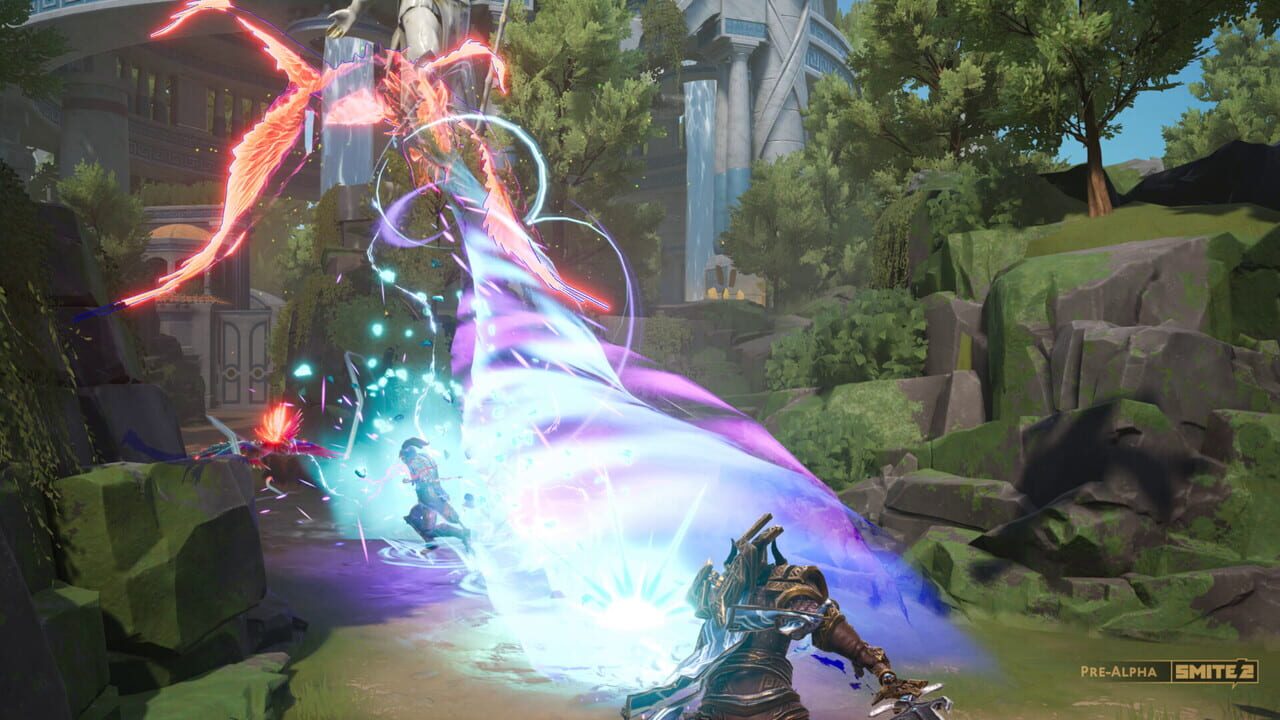
Smite 2 is Hi-Power/Spil Games’ sequel to the original Smite, a free-to-play MOBA where you play as gods and heroines from around the world. The sequel is a full reboot with a new engine, a new map, and a refreshed roster. This guide walks you through your first few weeks: picking a god, learning the lane roles, and understanding the teamfight basics.
Note: Smite 2 is a new sequel and is updated regularly. God balance, item builds, and map rotations shift between patches. The strategies below are evergreen, but check the in-game god stats and the official site for what is meta this season.
Before you start: know the three pillars
- God-based MOBA. Each god has a distinct role and playstyle.
- Five lanes. Each team fills five roles: top, mid, jungle, bot, and support.
- Teamfights. The game is won through coordinated teamfights, not solo plays.
Your first week: pick a god
- Tank. High survivability, engages the teamfight.
- Fighter. Mid-damage, sustained, can engage or peel.
- Assassin. High burst, low survivability, kills the carry.
- Mage. High burst, low survivability, backline.
- Marksman. High sustained damage, fragile, backline.
- Support. Buffs, heals, and peels for the team.
Pick the god whose role and playstyle you enjoy. For a solo beginner, Tank is the most forgiving — it has the best early survivability and the smoothest skill set. For a player who wants to carry, Marksman is the most rewarding.
Play 20 matches. Do not worry about winning. Your goal is to learn how your god’s skills, cooldowns, and positioning work in concert.
Week 2: learn the early game
- Last-hit minions. Last-hitting minions gives you gold. Practice this in the early game.
- Wave control. Push the wave to your side of the map. Do not over-extend.
- Gank timing. If you are Jungle, gank when the enemy is over-extended.
- Vision. Use wards to track the enemy’s position. If you do not know where they are, you are at a disadvantage.
Week 3: understand teamfights
- Engage. The Tank or Jungle starts the fight. The rest follow up.
- Peel. The Support protects the Marksman and Mage.
- Positioning. The Marksman and Mage stay in the back. Do not over-extend.
- Objectives. Fight for the map objectives when your team is ready. Do not force a fight.
Week 4: draft for the ladder
- Draft around the enemy. If the enemy has a strong engage, pick a peel-heavy team.
- Pick a carry. Every team needs a Marksman or Mage to close out the game.
- Ban the enemy’s best. In ranked, ban the enemy’s strongest god.
By day 30 you should have:
- A main god that you are comfortable playing.
- A draft template that you know by heart.
- A teamfight understanding that you can apply in ranked.
FAQ
Is Smite 2 free to play?
Yes. You can earn all gods in-game for free. Cosmetics and convenience items are optional.
What is the best god for beginners?
Tank. It has the best early survivability and the smoothest skill set. If you want to carry, Marksman is the most rewarding.
How fast do you rank up?
Ranking is fast in the early game and slows down as you approach the higher ranks. Check in-game for the current rank system.
Should I spend money?
No. The free-to-play model is designed to be fully playable. Spending money only speeds up the process.
How many gods should I learn for ranked?
Two or three, not five. In ranked, the player who knows their main god’s cooldowns and positioning better than the enemy team wins most lane fights. A pool of five gods means you are not good at any of them.
Should I ban a meta god or the enemy’s main?
Ban the enemy player’s main. The enemy has played that god 100 times. Banning it is more valuable than banning a meta god the enemy has not used before. Check in-game for the enemy player’s recent matches.
What should my first item be?
The first item should match the role. Damage for the carry, health for the tank, mana for the mage, boots for everyone. Check in-game for the best first items for each god.
Smite 2: Hero Pick Tips for Ranked
Ranked draft is where most beginners lose. The mistake is not picking the wrong god — it is not thinking about why you are picking a god. Here is how to actually draft.
- Pick a main, not a pool. If you have five gods you can play, you will not be good at any of them. Pick two or three gods and learn them deeply. In ranked, the player who knows their main god’s cooldowns and positioning better than the enemy team will win most lane fights.
- Draft around the enemy, not the meta. The meta is a starting point. If the enemy picks a team with a long cooldown engage, your team should have peel. If the enemy picks a team that is strong early, your team should have a strong late-game carry. Check the enemy picks before you lock yours.
- Do not pick a god just because you like the art. Every god has a role. If you pick an assassin because you like the model but you have no peel, your carry will die. Pick the god that fills the role your team needs.
- Ban the enemy’s main, not the meta. In ranked, the enemy player has a main god they have played 100 times. Ban that god. It is more valuable than banning a meta god the enemy has not used before. Check in-game for the enemy player’s recent games.
- Pick a support that matches your lane. If your lane is a weak early lane, pick a support that is strong early. If your lane is a late-game carry, pick a support that scales. The support should not be a different style from the lane.
Check in-game for the current god stats, the draft screen, and the enemy player’s recent matches.
Smite 2: Item Build Priority
The item build should answer one question: what does this god need right now? The most common mistake is buying the meta build when the game is not the meta.
- First item is the most important item. Your first item defines the next five minutes. For a Marksman, a damage item early usually wins the lane. For a Tank, a health item early makes you impossible to kill. For a Mage, a mana item early keeps you casting.
- Boots early, not late. Boots are not a luxury item. Buy them as soon as you can. The movement speed changes how you fight every skirmish. Check in-game for the current boots options and which one matches your god.
- Match the enemy, not the guide. If the enemy team is heavy on burst, you want survivability items. If they are slow, you want speed items. If they are stacked on one type, you want a type-counter item. The guide is a starting point, not a script.
- Do not skip the core item. Every god has one or two core items that define them. If your core item is not bought by minute 10, you are behind.
- Adapt the build to the game, not to the meta. If the game is going a different direction than the meta, your build should go with it.
Check in-game for the current item list and the best first items for each god.
Keep exploring
- Smite 2 on MMOKB — the Smite 2 game hub has the full knowledge base, tools and guides.
- Browse the full library — all MMOKB guides
Reviewed & verified
| Covers | Smite 2 |
| Last verified | November 24, 2026 |
| Accuracy | The game’s own numbers and rules — they change with patches; check in-game for live values. |
Discussion
0 commentsNo comments yet. Be the first!