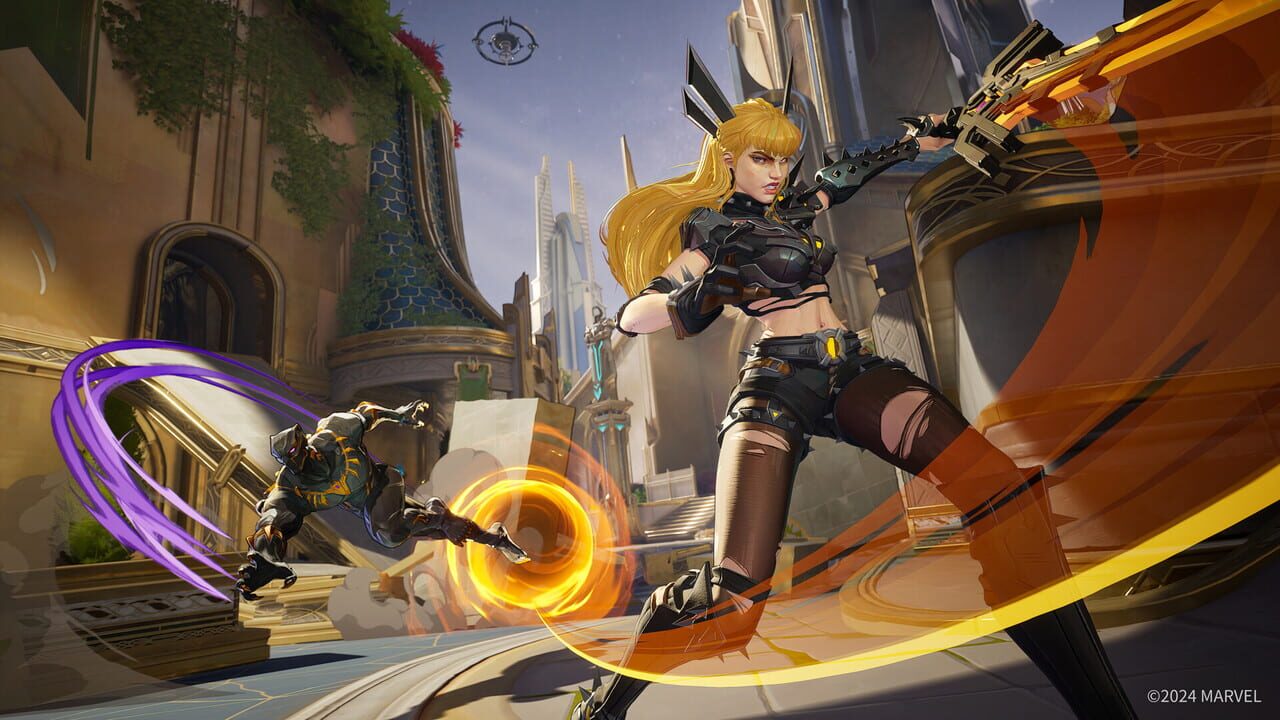
Marvel Rivals Solo Play Guide
Intro
Playing Marvel Rivals solo doesn’t mean you’re powerless — it means you have to make smarter calls every round. This guide breaks down how to survive, contribute, and climb even when you’re not rolling with a pre-made squad. Whether you queue solo into competitive brawls, hop into co-op Infiltration missions, or just want to grind heroes at your own pace, these tips cover what actually works. We’ll look at hero roles, positioning basics, objective awareness, and meta picks that carry well without constant team coordination.
Core Mechanics
| Mechanic | What It Is | Why It Matters Solo |
|---|---|---|
| Hero Roles | Tank, Damage, Support — each has a distinct job in team fights | Solo players must self-identify role and play accordingly |
| Ultimate Ability | A powerful ability that charges through combat actions | Ult economy matters; don’t hoard, don’t waste |
| Rival Ability | A secondary hero-specific ability beyond the ult | Adds depth to combos and playstyle flexibility |
| Objectives / Brawn | Map-controlled points or payload movement that end the round | Solo players who ignore objectives lose impact fast |
| Team Synergy / Links | Certain hero pairings activate special combo abilities | Less relevant solo, but worth knowing for pick order |
| Spectate & Cooldown Tracking | Watching enemy ult timing and ability cooldowns | Solo play demands better info-gathering yourself |
| Pick/Ban Draft | Pre-match hero selection phase with bans | Solo queue draft requires reading enemy comp threats |
| Solo Queue Matchmaking | You enter the general pool without a full squad | Longer waits, unpredictable teammates, self-reliance required |
| Infiltration Co-op PvE | Team-based vs. AI mission mode | Solo-infiltration is possible; different pacing than PvP |
Step-by-Step
Step 1 — Pick a Solo-Friendly Hero
Not every hero is built for solo queue greatness. You want characters who can influence fights independently, recover from mistakes, and don’t rely on precise teammate coordination.
Tank picks for solo: Look for tanks with strong peel, self-sustain, and clear engage tools. A tank who can survive a mistake and still hold a line is gold in solo queue where cleanup isn’t guaranteed.
Damage picks for solo: Pick characters with good mobility, self-peel, and consistent DPS. Heroes who can pick off isolated targets and disengage safely give you agency in messy solo teams.
Support picks for solo: Supports who can contribute damage or have self-defense tools are more solo-viable. Pure healers with no way to survive alone struggle when your team misses positioning.
Step 2 — Master One Role Before Expanding
Solo queue chaos rewards specialization. Rather than hopping between roles every match, lock in one main role and climb the competency ladder. When you deeply understand one archetype, you can recognize mismatches in the draft and adapt your play within that framework instead of fumbling across all three.
Step 3 — Learn the Map Objectives Cold
In Marvel Rivals, the match isn’t won by kills alone — it’s won by controlling what the map forces you to control. Whether it’s a payload, an attack/defend point, or an objective room, you need to know:
- Where objectives spawn and their timers
- Which angles control the objective
- Where enemies can flank
- The shortest path to reposition after an objective push
Solo players often die trying to chase kills when they should be holding position. Stop chasing. Hold ground.
Step 4 — Manage Your Ultimate Like Currency
Your ult is your most impactful tool, and solo players tend to either:
- Waste it — popping on low-value targets or when the team isn’t following up
- Bottle it — holding until it’s too late to use effectively
Treat your ult like a budget. Spend it when the return is clear. If you secure a key elimination or force the enemy to use their defensive ult, that’s a fair trade.
Step 5 — Communicate What You Can
You don’t have a voice chat squad, but solo queue still benefits from pings and quick chat. Use ping systems to call out:
- Enemy ults you see
- Objective status
- Flank warnings
- Ready-to-ult signals
It costs nothing and can prevent teammates from making fatal mistakes. You can’t control your team, but you can reduce the odds they make the wrong call.
Step 6 — Review Your Deaths
Every death in solo queue is data. Ask yourself:
- Was I out of position?
- Did I overcommit without an escape?
- Did I ignore a flank I should’ve seen?
- Was I fighting a matchup I shouldn’t have engaged?
Pattern-spotting your deaths is faster than grinding matches. Fix the pattern and your win rate follows.
Step 7 — Rotate Between Modes to Stay Fresh
If ranked solo starts feeling stale, switch to Infiltration co-op PvE missions. These let you practice hero combos, test builds, and have fun without the ranked pressure. When you’re ready to climb again, you’ll come back sharper.
Tips
- Meta checks matter. The balance pass shifts heroes. Don’t main a hero who just got squashed unless you’re prepared for the climb. Quick patch reads keep your pool relevant.
- Pick anti-meta counters. If the enemy team is stacked with squishy DPS, bring a dive-oriented hero. If they’ve got heavy frontline, go poke or sustain. Read the draft and adjust.
- Don’t feed the enemy team’s momentum. After you die, wait for your respawn and reposition — don’t immediately run back into the same fight you just lost.
- Track enemy cooldowns. If you know the enemy tank used their big defensive ability, that’s your window. Solo players who memorize enemy ult timings gain a massive information edge.
- Stay near cover. Standing in the open is solo queue suicide. Peek, shoot, retreat. Never hold an angle longer than necessary.
- Play the objective, not the kill feed. A single objective secure beats three flashy eliminations that don’t move the round forward.
- Watch your positioning relative to your team. Solo queue teammates disconnect or go off alone constantly. Position yourself so you can swing between fights rather than getting stranded.
- Use the Spectate system wisely. Between rounds or when eliminated, watch the enemy perspective. You’ll spot flanks and ult timings your own POV hides.
- Limit hero-hopping. Picking a new hero every match prevents skill retention. Stick with 2–3 heroes per role until they feel second nature.
FAQ
Q1: Can I really climb solo in Marvel Rivals? Yes, but expect a harder climb than with a coordinated squad. Solo queue demands stronger individual game sense, better positioning, and sharper decision-making because you can’t rely on teammates to cover your mistakes. Focus on one hero pool, track your deaths, and prioritize objectives over kills.
Q2: What heroes are best for solo queue right now? Heroes with self-sufficiency tend to shine in solo queue. Tanks with self-peel and sustain, damage heroes with mobility and escape tools, and supports with defensive options are all strong picks. Check the latest balance patches for the current meta.
Q3: Is Infiltration co-op worth playing solo? Absolutely. Infiltration is a co-op PvE mode where you fight AI enemies. Playing it solo lets you practice hero combos, test builds, and have fun without the ranked pressure. It’s a great way to stay sharp between competitive sessions.
Q4: How important is ult management in solo queue? Extremely. In solo queue, follow-ups are unreliable, so wasting your ult on a low-value target or holding it until it expires costs you the round. Treat your ult like currency — spend it when the return is clear and the timing is right.
Q5: Does Marvel Rivals support PvP arena or trading? No. Marvel Rivals does not feature a dedicated PvP arena mode separate from its ranked and casual matches, and it does not include player trading or a player-vs-player arena system. Focus on ranked solo queue and Infiltration PvE for progression.
Keep exploring
- Marvel Rivals on MMOKB — the Marvel Rivals game hub has the full knowledge base, tools and guides.
- Read the Marvel Rivals knowledge base — Vanguard, Duelist, Strategist, Roster.
- More Marvel Rivals guides — Marvel Rivals Achievements: 2026 Step-by-Step Completion Guide, Marvel Rivals Advanced Strategies Guide, Marvel Rivals Builds & Farming Guide 2026, Marvel Rivals Best Builds, Marvel Rivals Boss Guide 2026: Proven Strategies, Marvel Rivals Combat Guide 2026: 5 Pro Tips for Dominating.
- Browse the full library — all MMOKB guides
Reviewed & verified
| Covers | marvel-rivals |
| Last verified | November 4, 2026 |
| Accuracy | The game’s own numbers and rules — they change with patches; check in-game for live values. |
Discussion
0 commentsNo comments yet. Be the first!