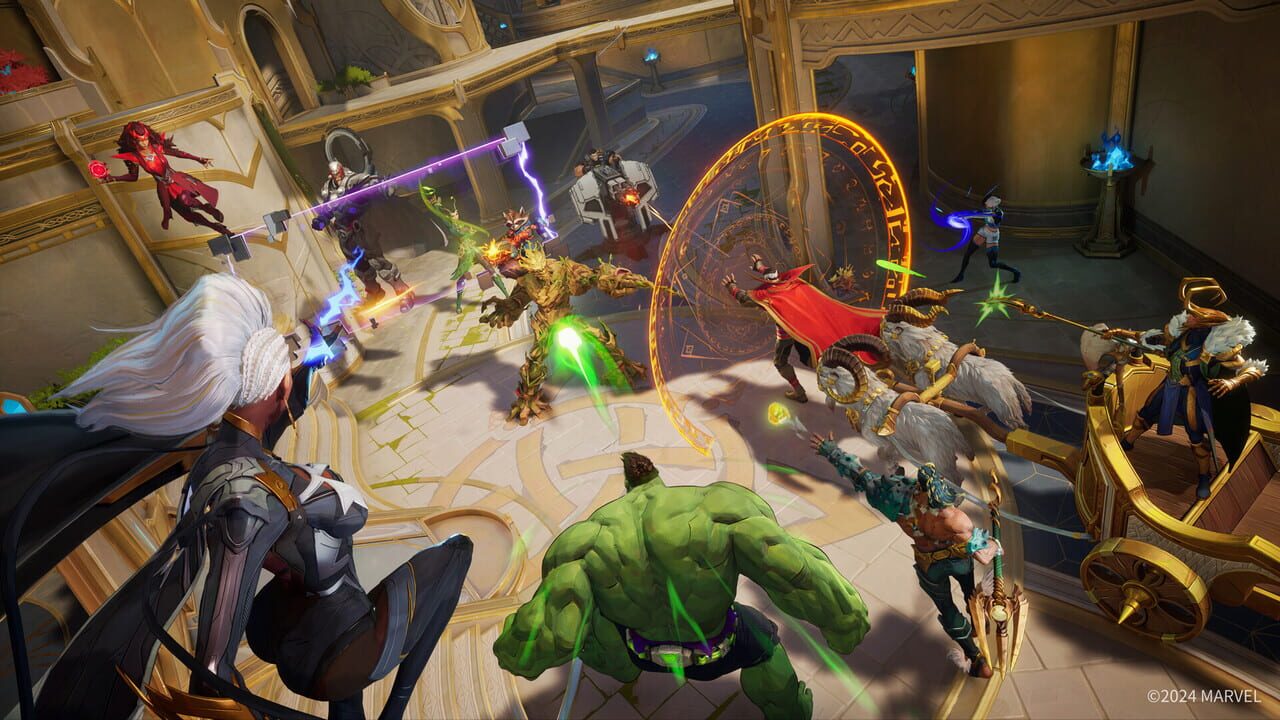
Marvel Rivals Advanced Strategies Guide
Hey there, Rivals! If you’ve been grinding matches and still feel stuck in a rank bracket, you’re in the right place. This Marvel Rivals Advanced Strategies Guide is built for players who already know how to fire a blaster and swing a hammer — now it’s time to level up the brainy side of the battlefield. Whether you’re climbing Competitive, running rated matches, or just want to stop feeding the enemy team’s ult economy, this guide drops actionable intel you can use next session. Marvel-rivals rewards smart positioning, role awareness, and knowing when to commit vs. when to peel. We’ll break down the core mechanics that separate good players from consistent winners, walk you through step-by-step decision trees, and share tips that hit different every round. Let’s get into it.
Core Mechanics
| Mechanic | What It Does | Why It Matters at High Levels |
|---|---|---|
| Role Trio (Tank / Damage / Support) | Every squad runs one of each; heroes are locked to a role band. | Balanced compositions win fights; missing a role = broken synergy and lost object points. |
| Team Composition Synergy | Certain heroes amplify each other (e.g., peel + dive, armor buff + frontline). | A composed team out-durability-trades even when individually out-aimed. |
| Ultimate Economy | Ultimate Charge builds through damage dealt, damage taken, healing, and objectives. | Hoarding ults wastes pressure; spending at the right moment flips rounds. |
| Objective Control | Payload push, Domination points, or mission-specific goals drive matches. | Kills without objective play rarely close rounds; map control > kill count. |
| Positioning & Terrain | Cover, high ground, and choke points vary by hero mobility. | Good angles multiply effective DPS; bad angles erase it regardless of gear skill. |
| Counter-Picking | Some heroes hard-counter specific enemy choices (mobility vs. zoners, burst vs. sustain). | Smart bans and picks shut down enemy game plans before the fight starts. |
| Map Awareness | Mini-map, sound cues, and sightlines communicate enemy movement. | Tracking flanks prevents backline suicides and enables picks. |
Step-by-Step
Step 1 — Draft Phase: Read the Enemy, Not Just Your Pool
Start every match by scanning the enemy roster. Identify their win condition: are they diving your backline? Holding angles? Chasing payload? Match that against your available counters. If they lock in heavy dive (Mobility-heavy assassins), prioritize peel and zoning on your end. If they play methodical angle control, bring disruptors and recon heroes. The draft is where rounds are won before anyone swings.
Don’t auto-lock your comfort pick. Your team needs role coverage first, comfort second. A well-played sub-optimal hero beats a poorly played perfect fit every time.
Step 2 — Early Round: Establish Map Presence
Once the match starts, your opening 30 seconds set the tone. Tanks should post early vision and hold key corridors. Damage heroes should rotate toward contested zones rather than farming alone. Supports should anchor near high-traffic routes where team survival matters most. This isn’t about getting first blood — it’s about controlling information and tempo.
Use your movement abilities to scout. A single well-timed recon can deny the enemy an entire rotation.
Step 3 — Mid Round: Rotate Around Objectives, Not Kills
Here’s the mindset shift: kills are a means, not an end. After an engagement resolves, immediately assess where the objective is. If the payload is moving, reposition to contest it. If Domination is spawning, rotate toward the zone. Never chase a kill into a dead end while the team loses ground elsewhere.
Learn to trade intelligently. If your tank falls but the objective is won, that’s a net positive. If your support dies holding an empty lane, that’s a net negative. Calculate the exchange.
Step 4 — Late Round: Ultimate Timing Is Everything
This is where matches are decided. Save your big ultimates for cluster opportunities, not solo picks. A perfectly timed AoE ultimate on five grouped enemies is worth more than three individual eliminations scattered across the map. Communicate with your team: call out when ults are ready, coordinate simultaneous spends, and never spam individual ults in isolation.
Watch the enemy ult economy too. If they’ve spent theirs, that’s your window to force a fight. If they’re sitting on full charge, play conservatively and wait them out.
Step 5 — Post-Round: Review and Adapt
Between rounds, briefly assess what worked and what didn’t. Did the enemy rotate fast? Adjust your vision. Were your ults wasted? Hold tighter next time. Is a specific hero dominating? Consider a counter-pick on the next draft. The best players treat every round as data.
Tips
-
Communication beats mechanical outplays. A coordinated team with average aim wins over five uncoordinated pros every time. Use pings, callouts, and role clarity constantly.
-
Learn one hero per role deeply. It’s better to be unstoppable on three heroes than mediocre on fifteen. Master positioning, cooldown tracking, and matchup knowledge for your main picks.
-
Watch the minimap every three seconds. Glancing at the map should be as natural as reloading. It tells you where enemies are, where teammates are, and where objectives are heading.
-
Save peel for the right moment. Supports shouldn’t burn defensive cooldowns on random skirmishes. Hold them for when your carry is actually in danger.
-
Track enemy ultimates, not just health bars. A fully charged enemy ultimate changes the entire math of a fight. Adapt your positioning accordingly.
-
Rotate with purpose, not panic. When a fight breaks, move deliberately toward the objective or a defensible position. Running blindly toward the nearest teammate usually leads to clustered deaths.
-
Know your hero’s power windows. Some heroes are strong at low charge and weak at full; others invert that. Play to your strengths and avoid fights when you’re depleted.
-
Practice your settings. Sensitivity, crosshair placement, ability bind layout, and audio cues all matter. Spend five minutes in the training range adjusting these — it compounds over hundreds of matches.
-
Variance is normal. Even perfect plays lose sometimes. Focus on process improvement, not individual round outcomes. Consistency over time is what climbs ranks.
-
Stay updated on balance changes. Meta shifts happen regularly, and heroes that were tier-3 last month can become essential this month. Read patch notes and adjust your pool accordingly. The latest balance post has already begun tweaking heroes like Iron Man, so stay sharp on those adjustments.
FAQ
Q1: What’s the most important skill for climbing in Marvel Rivals? A: Team coordination and objective focus. Mechanical skill matters, but players who consistently win rounds understand that kills without purpose don’t close matches. Prioritize position, communication, and objective control above raw aim.
Q2: Should I main one hero or spread across multiple? A: Start by going deep on one hero per role until you reach a solid rank. Once you have fundamentals locked in, expand your pool to adapt to different matchups and countering. Versatility at a high level of proficiency is more valuable than shallow knowledge across dozens of characters.
Q3: How do I handle being consistently targeted by the enemy team? A: First, don’t tilt — it’s a sign you’re playing well enough to threaten them. Second, adjust positioning: stay near allies, use cover more aggressively, and avoid overextending for solo plays. Third, consider switching to a more durable or mobile hero if the matchup is unfair. Sometimes the best counter to focus fire is changing the board state entirely.
Q4: What role should I pick if I’m new to the game? A: Support is the most forgiving entry point. You contribute through healing and peeling even if your aim isn’t sharp yet, and you learn map control, objective timing, and team positioning faster than any other role. Once you’re comfortable, branching into Tank or Damage will feel much more natural because you already understand the rhythm of a match.
That’s your Advanced Strategies Guide for Marvel Rivals. Stick to the fundamentals, communicate with your team, and keep adapting every round. The climb isn’t about perfection — it’s about consistency. See you on the battlefield, Rivals.
Keep exploring
- Marvel Rivals on MMOKB — the Marvel Rivals game hub has the full knowledge base, tools and guides.
- Read the Marvel Rivals knowledge base — Vanguard, Duelist, Strategist, Roster.
- More Marvel Rivals guides — Marvel Rivals Achievements: 2026 Step-by-Step Completion Guide, Marvel Rivals Builds & Farming Guide 2026, Marvel Rivals Best Builds, Marvel Rivals Boss Guide 2026: Proven Strategies, Marvel Rivals Combat Guide 2026: 5 Pro Tips for Dominating, Marvel Rivals Controller Guide.
- Browse the full library — all MMOKB guides
Reviewed & verified
| Covers | marvel-rivals |
| Last verified | November 4, 2026 |
| Accuracy | The game’s own numbers and rules — they change with patches; check in-game for live values. |
Discussion
0 commentsNo comments yet. Be the first!