Intro
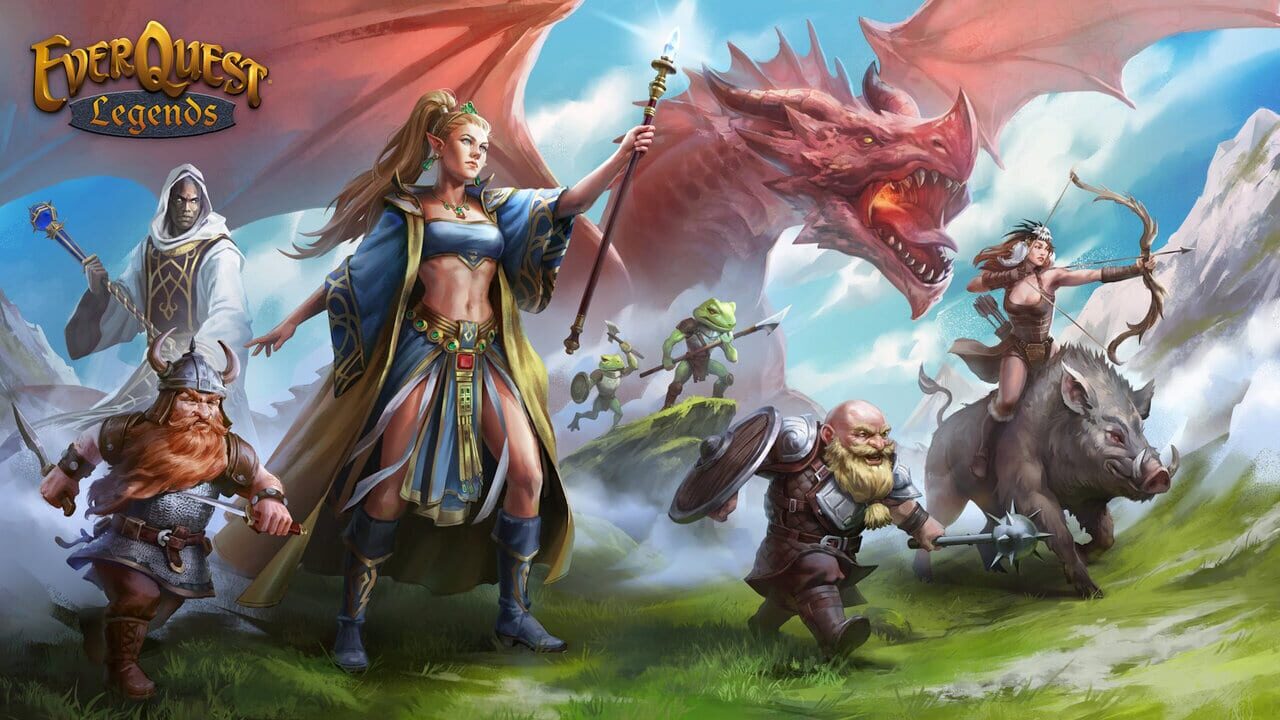
EverQuest Legends is a standalone, solo-friendly reimagining of the original 1999 EverQuest, built by Daybreak Games and the independent studio Game Jawn, and released in 2026. It takes the pre-Kunark era of Norrath — the part of the classic world that most of the modern EverQuest catalog has already moved past — and rebuilds it with restored sound and visuals and a set of quality-of-life enhancements that are the whole point of the new game. The original EverQuest is the first MMORPG, and this is the most accessible version of that world: the same place, the same early-day systems, and the friction of the 1999 client removed.
For a new player the game is one decision with two halves: you want the nostalgia, and you do not want the 1999 grind. This guide is a first-session order of operations: how the pre-Kunark rebuild differs from the classic-era wikis you may remember, how the solo-friendly progression actually works, and where the endgame is heading from the rebuilt base.
What Changed From Classic
The core world is the same Norrath, at the same moment in its history: pre-Kunark, the early-day era before the expansions that most of the classic community grew up with. What changed is the client around it:
| Change | What it removes | What it keeps |
|---|---|---|
| Restored sound and visuals | The 1999 audio and texture budget | The world, the zones, the early-day content |
| Quality-of-life enhancements | The client friction that made solo play painful | The early-day systems the community grew up with |
| Solo-friendly progression | The “you need a group for everything” wall | The progression loops, with the group made optional |
| Standalone game | The requirement to own or be inside the modern EverQuest | The pre-Kunark era as its own thing |
The last row is the important one. EverQuest Legends is not a mode inside the current game and not a server within it; it is a standalone title that takes the early era and builds the quality-of-life layer on top of it. The pre-Kunark content is the content, and the solo-friendliness is the design.
Your First Session, Step by Step
Step 1: Pick the Classic Class You Always Wanted
The pre-Kunark class list is the class list you may remember, and the rebuild keeps it. For a new player the decision is the one you have been putting off: the class you always wanted to play in the early era. The solo-friendly progression is there so that the class you pick is the class you can actually complete the game with, not the class you need a four-person party to make work. Pick the one you wanted, and the rebuild is the version that lets you finish it.
Step 2: Learn the Solo-Friendly Progression
The quality-of-life layer is the progression. In the classic game, the early era was a group era: the content was tuned for parties, and solo play was a side quest you did between group sessions. The rebuild retunes that. The solo lane is a lane, not a workaround: you can progress through the early-era content on your own, and the group content is an option, not a wall. For a new player the habit is: run the solo lane, and only pull a group when you actually want the group version of a piece of content.
Step 3: Bank the Early-Era Materials
The pre-Kunark era is the early era, and the materials it drops are the base layer of the deeper systems that come later. The mistake new players make is spending the early materials on the early gear, because it is the gear you have and it is the gear you are wearing. Bank the materials for the systems that come after the early era, and the early gear is a temporary thing you are replacing, not the thing you are building on.
Step 4: Decide How Much of the Group Era You Want
The solo-friendly design is the frame, not the whole. The group content is still there, and it is still the group content, and the moment you want the group version of a piece of content, the group is the thing you are playing. For a new player the honest question is how much of that you want: the solo lane is the base, and the group lane is the option you take when you want the group version.
Step 5: Read the Endgame From the Base
The rebuild is the base era, and the endgame is the part that comes after the early content. For a new player the habit is: finish the early era solo, bank the base-layer materials, and then read what the endgame is made of before you start building for it. The base is the entry, and the endgame is the thing the base is built for.
The Early-Era Content, in Practice
The pre-Kunark era is the content, and the era has a shape that the rebuild keeps. The zones are the zones, the factions are the factions, and the early-era content is the early-era content. What the quality-of-life layer changes is the way you move through it, not the things you are moving through. For a new player that is the frame: the content you remember, or the content you have read about in the classic-era wikis, is the content you are playing. The difference is the client around it, and the client is the one that makes the solo lane a lane.
Three habits fit the early era. The first is the zone: the early zones are the entry, and the zone you clear is the zone you bank from, because the materials of the era are the base layer of the systems that come later. The second is the faction: the early-era factions are the social layer of the era, and the faction you join is the faction you clear the era with. The third is the pace: the era is not the endgame, and the pace of the era is the pace of the entry, not the pace of the thing the entry leads to. The base is the entry, and the base is the base.
Tips
- Pick the class you wanted, not the class that levels fastest. The rebuild is the version that lets you finish the class you actually want.
- The solo lane is the base, not a workaround. Run it, and pull a group only when you want the group version.
- Bank the early-era materials. The base layer is what the deeper systems are built on; the early gear is the thing you replace.
- The group is the option, not the wall. The solo-friendly design is the frame; the group content is the thing you take when you want it.
- Finish the base before you build for the endgame. The base is the entry; the endgame is the thing the base is built for.
FAQ
What is EverQuest Legends?
A standalone, solo-friendly reimagining of the original 1999 EverQuest, built by Daybreak Games and Game Jawn and released in 2026. It takes the pre-Kunark era of Norrath and rebuilds it with restored sound and visuals and quality-of-life enhancements that make solo play the base lane.
Is it the same as EverQuest or EverQuest 2?
No. It is a standalone title built on the pre-Kunark era, not a mode inside the current EverQuest and not the EverQuest 2 era. The early-era content is the content, and the solo-friendly layer is the design.
Can I play the early content solo?
Yes. That is the point of the rebuild. The solo lane is a lane, not a workaround, and the group content is an option you take when you want the group version.
What is the pre-Kunark era?
The early part of Norrath’s history, the moment in the world before the expansions that most of the modern catalog has moved past. EverQuest Legends rebuilds that era as its base, with the solo-friendly layer on top.
First-session class, solo-lane, and material-banking habits documented for the rebuild. The base is the entry; the endgame is the thing the base is built for.
Keep exploring
- EverQuest Legends on MMOKB — the EverQuest Legends game hub has the full knowledge base, tools and guides.
- The classic era — the EverQuest hub holds the original 1999 game and the pre-Kunark era this rebuild is built on.
- Browse the full library — all MMOKB guides
Reviewed & verified
| Covers | EverQuest Legends |
| Last verified | November 4, 2026 |
| Accuracy | The game’s own numbers and rules — they change with patches; check in-game for live values. |
Discussion
0 commentsNo comments yet. Be the first!