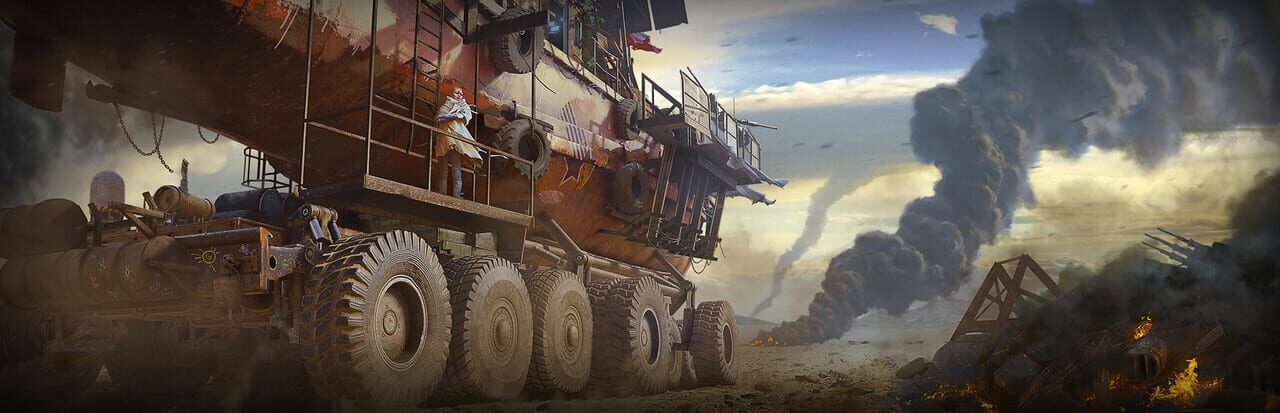
Crossout Beginner Guide 2026: Build Vehicles & Win Fights
Crossout is a post-apocalyptic vehicle combat MMO by Gaijin Entertainment. You scavenge the Wasteland, collect scrap, and assemble customized war machines for intense battles against other players and AI enemies.
This guide covers everything you need to start strong in 2026: vehicle building fundamentals, faction choices, Scavenge mode, the player market, and combat tactics that will keep you alive longer.
Note: Some specific faction level targets and market prices are estimated and may shift after updates. Always verify current values in-game or on CrossoutDB.
About the Game
Crossout launched in 2017 as an early access title and became a full release in 2019. It runs on the PhysX engine, giving destructible terrain and detailed vehicle damage modeling. You fight across several arenas set in a ruined world where factions war over remaining resources. The game receives regular seasonal updates, new parts, events, and balance patches. CrossoutDB remains the most reliable third-party resource for live part stats, market prices, and build sharing.
How Vehicle Building Works
Every vehicle in Crossout is built from modular parts in your garage. This is the single most important mechanic you will learn. Understand it early and you will beat players who just slap parts together.
Core Parts Breakdown
| Part Type | Role | What to Know |
|---|---|---|
| Frame | Structure | Determines connection points. Frames come in small, medium, and large sizes. |
| Cabin | Core | Provides your energy pool and base stats. If destroyed, you lose the match. |
| Weapons | Damage | Machine guns, shotguns, cannons, rocket launchers, and melee weapons. All consume energy. |
| Wheels / Tracks | Mobility | Wheels are fast but fragile. Tracks are slower but durable. Hover parts unlock at higher faction levels. |
| Armor | Protection | Adds hit points. Heavier armor costs more energy but keeps you alive longer. |
| Modules | Utility | Radar, repairs, engine boosts, and other special functions. |
The Energy System (Critical!)
Your cabin generates a limited energy pool. Every weapon, module, and some armor pieces draw from it.
- Overload stops your vehicle. If energy demand exceeds cabin output, equipped parts stop working and you cannot fire weapons or activate modules.
- Always keep your energy budget in the green zone.
- Beginners commonly fail here: slapping six machine guns on a weak cabin and wondering why nothing fires.
Pro tip: Before every battle, check the energy display. If you are in the red, remove a weapon or upgrade your cabin immediately.
Faction Progression — What to Level First
Each faction unlocks a unique set of parts. You earn faction XP through matches and spend it to level up. Specialization beats generalization every time.
| Priority | Faction | Playstyle | Key Strengths |
|---|---|---|---|
| 1st | Engineers | Balanced / Versatile | Best starter faction. Wide selection of frames, cabins, and parts. |
| 2nd | Lunatics | Fast / Aggressive | Light frames, shotguns, fast wheels, hover parts. |
| 3rd | Scavengers | Heavy / Tank | Durable frames, cannons, truck parts, heavy armor. |
| 4th | Nomads | Versatile / Balanced | Solid all-around parts, good mid-range weapons. |
| 5th | Steppenwolfs | Military / Defensive | Advanced armor, radar modules, turret systems. |
| 6th | Dawn’s Children | Tech / Experimental | Energy weapons, hover parts, unique modules. |
| 7th | Firestarters | Melee / Chaos | Flamethrowers, melee weapons, aggressive options. |
Recommended Leveling Order
- Push Engineers first — it gives you the broadest early-game selection so you can experiment and find your style.
- Then Lunatics or Scavengers — pick the playstyle you enjoy most: fast and aggressive or slow and tanky.
- Fill in the rest later — faction levels persist across seasons, so there is no rush.
Do not split levels evenly. A level 7 Lunatic with dedicated shotgun builds will crush a level 3 in every faction who has no specialized gear.
Game Modes Explained
Crossout offers two primary multiplayer modes:
Scavenge (PvE Extraction)
This is Crossout’s signature mode. You enter an arena, fight AI-controlled enemies and other players, and collect scrap to earn XP and parts. At the end, you bring your loot back to base.
- Great for grinding parts and earning cash without risking your best vehicle.
- Complete objectives to earn bonus rewards.
- Use the scrap you collect to craft new parts or sell on the market.
Arena (Competitive PvP)
Direct player-vs-player combat across various map types. This is where your build truly gets tested.
- Teams compete to destroy the enemy base or accumulate points.
- Bring a build suited to the map — open maps reward long-range weapons, close maps reward shotguns and melee.
Parts Economy & the Player Market
Crossout has a player-driven market where you buy and sell parts using in-game coins.
- Common (white/green) parts — sell for low coin amounts. Grind these out rather than buying.
- Rare (blue/purple) parts — decent mid-tier value. Good for testing builds before committing coins.
- Epic (gold) and legendary parts — expensive. Only buy if you have confirmed a build works.
- Limited and collector parts — hold onto event rewards. Their value often increases over time.
Always check CrossoutDB before listing or buying expensive parts. Prices fluctuate based on meta shifts after updates.
Best Early-Build Weapons
Choosing the right weapon defines your playstyle:
- Machine Guns — the best starting choice. Easy to aim, reliable damage, moderate energy cost. Works on any build.
- Shotguns — devastating at close range. Pair with fast wheels or hover parts for hit-and-run tactics.
- Cannons — high damage per shot but slow fire rate. Best for players who like to pick their moments.
- Rocket Launchers — area denial and burst damage. High energy cost and slow reload make them risky for beginners.
- Melee Weapons — flamethrowers and blades for aggressive close combat. Very high risk, very high reward.
Beginner recommendation: Start with an MG build on a medium Engineers frame. It teaches positioning, energy management, and target prioritization without overwhelming complexity.
Combat Tips for New Players
- Protect your cabin. It is your health bar. Position it behind armor and never expose it unnecessarily.
- Manage energy actively. Don’t just check it once — monitor it during every fight. Overload mid-battle is a death sentence.
- Use cover. The Wasteland maps are full of destructible terrain. Use walls, ruins, and debris to block enemy fire.
- Target wheels and tracks first. Immobilized enemies are easy pickings. A quick turret build excels at this.
- Don’t chase. Reposition. Aggressive players who run out of map get flanked. Control the center and force enemies to come to you.
- Upgrade your cabin before your weapons. A better cabin gives more energy, letting you equip stronger parts without overload.
- Learn one build, master it. Beginners often switch builds every session. Pick one reliable setup and iterate on it.
Common Mistakes to Avoid
- Overloading your cabin. The #1 beginner mistake. Red energy means a useless vehicle.
- Ignoring armor. A fast vehicle with no protection dies in one shot.
- Splitting faction levels evenly. You’ll have mediocre parts in every faction and be outclassed by specialists.
- Buying before building. Test your loadout in Scavenge first. Don’t spend coins on parts you haven’t confirmed work together.
- Chasing rare parts early. A well-built common-part vehicle beats a poorly balanced epic-part vehicle every time.
Quick-Start Checklist
- Push Engineers faction to at least level 5 before anything else
- Build one reliable MG vehicle on a medium Engineers frame
- Keep your energy budget green in the garage before every match
- Use Scavenge mode to grind parts and test builds safely
- Check CrossoutDB before buying or selling any rare+ parts
- Protect your cabin position in every fight
- Stop leveling all factions equally — specialize instead
FAQ
| Question | Answer |
|---|---|
| What is the best faction for beginners in Crossout? | Engineers, because it offers the widest selection of frames, cabins, and parts for experimentation. |
| How do I avoid overloading my vehicle in Crossout? | Always keep total energy demand below your cabin’s output. Check the garage energy meter before every battle and remove or downgrade parts if you are in the red. |
| Is Scavenge mode worth playing as a beginner? | Yes. Scavenge lets you earn coins, XP, and scrap while testing builds without the pressure of competitive PvP. |
| Should I buy rare parts early in Crossout? | No. Common parts are perfectly viable if your build is balanced. Save coins until you have locked in a proven loadout. |
| Where can I check live part prices and stats for Crossout? | CrossoutDB (crossoutdb.com) is the most accurate third-party resource for part stats, market prices, and community builds. |
| What is the most important part to protect in Crossout? | Your cabin. It provides energy and health. If it is destroyed, you lose regardless of how much armor you have left. |
Final Thoughts
Crossout rewards players who understand its building system. The gap between a balanced build and an overloaded mess is thin, but the difference in performance is massive. Start with Engineers, stick to one vehicle archetype, manage your energy, and grind Scavenge until you can afford upgrades. The Wasteland will wait for no one — build smart and roll out.
Keep exploring
- Crossout on MMOKB — the Crossout game hub has the full knowledge base, tools and guides.
- Read the Crossout knowledge base — Workshop, Scrap And Economy, Battle Modes.
- Browse the full library — all MMOKB guides
Reviewed & verified
| Covers | Crossout |
| Last verified | October 10, 2026 |
| Accuracy | The game’s own numbers and rules — they change with patches; check in-game for live values. |
Discussion
0 commentsNo comments yet. Be the first!