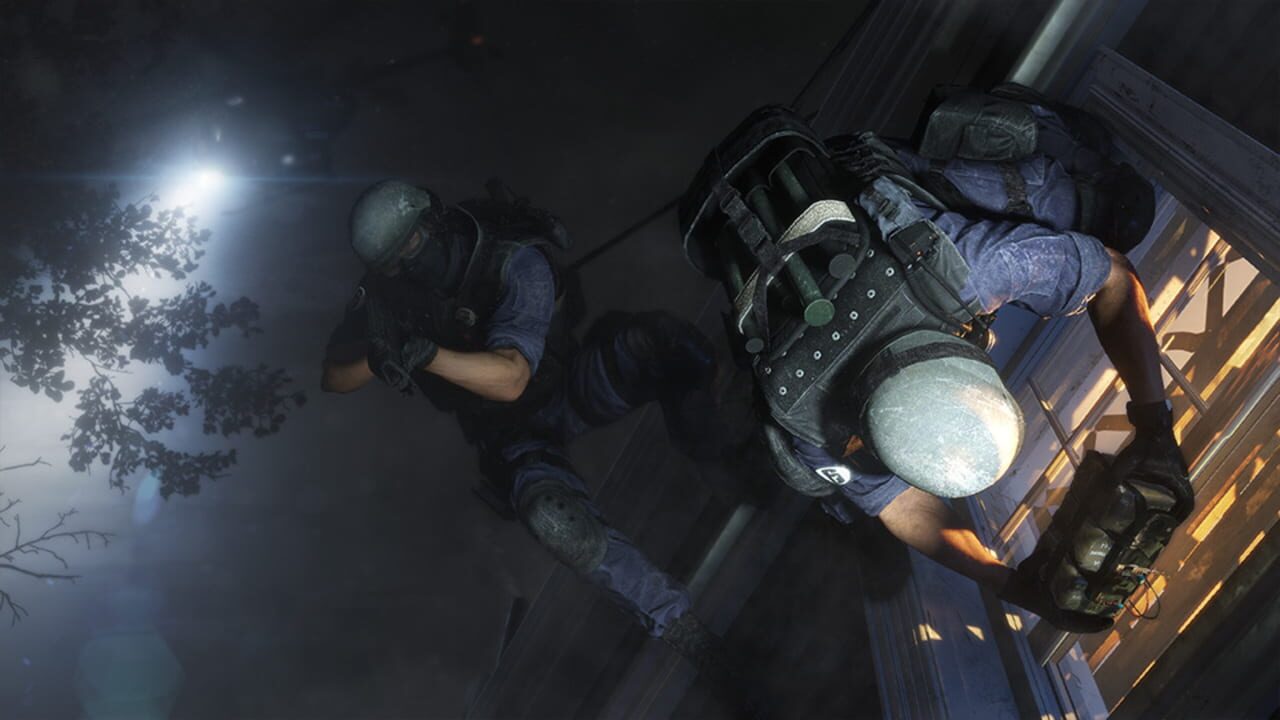
Rainbow Six Siege Beginner Guide 2026: How to Survive Your First Season
Welcome to Rainbow Six Siege — or as you’ll quickly discover in your first few matches, a beautiful, devastating mess of breaching charges, collapsed walls, and friendly fire. This Rainbow Six Siege Beginner Guide is designed to help you survive those early rounds, understand what makes this game special, and actually start enjoying the tactical depth that has kept a dedicated community playing since 2015.
Rainbow Six Siege is not about twitch reflexes or aimbot-level reaction times. It rewards learning, teamwork, map knowledge, and smart utility usage. You will die a lot. That is normal. Every death teaches you something your next round can use.
Core Game Mechanics
| Mechanic | What It Means | Why It Matters |
|---|---|---|
| Attackers vs Defenders | 5v5 — Attackers breach and plant the Spike; Defenders hold the site | Understanding your side’s goal is step one |
| Operators | 60+ characters, each with unique gadgets, health, and armor | Pick 1-2 and learn them deeply before expanding |
| Destructible Surfaces | Walls, floors, and ceilings can be breached or reinforced | Map control through geometry is the core skill |
| Gadgets | Each operator has 2 gadgets plus deployable equipment | Economy management during loadout phase is critical |
| Starting Operators | Rook, Engine, Sledge are early unlocks | Best choices for learning core mechanics |
| Ranked Play | Competitive mode with SR (Score Ranking) | Where you measure real progress |
| Casual Mode | Relaxed mode with no SR penalty | Your safe training ground |
Step-by-Step: Your First 20 Hours
Step 1 — Install and Optimize Settings (1 hour)
Get Rainbow Six Siege installed and optimized before you play a single match.
- Sensitivity: Lower is better. Most high-level players use between 8-14 DPI with in-game sensitivity around 3-5. Find your sweet spot.
- Mouse Acceleration: Turn it OFF. Always. Muscle memory dies with acceleration on.
- Crosshair: Pick a small, static crosshair. No animated, expanding, or color-changing ones. You need consistency.
- Audio: Enable positional audio immediately. Footsteps, breaching charges, and gadget sounds are free information.
- Keybinds: Move melee to a comfortable key. You will be crouch-peeking and knife-peeking constantly.
Step 2 — Master Casual Mode First (5-7 hours)
Do NOT jump into Ranked yet. You will lose SR, feel frustrated, and quit. Casual is your classroom.
- Pick Sledge as your first operator. His hammer is intuitive, his role is clear, and you learn wall breaches immediately.
- Learn the difference between breachable walls (brown or orange tint) and reinforced walls (blue tint with visible metal mesh).
- Practice using your hammer on weak walls. One solid hit destroys most breachable surfaces.
- Watch where your team rotates and follow them. Do not go lone wolf in your first ten hours.
- Hold angles. Do not spray and pray into doorways.
Step 3 — Understand the Loadout Phase (every round)
Every round, you have approximately 45 seconds to prepare. This is where most new players waste precious time.
| Item Type | Description | Priority for Beginners |
|---|---|---|
| Primary Weapon | Main gun for the round | Lock it in by operator choice |
| Secondary Weapon | Pistol — bring it every round | Always equip, never skip |
| Gadget 1 | Operator-specific ability | Learn it inside-out before playing |
| Gadget 2 | Second operator ability | Learn it inside-out before playing |
| Deployable | Shield, camera, barbed wire, etc. | Bring what your team composition needs |
| Melee | Knife for last resort | Do not forget it |
The loadout phase is not just about weapons. Your deployables, your gadget choices, and your team coordination during those 45 seconds determine whether you win or lose the round before it even starts.
Step 4 — Learn One Map at a Time (7-10 hours)
Rainbow Six Siege has roughly 20+ maps. Do not attempt to learn them all at once. Focus.
Start with these three:
- Consulate — Medium-sized layout that teaches rotation basics and mid-round decision making
- Skyscraper — Excellent for understanding vertical play and multi-floor engagement
- Oregon — Classic house layout that teaches utility usage and close-quarters defense
For each map, learn:
- Where both Spike sites are located
- Which walls are breachable versus reinforced on each side
- Common camera placements and barb wire positioning
- Two common attacker push routes and two solid defender setup positions
Map knowledge beats aim every time in Rainbow Six Siege.
Step 5 — Transition to Ranked (10+ hours)
Once you can consistently complete objectives, call out enemy positions, and understand basic map layouts, enter Ranked. Expect to lose frequently. That is part of the process. Your SR will climb as your game sense develops.
Essential Tips for New Players
Communication Wins Rounds
Rainbow Six Siege is fundamentally a team-based tactical shooter. Even basic callouts like “One on B site main” or “I’m pushing front door” dramatically improve your team’s performance. Use voice chat or the ping system. Stay present.
Don’t Rush Into Rooms
Peek corners methodically. Check angles before committing your body. Your first bullet should eliminate an enemy, not alert them to your presence. Wallbangs and hole peeks are extremely common in Siege — expect shots from directions you did not anticipate.
Learn Aggressively from Deaths
When you die, watch the replay immediately if possible. Where did the shot come from? Could you have peeked differently? Was there a camera you missed? Did your team already engage and you walked into a crossfire? Every death contains a lesson worth studying.
Operator Depth Beats Operator Breadth
It is far better to be excellent with Sledge and Thatcher than to be mediocre with five different operators. Master one role — breacher, sentinel, flanker, or anchor — before expanding your operator pool. Specialists earn respect; generalists earn deaths.
Economy Management Is Critical
Your deployable equipment costs squad points. If your team wastes all their points early in a round, you will have no shields, no cameras, and no barb wire for late-round fights. Think about point efficiency. A $2000 camera now might save you $4000 in lost utility later.
Listen for Everything
Rainbow Six Siege audio is incredibly rich and informative. Footsteps, reloads, gadget deployments, breath sounds, and even the sound of enemies moving through different floor types all provide intel. Wear headphones if you possibly can. Audio is a weapon.
Do Not Fear Trading Kills
Sometimes pushing an angle and dying tells your team “there is someone holding that angle.” That is valuable intelligence. Trading kills is acceptable and often necessary in Siege situations. Information gained from a sacrifice is never wasted.
Common Beginner Mistakes
- Playing Ranked too early — You will lose SR and motivation. Build fundamentals first.
- Switching operators every match — Stick with 1-2 operators until you understand their roles deeply.
- Ignoring destructible terrain — Breaching walls and floors is what makes Siege unique. Learn when and how to use it.
- Standing still after getting info — Call out enemy positions and then reposition. Stationary players die.
- Hoarding gadgets — Use your gadgets. A deployed camera that sits unused is a wasted opportunity.
- Solo queue blind — Try to find a consistent squad when possible. Coordination dramatically improves your win rate.
FAQ
Q: Should I play Ranked or Casual first?
Start with Casual until you understand at least one map and one operator well. Jumping straight into Ranked with no foundational knowledge will frustrate you and cost you significant SR. Casual is your classroom. Ranked is your exam.
Q: What is the best operator for beginners?
Sledge (attacker — hammer breaks walls cleanly), Thatcher (attacker — EMPs destroy enemy gadgets reliably), and Smoke (defender — poison gas grenades control areas effectively) are widely considered the best starter operators. They teach fundamental Siege concepts clearly and forgivingly.
Q: Why do I keep getting shot through walls?
Rainbow Six Siege features thin walls, glass surfaces, and intentional floor and ceiling breaches throughout every map. Learn which surfaces can be shot through on each map you play. Use reinforced panels (yellow tint) to block the most common angles. This is a core survival skill that takes time and repeated exposure to develop.
Q: Is there a training or practice mode?
Yes — Rainbow Six Siege includes a shooting range and Custom Game mode where you can practice against bots. Use the Custom Game mode extensively to practice operator abilities, memorize map layouts, and experiment with utility setups without the pressure of losing SR. Bots are imperfect but useful for building confidence.
This guide covers only features that exist in Rainbow Six Siege — the 5v5 PvP operator combat, destructible environments, Ranked and Casual modes, and the core tactical gameplay loop. The game does not include crafting systems, player trading, traditional co-op PvE campaigns, or any external economy beyond in-round squad point management.
Keep exploring
- Rainbow Six Siege on MMOKB — the Rainbow Six Siege game hub has the full knowledge base, tools and guides.
- Read the Rainbow Six Siege knowledge base — Sides, Gadgets, Room Control, Ranked Seasons.
- More Rainbow Six Siege guides — Rainbow Six Siege Guide 2026: How to Learn & Win (Beginner Tips), Rainbow Six Siege Best Builds Farming And Tips, Rainbow Six Siege Best Builds: 7 Operator Loadouts for 2026, Rainbow Six Siege Best Tier List 2026: Top Operators Ranked, Rainbow Six Siege Boss Guide, Rainbow Six Siege Money Making Guide 2026.
- Browse the full library — all MMOKB guides
Reviewed & verified
| Covers | rainbow-six-siege |
| Last verified | October 15, 2026 |
| Accuracy | The game’s own numbers and rules — they change with patches; check in-game for live values. |
Discussion
0 commentsNo comments yet. Be the first!