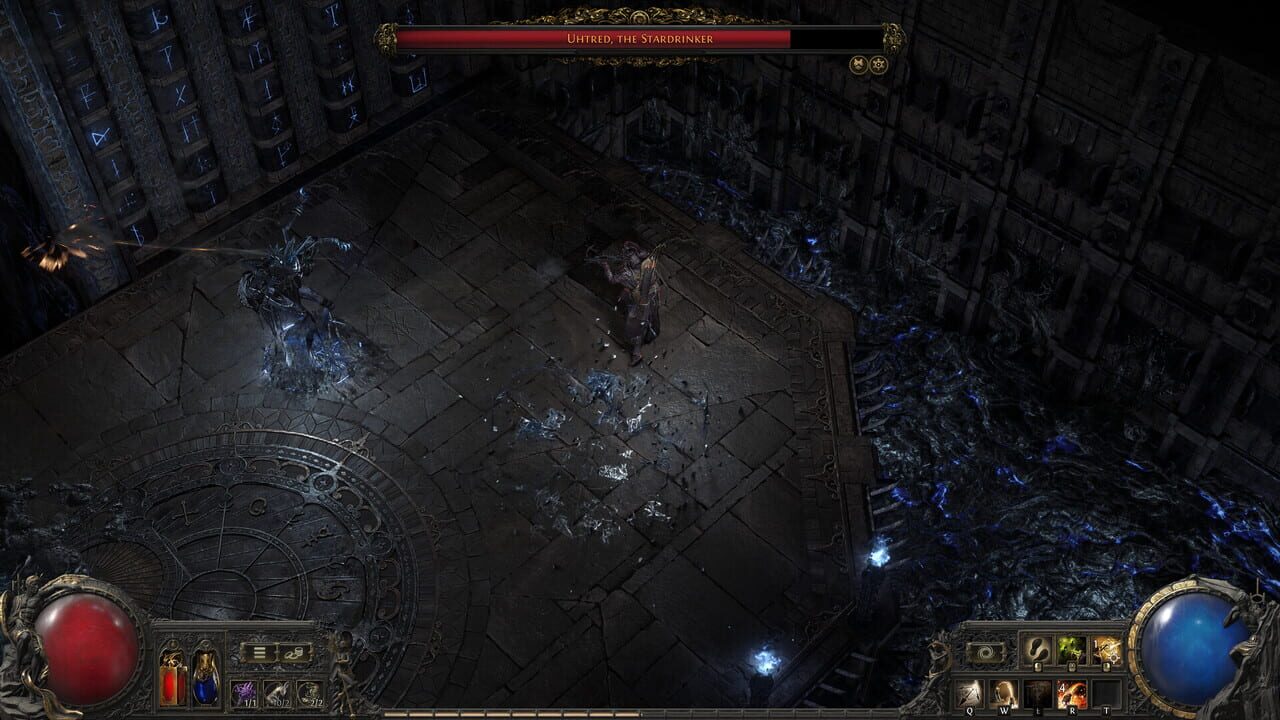
Hey there, Wraeclast wanderer! If you’re jumping into path-of-exile-2 and want to build gear that actually hits hard, you’ve come to the right spot. This Path Of Exile 2 Crafting Guide covers everything from basic orb usage to advanced crafting strategies, so you’re never left rolling dice blind. And hey — POE2 just hit Steam Deck Verified, so you can prep some beastly builds on the go. Plus, if you haven’t already, grab that Soulflame Weapon Effect reward by registering for full release updates. Let’s get your gear sorted.
Core Mechanics
Understanding how crafting works in Path of Exile 2 is half the battle. Here’s the breakdown:
| Mechanic | Description |
|---|---|
| Currency Orbs | The backbone of crafting. Each orb modifies an item in a specific way — rerolling values, adding modifiers, or forcing prefixes/suffixes. |
| Crafting Bench | Found at major towns, the bench lets you spend currency to apply specific crafted modifiers to rare items. This is the most reliable way to build endgame gear. |
| Modifiers & Slots | Rare items have up to 6 modifiers: 3 prefixes and 3 suffixes. Each slot has a type restriction (e.g., a sword can’t get armor modifier prefixes). |
| Shaper/Eraser/Crafter Orbs | These remove or replace specific modifiers. Shaper removes suffixes, Eraser removes prefixes, and Crafter orbs let you add new modifiers from a pool. |
| Scouring | Using an Orb of Scouring resets all explicit modifiers on a magic item back to their base values, which is useful before trying to re-roll with other currency. |
| Incubators | Special items that, when placed in an empty socket, guarantee a set of modifiers will appear when the item is next modified by currency. |
| Foil/Beyond/Snapshot Maps | Map modifiers that affect crafting. Foil guarantees two rare maps per run, Beyond adds extra chaos modifiers, and Snapshot locks maps for later use. |
| Delving | While this guide focuses on crafting, Delve is a separate endgame activity. Note that Path of Exile 2 has reworked how Delve and other systems work compared to PoE1. |
| Vaal Orb Risks | Vaal Orbs corrupt items, randomly changing stats or applying a corrupted modifier. Corrupted items cannot be altered further, making Vaal Orb crafting high-risk. |
| Awakening Orbs | Used to activate awakened support gems, increasing their effectiveness but also raising their gem level requirement. |
Step-by-Step
Step 1 — Know Your Item Slots and Modifier Types
Before you spend a single orb, understand what your item can accept. A weapon has weapon-type prefixes, while armor has armor-type prefixes. Mismatched modifier types waste currency. Always hover over the empty modifier slots on a rare item to see which modifier types are still available. This step alone saves more currency than anything else in this guide.
Step 2 — Source Your Base Item
Start with a solid base. A level 75+ rare helmet with good base armor and life is far more valuable than a level 50 one, because higher-level items scale better with added modifiers. Look for bases with inherent stats your build needs — for example, a metal shield for block builds or a claw for attack speed champions. You can farm bases from maps, bazaar trades, or craft them via the Fabricator in town.
Step 3 — Apply Your Incubator (If Using One)
If you’re targeting a specific modifier like “Adds X to Y Elemental Damage,” slot the matching incubator into an empty socket on your item. When you next use currency on the item, the incubated modifier is guaranteed to appear. This is one of the most cost-effective ways to secure a desired stat without burning multiple alteration attempts.
Step 4 — Use Crafting Bench for Primary Stats
Head to the Crafting Bench in any major town (like the Crossroads or Ruined City). Select your item and choose the modifier you want. Bench crafting costs scale with the modifier’s rarity and power — a ” +40 to Strength” prefix might cost a few divines, while a top-tier ” +20% to Elemental Resistances” could run significantly more. Always check the currency cost tooltip before confirming.
Here’s a quick reference for common bench costs at various power tiers:
| Modifier Tier | Example Cost (Divine Orbs) | Typical Use |
|---|---|---|
| Low | 1–3 | +Attributes, small resistances |
| Mid | 3–8 | Moderate life, damage over time |
| High | 8–20 | Significant elemental damage, armor |
| Ultra | 20–50+ | Top-tier explicit modifiers |
Step 5 — Fill Remaining Slots with Currency Orbs
Once your primary crafted modifiers are locked in, use currency to fill the remaining slots. Start cheap:
- Orb of Alteration (1x): Rerolls random values on a modifier
- Orb of Transmutation (1x): Adds a random magic modifier to an empty slot
- Orb of Regret (1x): Removes a single modifier, freeing a slot
- Chaos Orb (1x): Rerolls all explicit modifiers on a rare item
Work your way up to Exalted Orbs if you need to add a brand-new modifier to an item with no empty slots. An Exalted Orb adds one random modifier, but it’s expensive — use only when necessary.
Step 6 — Polish with Precision Currency
For high-end builds, precision matters. Use Orbs of Annulment to remove a single modifier and replace it with a new one. This is essential for clearing bad rolls (like negative resistances) and replacing them with useful stats. However, annulments are unpredictable — you never know what the replacement will be, so this is a gamble best saved for items you’re already comfortable with.
Step 7 — Check for Corrupted Modifiers
If your item is uncorrupted, you have full crafting flexibility. If it’s already corrupted, you can only use currency that explicitly affects corrupted items (like a Mirror of Kalandra, which duplicates the item as-is). Plan your crafting path before corrupting anything unless you’re going for a specific corrupt-based strategy.
Step 8 — Test and Iterate
Crafting is iterative. Don’t expect perfection on the first try. Playtest your item, note what’s missing, and return to the bench or use currency to adjust. Endgame gear is rarely built in one session — it’s a process of refinement across multiple items and builds.
Tips
- Always read the tooltip. Before spending currency, check what the modifier will actually add. A “+15 to All Attributes” sounds great, but on a dagger it might be worthless compared to “+30% Attack Speed.”
- Save your good currency. Divines, mirrors, and exalts are precious. Don’t waste them on low-tier gear unless you’re experimenting. Save your big spenders for endgame bosses and league finals.
- Learn the modifier pools. Each item type has a specific pool of possible modifiers. Studying these pools helps you predict what currency will give you, making your crafting decisions faster and cheaper.
- Use the trade site. The official Path of Exile 2 trade site lets you search for crafted items. Sometimes it’s cheaper to buy a pre-crafted piece than to roll it yourself, especially for ultra-rare modifiers.
- Don’t rush into Vaal Orbs. Corruption is fun but brutal. A single Vaal Orb can turn a decent item into garbage or a god-tier piece. Treat it as entertainment, not a strategy, unless you’re running a specific corrupt build.
- Track your spending. Keep a mental (or written) note of how much currency you’ve spent on each item. It’s easy to get carried away and realize later you’ve blown your entire chaos stash on one mediocre helm.
- Take advantage of Steam Deck. With POE2 now Steam Deck Verified, you can craft and refine builds anywhere. The handheld experience is fully optimized, so don’t sleep on mobile crafting sessions during commutes.
- Register for full release rewards. Don’t miss the Soulflame Weapon Effect — it’s a free milestone reward for signing up for full release updates. Grab it early; it’s a nice visual flex and potentially useful.
FAQ
Q1: What’s the cheapest way to get good modifiers on an item? The most budget-friendly approach is to use Orbs of Scouring on a magic item to reset its values, then apply Orbs of Alteration to reroll individual modifiers until you get acceptable numbers. For crafting bench mods, start with the lowest tier modifiers and work your way up only when your base item justifies the investment.
Q2: Can I craft on corrupted items? No. Once an item is corrupted, you cannot use most crafting currency on it. The only exceptions are the Mirror of Kalandra (which duplicates the corrupted item) and certain specialized currency that explicitly states it works on corrupted gear. Always uncorrupt or avoid corrupting until your crafting is complete.
Q3: How do I know which modifiers are good for my build? This depends entirely on your character class and playstyle. Melee champions benefit from attack speed, physical damage, and life. Spellcasters want mana, spell damage, and elemental damage. Check community wikis, build guides, and the in-game trade site to see what top players are using. You can also experiment — sometimes unusual modifier combinations produce unexpectedly strong results.
Q4: Is crafting in Path of Exile 2 different from Path of Exile 1? Yes, there are several notable changes. POE2 introduces new crafting bench interfaces, reworked currency interactions, and quality-of-life improvements like better modifier previews. Some mechanics from PoE1 carry over, but the overall crafting economy and available currency types have been adjusted. The Steam Deck Verified launch also means crafting UI is fully playable on handheld — a welcome improvement for on-the-go refinements.
Discussion
0 commentsNo comments yet. Be the first!