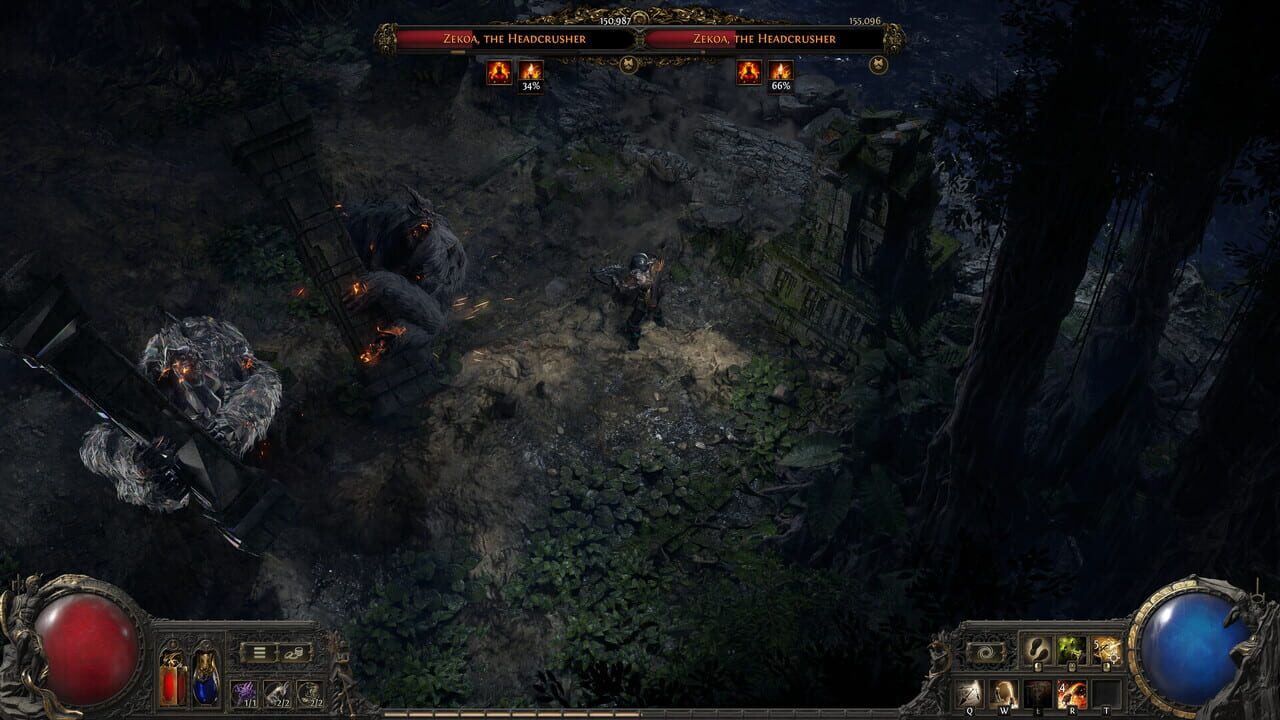
You’re about to dive into path-of-exile-2, and let’s be honest — Wraeclast doesn’t care if you’re ready. This guide is your safety net. Whether you’re jumping in at full release or gearing up for your first league, we’ve got you covered. Let’s get you living.
Path of Exile 2 is Grinding Gear Games’ true sequel, not a reskin. Bigger acts, revamped skill gems, a deeper passive tree, weapon swaps, and combat that lands with real weight. But yeah, the systems stack up fast. This guide strips away the noise and gives you what actually matters — core mechanics, step-by-step direction, and tips that keep you from wasting time on dead-end builds.
Core Mechanics
| Mechanic | What It Is | Why It Matters |
|---|---|---|
| Class System | Six base classes: Warrior, Ranger, Sorceress, Monk, Duelist, Necromancer. Each branches into multiple jobs via the Ascendancy system. | Your class defines your foundation. Pick one that matches how you like to fight. |
| Passive Skill Tree | A massive node-based grid where you spend points to boost stats, unlock keystones, and access special zones. | The backbone of every build. Bad early choices can lock you out of your dream build later. |
| Ascendancy | Specialized sub-class unlocked at level 9 giving unique passives and a keystone passive. | Turns your generic class into something distinct. Each one radically changes your playstyle. |
| Skill Gems | Gems socketed into equipment that grant skills or effects. Linked via Support Gems for added power. | Your primary source of damage, defense, and utility. Gem choices define your entire build. |
| Support Gems | Gems that modify and enhance active skill gems when linked together. | Critical for build optimization. The right support completely transforms a skill. |
| Currency | Items like Orb of Alchemy, Chaos Orb, Divine Orb, etc. Used to alter items, trade, and craft. | The economy runs on currency. Learn what each does — they’re your lifeline for upgrading gear. |
| Stun, Block, Dodge | Three primary defensive mechanics. Stun slows enemies; Block absorbs hits; Dodge evades them. | Essential for survivability. Mix and match based on your build’s design. |
| Weapon Swap | Carry two sets of weapons and swap between them mid-combat using skill hotkeys. | Opens up hybrid builds chaining different weapons for devastating combos. |
Step-by-Step
Step 1: Choose Your Class Wisely
Your class choice matters more in PoE 2 than in the original. The six base classes each have strong identities:
- Warrior — Melee tank with solid offense and defense. Great for beginners who want to stay in the fight.
- Ranger — Ranged physical damage with pet and projectile options. Solid for players who prefer staying at range.
- Sorceress — Elemental spellcaster wielding fire, cold, and lightning. High damage but fragile.
- Monk — Fast melee combatant with martial arts flair and energy shield mixing. Unique and fun.
- Duelist — Hybrid melee class scaling both strength and dexterity. Versatile and forgiving.
- Necromancer — Summoner-focused with minion armies and life-leech mechanics. Perfect for players who like commanding an army.
Pick a class that matches your preferred playstyle. Don’t overthink it — respecs are cheap early on.
Step 2: Navigate the Passive Skill Tree
The passive tree in Path of Exile 2 is redesigned — larger, more intricate, and with special zones requiring specific conditions to access. Here’s how to handle it:
- Follow the main path first. Stick to the central route toward your class’s Ascendancy node. Don’t wander into random corners early.
- Grab nearby +10 to +15 stat nodes. These are always good early investments.
- Avoid keystone passives until you understand them. Some are amazing; others are traps. Research before committing.
- Save spare points for later. You’ll get respecs, so don’t pressure yourself to perfect the tree on day one.
Step 3: Socket and Link Skill Gems Early
Skill gems are the engine of your build. From act one, pay attention to what you find:
- Equip your main damage gem on your weapon or in your hand slot.
- Add a support gem if you find one. Even basic Increased Damage makes a noticeable difference.
- Don’t socket random supports into everything. Match the right support to the right skill. Start simple, refine later.
- Use the gem link preview tool in the UI to see what a link looks like before committing.
Step 4: Gear Up Sensibly
You don’t need perfect gear to start, but you do need decent gear to survive:
- Weapon first — Your damage source. Look for higher dps, better base type, and useful modifiers.
- Armor or Energy Shield — Depends on class. Warriors and Necromancers want life and armor. Sorceresses and Monks want energy shield.
- Accessories — Rings, amulets, and belts offer resistances and stats. Prioritize life, resistances, and damage.
- Flasks — Don’t ignore these. Utility flasks for mana, endurance charges, and poison removal are essential.
When in doubt, equip the highest item level you can meet with good rolls. You’ll replace everything constantly.
Step 5: Learn the Currency System
Path of Exile 2’s economy is item-based. Here’s what you’ll use most:
- Chaos Orb — The bread and butter. Rerolls rare item modifiers and trades hands constantly.
- Orb of Alchemy — Turns a normal item into a rare. Useful for crafting bases.
- Orb of Transmutation — Adds one modifier to a magic item.
- Exalted Orb — Adds one random modifier to a rare. Valuable for boosting gear.
- Divine Orb — Rerolls numerical values of a rare item’s modifiers. High-tier currency.
- Blessing Orbs — Add specific modifiers to equipment.
Learn basic values through the trade website and vendor recipes. Understanding currency flow is half the battle.
Step 6: Tackle the Act Campaign
Path of Exile 2 features multiple acts, each longer and more detailed than the original:
- Early acts — Introduction to mechanics. Focus on gem linking and movement.
- Mid acts — New enemy types and environmental hazards. Start building resistances.
- Late acts — Dense packs and tougher bosses. Gear should be leveling with you now.
- Final acts — Boss gauntlets. Everything you’ve learned gets tested here.
Pro Tips for New Players
- Respec often. Early game respecs are cheap. Don’t cling to a bad tree.
- Run low-level maps before high ones. You’ll learn mechanics without dying repeatedly.
- Save currency orbs. Don’t spend Divine Orbs on temp gear — hold them for endgame builds.
- Join a community. Path of Exile 2 is brutal solo. Discord servers and forums are goldmines for build help.
- Don’t skip lore. The story in PoE 2 is actually worth experiencing. It adds weight to every encounter.
FAQ
| Question | Answer |
|---|---|
| Is Path of Exile 2 harder than the first game? | Yes and no. The campaign is more guided, but endgame depth is significantly deeper. Expect a steeper initial curve, but be rewarded with more meaningful build diversity. |
| Can I respec my passive tree early on? | Yes. Early respecs cost very little. Use them freely to experiment before settling into a build. |
| Do I need to min-max my first character? | No. Play what sounds fun. You can always reshuffle later. |
| What’s the best class for beginners? | Warrior and Necromancer are the most forgiving. Warrior tanks well; Necromancer lets minions absorb damage. |
| How do skill gem links work? | Socket an active gem and support gems into the same piece of gear. Matching colors connects them. Better links = bigger impact. |
| Is Path of Exile 2 free to play? | Yes. Full release is free-to-play with cosmetic and convenience microtransactions. |
Go forth and conquer Wraeclast. You’ve got this.
Discussion
0 commentsNo comments yet. Be the first!