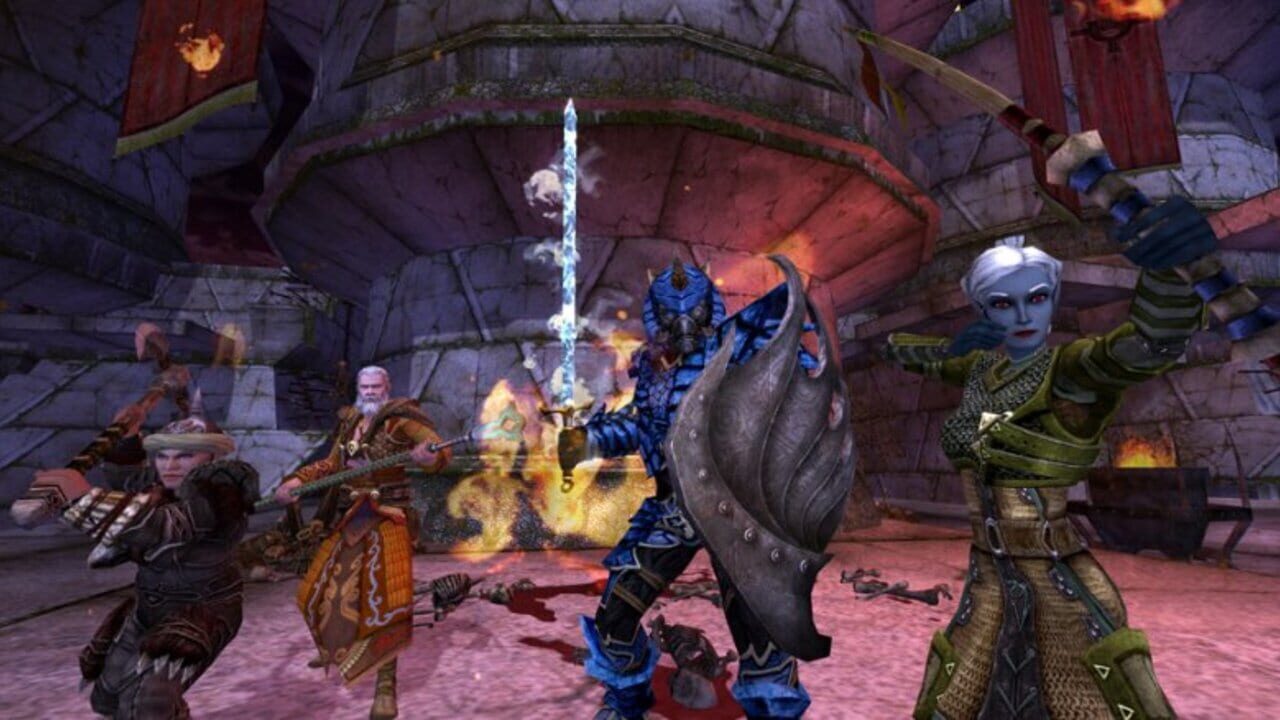
Intro
Dungeons & Dragons Online has been running since 2006, and it is the MMO that actually runs on the Dungeons & Dragons rules: you play a D&D class across Toril, the Forgotten Realms, and the campaign rotates in with each new update. The base game is free to play; an optional premium layer extends the instanced content. This guide is the new-player shape of the game: classes, the “life” progression, and where the endgame actually lives. See the full class roster on its own page before you lock in a character.
Core Mechanics
| Mechanic | What It Is | Why It Matters |
|---|---|---|
| D&D class | Your base class, straight from the tabletop roster | Every D&D class is playable and keeps its tabletop identity |
| Multi-classing / lives | Reincarnation points let you add new classes to the same character | A build is class plus the classes you layered on top |
| Feats | Point-based passive bonuses bought as you level | The refiner of any class — spend deliberately |
| Skills & skills ranks | Trained abilities for quests, traps, and puzzles | You only need enough for your build; the rest is flavor |
| Platinum | The base in-game currency, earned and spent inside the game | Covers repairs, respecs and the everyday economy |
| Astral Shards | A premium currency that pays for select in-game services | Account-wide — spend it where it actually saves time |
| Heroics | Instanced group content for smaller parties | The main endgame loop |
| Raids | Larger instanced encounters | The high end of the loop |
| Housing | Homes you can own and furnish | Storage, stations, and show-off space |
| Auction House / Shard Exchange | Player trading for gear and services | The economy behind the gear you build |
Step-by-Step
Step 1: Pick a Class That Fits How You Want to Play
The roster is the D&D list, straight from the rules — the Fighter, the Wizard, the Rogue, the Cleric, the Ranger, the Paladin, the Bard, the Barbarian, the Druid and the Warlock are all playable, and each keeps the identity it has on paper. The MMO adds the feat, skill and multi-classing progression that refines a class into a build. You can always multi-class later, so the deciding question is day one:
- Front-line, absorb damage, keep the party alive? Fighter, Paladin, or Cleric.
- Hit hard from range? Ranger or a Wizard build.
- In behind the enemies before they notice you? Rogue.
- Support the group? Cleric and Paladin do more than people expect; Druid covers the sustain slot.
For a first character, Cleric and Fighter are the most forgiving — tanky, and the game hands you plenty of support options. Full roster, on the class page.
Step 2: Learn the Interface
DDO is a mouse-driven MMO. Point to move, target an enemy, and pick the power from your action bar — your character does not auto-attack, so every swing is a choice you make. The interface is fully rebindable; learn a comfortable set early and keep it.
The few things worth memorizing:
- The quest log for what to do next
- The character sheet for feats and skills
- The inventory for gear and crafting materials
- The map for where the instanced entry points sit
Everything else is rebindable, so do not sweat the defaults.
Step 3: Run Your First Heroic
The open world of Toril is the connector; the real progression is the instanced content. You will meet the Neverwinter area first, and the early quests teach the loop: talk to the giver, follow the marker, clear the objective, return for XP and loot.
When you are ready, the small-party heroics are the main loop:
- Check the quest log before you start — some objectives need a specific skill or a party member who has it
- Read the instance entry for the expected level and the group size
- Bring potions and know the reset behavior for your class’s key powers
See where the instanced content lives on its own page for the heroics-and-raids split.
Step 4: Work the Gear and Feats
- Feats are the build. The class is the skeleton; the feats are how it plays. Spend points early — hoarding feat points does not pay.
- Gear drops are generous. At low levels, focus on leveling and class understanding; the gear catches up.
- Reforging lets you reroll stats on gear — the tool for turning “fine” into “your build.”
- The auction house is where crafted gear and upgraded pieces live; learn the prices for your class’s piece before you buy.
Step 5: Use the Lives System
The D&D class is only the first life of a character. Reincarnation points let you add new classes to the same character, and the game’s progression is built around those stacked lives — the “build” you end up with is base class plus the lives you layered. Plan the second life before you finish the first: the class you add on top is what turns a generic character into the build you actually play.
Step 6: Party Up
DDO is group-first. You can solo many early quests, but the faster and more rewarding path is:
- The in-game party finder
- Community channels like New Player and Beginner chat
- Your own Discord or forum presence, if you have one
A coordinated party opens harder difficulties and the better loot tables, and the learning curve for new mechanics is dramatically steeper solo.
Free to Play vs. Premium
The core game is free: the classes, the open world and the base instanced content are all available without paying. The premium layer sits on top — a subscription that opens the deeper instanced content and a few conveniences — and it does not change the D&D rules or lock the class roster. What exactly the current subscription unlocks is a live detail; check the in-game store and the subscription page. See the access model on its own page.
Related Guides
FAQ
What is the best class for a beginner in DDO?
Cleric and Fighter. They are tanky, the game hands them a lot of early support, and the feats on top of either one open into more than one build. The full roster and the in-game class guides are on the class page.
How do I level fast?
Run the heroics, not the open world, as your main XP source once you are in party range, and keep your feats and skills pointed at the class you are actually running — a generic build that respecs late is a slower build that respecs late.
What is the level cap?
The cap has risen with the game’s long update history and continues to move — check the in-game rules screen for the current cap on your account, because the exact number is a live detail.
What currency do I need to know?
Platinum for the in-game economy, Astral Shards for select premium services (account-wide), and DDO Points for the store. The shard exchange lets you trade equipped gear in ways the regular auction house does not.
Can I solo DDO?
Yes, for most of the early game. The endgame content is built for groups, and the party-first path is the faster and more rewarding one — see the instanced loops page.
Keep exploring
- Dungeons & Dragons Online on MMOKB — the Dungeons & Dragons Online game hub has the full knowledge base, tools and guides.
- Read the Dungeons & Dragons Online knowledge base — Classes, Endgame Loops, Toril World, F2p And Premium.
- More Dungeons & Dragons Online guides — Dungeons And Dragons Online Best Builds Farming And Tips, DDO Best Classes Tier List 2026: Stop Grinding Wrong Builds.
- Browse the full library — all MMOKB guides
Reviewed & verified
| Covers | dungeons-and-dragons-online |
| Last verified | November 3, 2026 |
| Accuracy | The game’s own numbers and rules — they change with patches; check in-game for live values. |
Discussion
0 commentsNo comments yet. Be the first!