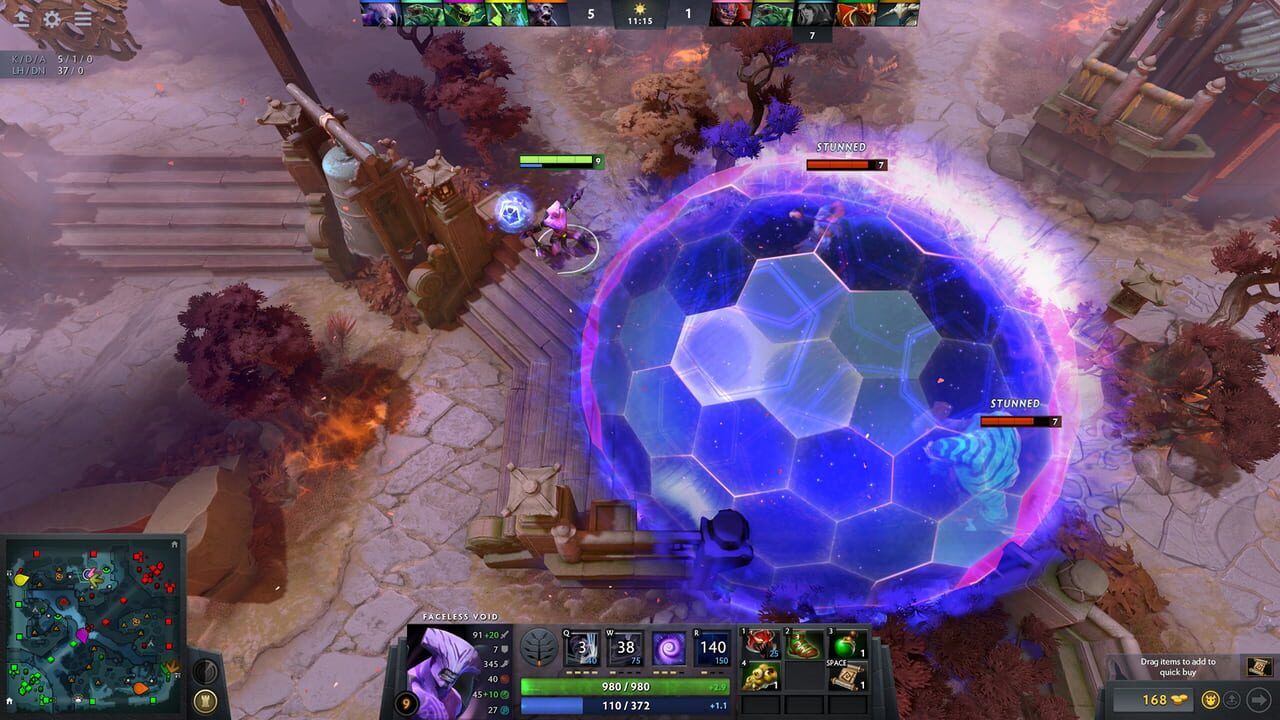
Dota 2 is Valve’s free-to-play PC MOBA, built around a three-lane map, a deep item economy, and a hero pool that rewards knowledge more than mechanical skill. It is one of the most mechanically dense games in the MOBA genre: the map is larger than most, the items are more consequential, and the meta shifts with every patch. This guide covers the fundamentals that separate a new player from a competent one.
The map and lane assignments
Dota 2’s map has three lanes: top, mid, and bottom, with a jungle between them. Your lane is not just where you start; it defines your role in the game. The top lane is usually a tank or bruiser who can hold lane and split-push. The mid lane is a mage or carry who controls the middle of the map and roams. The bottom lane is the carry lane: a ranged damage hero who is vulnerable early but scales into a late-game threat. The jungle is a roamer who ganks lanes and sets up objectives. As a beginner, learn one lane and commit to it; the role expectations are different enough that hopping between lanes every game is a recipe for confusion.
Hero selection and the meta
The hero pool is large, and the meta shifts with every Valve patch. The current meta is defined by which heroes are performing well in the competitive scene; check the in-game hero guide and the patch notes for the latest tier list. As a beginner, pick heroes who are simple and strong in your role: a tank with an easy kit beats a complex assassin you have not practiced. The hero select is where most new players lose: you cannot pick a hero that does not fit the game you are playing. If your team already has a carry, do not pick another one.
The item economy
Items are 50 percent of the game. The core items are the ones that define your hero’s build: a carry who falls behind on their first critical item will not catch up for the rest of the game. The item shop has a set of standard builds for each hero, but the actual build is adapted to the enemy composition. If the enemy has burst damage, buy a defensive item early. If they have sustained damage, build sustain. The in-game recommended build is a starting point, not a law. Check the item shop in-game for the current item prices and the recommended builds for your hero; Valve adjusts the item economy with each patch.
Ganking and roaming
Dota 2 is a game of roaming: the mid-laner roams to set up kills, the jungle ganks, and the support sets up vision. As a beginner, learn the basic gank pattern: wait for the enemy to push, coordinate with a ganker, and take the kill. Do not overextend in lane; the time you spend dead is the time your team is fighting with four players. The vision system (wards, wards, and the in-game minimap) is the second half of ganking: you cannot gank a lane you cannot see. Buy the cheap wards early; the information is worth more than the gold.
Teamfights and positioning
Teamfights are won by who is alive, not who has the best hero. Your positioning in a teamfight determines whether you contribute or die. A carry who dies in the first 2 seconds of a teamfight is not contributing damage; a support who lives to the end is contributing more. Learn the basic positioning: stay in the backline for ranged heroes, engage from the front for tanks, and use your crowd control on the enemy carries first. Before you engage, ask: do we have enough crowd control? Is the enemy carry alive? Is the Roshan (the neutral boss) up?
Ranked mode and mindset
Ranked mode uses a rating system with seasonal resets. Your goal is not to win every game; it is to have a positive expected value across many games. Focus on the fundamentals: lane play, item timing, and not overextending. Track your own mistakes in the post-game summary: deaths, missed objectives, and unnecessary roams are the three stats that matter. If you lose five games in a row, stop. The system will not fix your game for you. Check in-game for the current ranked season and the rating distribution.
FAQ
Is Dota 2 free to play?
Yes. Dota 2 is free on PC through Steam. Heroes are unlocked through gameplay currency; cosmetics and convenience items are the paid layer. No hero or item is pay-to-win.
What is the best hero to start with in Dota 2?
Pick a hero who is simple and strong in your role. A tank or a ranged carry with an easy kit beats a complex assassin you have not practiced. The in-game hero guide and the current patch notes will tell you which heroes are performing well right now.
How do I improve my game sense in Dota 2?
Watch the minimap every few seconds, buy the cheap wards early, and learn the basic gank pattern. Track your own deaths and the reasons for them in the post-game summary. If you are dead because you overextended, that is the stat to fix. Game sense is a habit, not a talent.
Hero Pick Tips for Ranked
In ranked, the pick screen is where games are lost:
- Lock off carries and offlaners early. If you are drafting bottom or top, take your hero in the first two rounds. The more time you take, the more the enemy can counter you.
- Watch bans first. Teams ban to remove strong early-game threats. If everyone is banned out of a niche, that signals a different play.
- Do not flex two heroes that do the same job. Two offlaners with no real support is a losing lineup; every role needs a pick.
- Play the matchup, not the fantasy. If the enemy mid is a strong early assassin, a durable hero who can kill him in lane beats the one with the higher damage ceiling.
Check the in-game hero guide for the current tier list; the hero pool changes with every patch.
Dota 2 Economy Basics
Gold is the only resource that matters in the long run, and how you spend it decides the game:
- Early gold goes to kills, not creep kills alone. Last-hitting gives you the first item faster; in a MOBA that is a snowball.
- Wards pay for themselves. A cheap ward that reveals a gank saves you a death — and a death costs you income and the gold you lost.
- The first item is the anchor. Every build has one “core” item that defines the hero; buy it before branching into situational picks. Miss it and the enemy is ahead for the whole game.
- Sell what you do not use. If the enemy is not bursty, the defensive item you bought is dead weight; trade it when it stops fitting.
Check the in-game shop for the current numbers and recommended build; prices shift with patches.
How much should I spend on items in Dota 2?
As much as the game allows: items are the other half of the win condition. Spend smart — your first core item before anything situational, and sell an item the moment it stops fitting. Check in-game for the current prices.
What is the best role to learn in ranked first?
Pick one and own it. Offlaners are the most beginner-friendly because they get the most forgiveness early; a carry behind will not catch up.
Do I need to learn every hero?
No. Learn ten to twelve that cover your lane well and you can queue ranked without problems. The in-game hero guide tells you which heroes are strong right now.
Keep exploring
- Dota 2 on MMOKB — the Dota 2 game hub has the full knowledge base, tools and guides.
- Browse the full library — all MMOKB guides
Reviewed & verified
| Covers | Dota 2 |
| Last verified | November 24, 2026 |
| Accuracy | The game’s own numbers and rules — they change with patches; check in-game for live values. |
Discussion
0 commentsNo comments yet. Be the first!