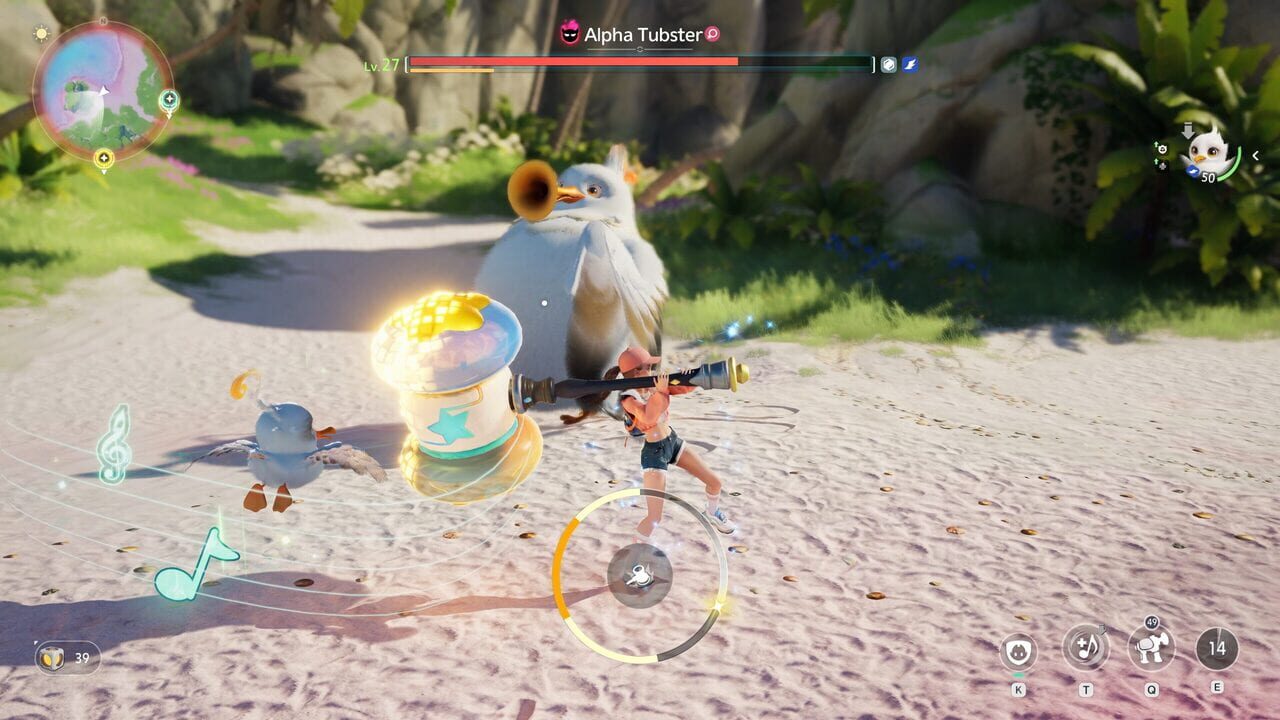
Aniimo Twining: The Core Loop
Aniimo splits creature control into two distinct modes, and understanding the difference is what separates stuck players from ones who breeze through Idyll’s gates. Command mode keeps your Wayfarer on the field while you issue orders to an Aniimo companion. Twining flips the script entirely — you become the Aniimo directly, gaining its movement kit, interact ability, and elemental traversal skills. The opening section of the game introduces both back to back on purpose, because every major puzzle in Idyll expects you to switch deliberately rather than brute-forcing your way through.
When you Twine, your Wayfarer waits at the swap point. You play as the Aniimo using its native controls, and once you finish whatever interaction the puzzle demands, you Twine back. This rhythm — swap out, solve, swap back — becomes the backbone of every route you take across the map.
The Five Field Skills That Open Idyll
Most obstacles you encounter in Aniimo are creature-gated by design. A chasm, a blocked tunnel, a crumbling wall, or a water route is not meant to be solved by your Wayfarer alone. Each field skill belongs to a specific Aniimo family, and knowing which one to call is half the battle.
Dig and Vine (Earth and Grass)
Earth Aniimo like Budclaw-style picks specialize in clearing blocked passages through digging. Grass-type Aniimo handle vine interactions, allowing you to pull down previously unreachable platforms or grow bridges across gaps. These two skills frequently overlap in early Idyll areas where a collapsed tunnel or overgrown path is the only route forward.
Glide and Gust (Wind)
Wind Aniimo are your answer to verticality. The glide skill lets you cross wide chasms that are otherwise impossible to reach. Gust abilities raise platforms, push objects, or clear debris blocking narrow passages. Wind skills often unlock shortcuts through terrain that looks impassable on foot.
Swim and Dive (Water)
Water Aniimo extend your routes along coastlines, rivers, and submerged areas. Swim lets you traverse water at normal speed instead of wading, while Dive unlocks underwater passages, hidden chests, and alternative paths that only become visible when you go below the surface. If a route traces the edge of a body of water and then stops, there is likely a Water Aniimo solution nearby.
Fire (Heat and Melting)
Fire-type Aniimo handle heat-based puzzles. Some doors and mechanisms require sustained flame to activate. Others block paths with ice or frozen barriers that melt under fire. Keep a Fire Aniimo on your roster if you notice cold biome areas or flame-requiring doors during your journey.
Light (Illumination and Reflection)
Light Aniimo solve puzzles involving darkness and mirror-like surfaces. Certain rooms are pitch black and require illumination to reveal hidden paths. Others need light reflected off surfaces to trigger switches or activate ancient mechanisms. These puzzles tend to appear in later Idyll zones.
How to Find the Right Aniimo for Any Puzzle
When a blocked path looks intentional — a gap with no visible bridge, a wall with scuff marks, a water line you can’t cross — stop testing your Wayfarer’s jump. The game is signaling that you need a different Aniimo. Open your Twining guide or collection tracker and search by the field skill keyword that matches the obstacle. Then swap to a creature that lists that skill before retrying.
Build a habit of scanning the environment for clues before engaging. Scuff marks suggest Dig. Overgrown vines suggest Grass. Still water with no outlet suggests Swim. Dark corridors suggest Light. Ice formations suggest Fire or Wind. Your attention to these environmental tells saves far more time than trial-and-error swapping.
Building Your Twining Roster
The most efficient roster covers one Aniimo per field skill category. Start with a digger, a glider, and a swimmer — these three unlock the majority of early Idyll gates. Once you have those locked in, expand into Fire and Light coverage as you encounter their respective biomes. Having one of each field skill on your active team means you rarely stop for chests or shortcuts, and you maintain combat coverage across all elemental matchups.
Don’t overlook secondary stats when choosing which specific Aniimo to carry. An Earth Aniimo with higher interact range may clear a tunnel faster. A Wind Aniimo with longer glide duration reaches platforms you could otherwise miss. Stat investment compounds across every puzzle you solve.
Twining in Combat
Twining is not just a traversal tool — it rewrites combat flow entirely. The same creature that solves a field puzzle brings its full combat kit into a fight. Elemental advantages matter in combat just as they do in the wild, and rotating between Aniimo types keeps you adaptive against different enemy clusters.
A smart rotation strategy is to lead with your Wayfarer for initial engagement, then Twine into the Aniimo whose element counters the dominant enemy type in the encounter. If you are fighting mostly Water-type enemies, Twine into a Fire Aniimo for sustained damage advantage. After the encounter clears, Twine back to your Wayfarer or to whichever Aniimo you need next for the upcoming puzzle.
Keep one of each field skill on your active team and you will solve more puzzles without losing combat readiness. The two roles reinforce each other constantly throughout Idyll.
Common Mistakes New Players Make
Staying Twined Too Long
Some players Twine into a powerful combat Aniimo and forget to swap back. Your Wayfarer is waiting at the swap point, and enemies may aggro on them. Always plan your Twine duration around the puzzle, not the fight.
Swapping Without Checking the Tracker
Randomly cycling through your Aniimo collection wastes time. Open the collection tracker, find the skill you need, and go straight to that Aniimo. Efficiency here compounds across every map you explore.
Ignoring Environmental Tells
The game hides solutions in the environment. A patch of loose dirt means Dig. Stale air in a tunnel means Wind. Shimmering water means Swim. Train your eye to read these cues before opening any menu.
Advanced Traversal Tips
Combine Skills for Double Solutions
Some puzzles in Idyll have multiple valid approaches. A gap might be bridgeable with Wind Glide OR bypassable with Grass Vine. Knowing both options lets you choose the path that preserves your preferred Aniimo for later encounters. Experiment freely in safe zones to discover alternative solutions.
Chain Twines for Speed Routes
Experienced players chain Twines — swapping from Wayfarer to Aniimo A, solving a small obstacle, swapping to Aniimo B for a second obstacle, then returning. This technique opens routes that feel sequential but are actually optimized for minimal backtracking.
Save Before Puzzle Sections
Idyll puzzles rarely have hard fails, but wasting five minutes on a broken swap chain is frustrating. Save before entering a new puzzle area and you can reload instantly if your approach fails.
FAQ
| Question | Answer |
|---|---|
| What is Twining in Aniimo? | Direct control of a single Aniimo and its full kit, including movement and puzzle interactions, instead of issuing orders while your Wayfarer stays on the field. |
| Which Aniimo should I keep for Twining? | One digger, one glider and one swimmer on the active roster covers most early Idyll gates. Expand from there into element coverage once the basics are set. |
| Do field skills need to be unlocked? | Yes, most are tied to the creature’s form and progression. Check the creature page and the skill upgrade path before assuming a fresh catch can handle every puzzle. |
| Can I Twine mid-combat? | Yes. Swapping into a counter-element Aniimo during a fight gives you access to its full combat kit and can turn a difficult encounter into an easy one. Swap back when the fight clears. |
Stay curious about Idyll, and your Twining will become second nature. Every puzzle the game throws at you is an invitation to use a skill you already own — the trick is recognizing which one.
Discussion
0 commentsNo comments yet. Be the first!