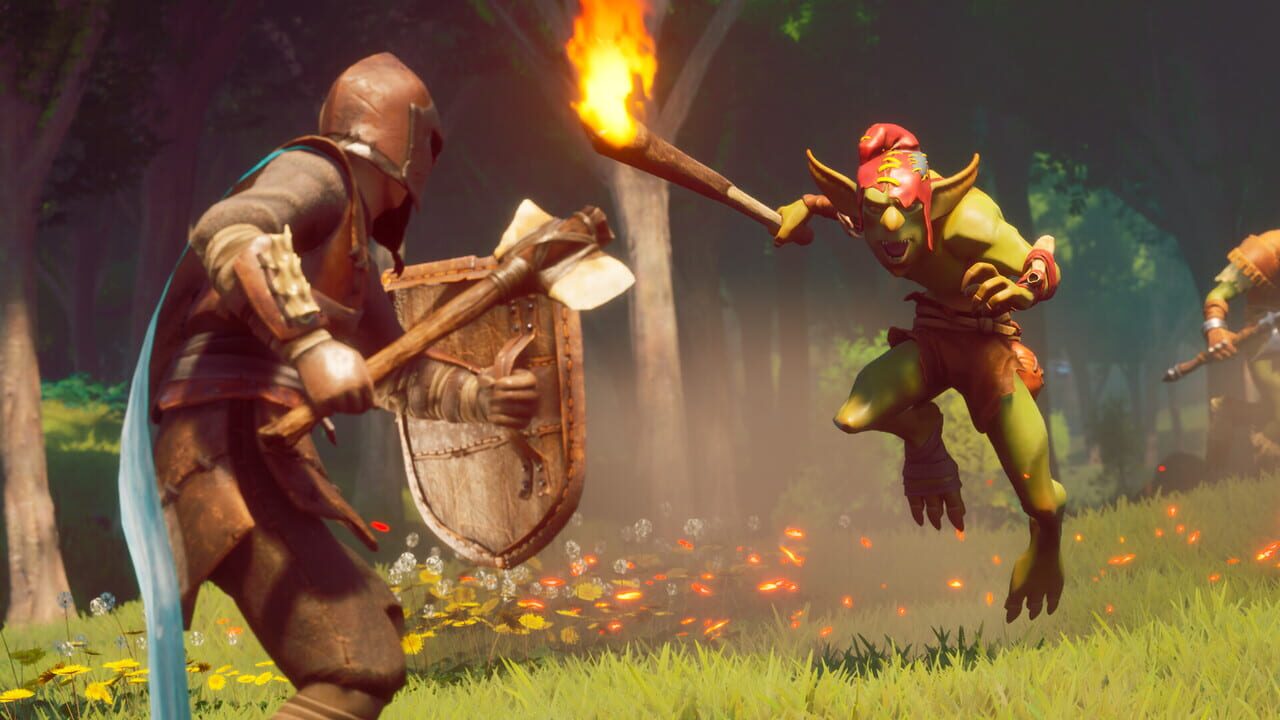
RuneScape: Dragonwilds officially leaves Early Access on September 15, 2026, launching in full across PS5, Xbox Series X|S, and PC (Steam and Epic Games Store). This marks the first RuneScape title ever released on a PlayStation console in the franchise’s 25-year history. The announcement was made at Summer Game Fest 2026 alongside a brand-new trailer.
If you’ve been grinding on PC during Early Access or you’re a PlayStation player waiting for this moment, here’s everything you need to know before 1.0 drops.
Release Details
- Full launch date: September 15, 2026
- Platforms: PS5, Xbox Series X|S, PC (Steam, Epic Games Store)
- Price: TBA for 1.0; currently $24.99 in Early Access
- Cross-play: Cross-platform play supported across all platforms
- Game Pass: Xbox and PC versions available through Game Pass on day one
- Server options: Both player-hosted and Jagex-hosted dedicated servers
What Is RuneScape: Dragonwilds?
Dragonwilds is an open-world survival crafting title set on Ashenfall, a forgotten continent within the RuneScape universe. It supports 1–4 player co-op and blends traditional RuneScape staples — quests, skills, lore — with survival mechanics like gathering, building, and crafting.
The game centers on battling massive dragons, culminating in a fight against the Dragon Queen. Magic plays a major role: you can summon spectral weapons, blink through combat, and cast utility spells. The skill system lets you level up classic RuneScape skills in a fully 3D survival context.
What’s New in 1.0
The September 15 launch delivers a complete, polished experience built on 17 months of Early Access feedback:
- Full questline completion — every story beat finalized
- Endgame boss encounters including the Dragon Queen
- Console-optimized controls and UI for PS5 and Xbox Series X|S
- All Early Access content polished and finalized
- Ongoing post-launch updates promised by Jagex
Early Access began April 15, 2025, and throughout that period the team added new regions, creatures, quests, and quality-of-life improvements shaped directly by community input.
Should You Start Now or Wait for September 15?
- Play Early Access now if you’re on PC — your progression carries forward into 1.0
- Wait for September 15 if you want the polished console experience on PS5 or Xbox Series X|S
- Game Pass subscribers can jump in day one on Xbox and PC at no extra cost
Mechanics Deep-Dive: Magic System
The magic system is the backbone of Dragonwilds combat. Understanding how spectral weapons and blink mechanics work will separate survivors from casualties.
Spectral Weapons — These temporary armaments materialize from raw mana and persist for a duration or until they land enough hits to deplete. Each spectral weapon type scales with your Magic stat:
- Spectral axes deal higher damage but have slower swing speed, ideal for single-target dragon fighting
- Spectral daggers offer rapid strikes useful for chipping away at boss health bars
- Spectral staves provide area-of-effect damage useful for crowd control during swarm encounters
Managing mana pool is critical. Spectral weapons drain steadily while active, so chaining multiple casts without recovering mana leaves you defenseless.
Blink Combat — Blink isn’t just a dodge mechanic; it’s an offensive tool when timed correctly. Successful blinks during enemy wind-ups grant brief invulnerability frames and reposition you closer to the target. Mastering blink distance is essential for closing gaps against large dragons without taking hitbox damage.
Utility Spells — Beyond combat, utility spells handle survival needs:
- Thermal vision reveals hidden paths in certain biomes
- Mending pulses repair structures and revive downed allies
- Resonance fields slow nearby enemies in clustered fights
Step-by-Step: Early Game Survival (Hours 1–10)
Your first hours establish the foundation for everything that follows. Follow this sequence to avoid common pitfalls.
Step 1 — Secure Immediate Shelter Before dusk hits, gather basic materials and construct a minimal shelter. Night cycles bring aggressive wildlife, and exposure without cover drains health rapidly. A three-wall structure with a door and torch is sufficient to start.
Step 2 — Stockpile Food Sources Hunting and foraging should run parallel to building. Prioritize high-satiety foods over cosmetic varieties. Cooked meats restore more stamina and provide sustained energy regeneration compared to raw consumption.
Step 3 — Level Core Skills Focus gathering skills (woodcutting, mining, foraging) alongside Magic early. These unlock crafting recipes and spell tiers simultaneously. Don’t spread too thin — lock into two skill tracks until they reach intermediate levels.
Step 4 — Claim Your First Region Each region has a central landmark that unlocks map awareness and nearby resource nodes. Visit it within the first three hours to reduce navigation costs on subsequent trips.
Step 5 — Craft a Spectral Focus Tool Before attempting any dragon encounter, craft at least one spectral focus item. This reduces mana cost for your chosen spell type and extends duration, making early practice runs significantly less punishing.
Step-by-Step: Mid-Game Progression (Hours 10–40)
Once basic survival loops are automated, shift focus toward specialization and co-op role definition.
Step 1 — Choose Your Build Path By hour 10, you should have enough data on your preferred playstyle to commit. Review the three core archetypes:
- Magic-focused casters prioritize spell efficiency and mana management
- Balanced survivalists maintain flexible skill levels across multiple categories
- Melee-assist supports excel at crowd control and resource redistribution
Step 2 — Expand Base Infrastructure Upgrade from starter shelter to a functional base with storage, crafting stations, and passive regeneration. Organize inventory systems early — disorganized bases waste crucial minutes during emergency retreats.
Step 3 — Attempt Low-Tier Dragon Encounters Practice your blink timing and spectral weapon rotation on smaller dragon variants. These encounters teach attack patterns without overwhelming resource costs on death.
Step 4 — Form or Join a Co-op Group If playing solo, consider recruiting one additional player before tackling mid-tier content. Pair magic users with gathering specialists for efficient resource acquisition.
Step 5 — Map High-Value Resource Nodes Mark locations for rare crafting materials on your personal map. These nodes often determine endgame gear quality and should be revisited regularly.
Step-by-Step: Endgame Preparation (Hours 40+)
The Dragon Queen fight demands careful preparation. Rushing in unprepared guarantees failure.
Step 1 — Maximize Magic Stats Invest heavily in Magic skill progression. The Dragon Queen’s health pool scales with difficulty, and pure physical builds struggle to damage her adequately.
Step 2 — Craft Tier 2 Spectral Gear Ensure all party members possess upgraded spectral weapons appropriate for their roles. Tier 2 gear provides meaningful damage increases and extended duration windows.
Step 3 — Stockpile Consumables Prepare at least three days’ worth of food, healing items, and mana restoration consumables. Unexpected prolongation of boss fights is common, and running out mid-engagement is devastating.
Step 4 — Establish Forward Base Build a temporary camp near the Dragon Queen’s territory. This reduces travel time between attempts and provides safe respawn points.
Step 5 — Practice Blink Rotations Spend focused sessions perfecting blink timing against the Queen’s attack patterns. Each blink dodge creates openings for counter-attacks and prevents party wipe scenarios.
Build & Role Guide Table
| Archetype | Best For | Key Skills | Co-op Role |
|---|---|---|---|
| Magic Caster | Dragon boss DPS | Magic, Runecraft | Primary damage dealer |
| Balanced Survivalist | Solo & small groups | All gathering + Magic | Flexible support |
| Melee-Assist | Crowd control | Combat + Construction | Tank/defender |
Co-op Tactics
Dragonwilds shines in 1–4 player co-op. Here are key teamwork strategies:
- Role division: Assign one player to magic DPS, one to gathering, and one to base defense for balanced teams of three.
- Blink chaining: Two players blinking in sync can corner larger dragons and create safe windows for the caster to channel spells.
- Resource sharing: Coordinate food and mana-restoring consumables before engaging any dragon. Sharing prevents wipes.
- Spectral weapon swapping: In co-op, spectral weapons can be temporarily shared with nearby allies, extending team-wide damage output.
- Revive priority: When a teammate falls, prioritize revival over pushing the boss. Downtime costs are cheaper than restarting the encounter.
Post-Launch Expectations
Jagex has committed to ongoing updates after the 1.0 launch. While specific details remain TBD, fans can expect:
- New regions and dragon variants
- Additional spell tiers and spectral weapon types
- Co-op quality-of-life improvements
- Seasonal events tied to RuneScape lore
FAQ
When does RuneScape: Dragonwilds 1.0 release?
September 15, 2026, on PS5, Xbox Series X|S, and PC.
Is there cross-play between PC and consoles?
Yes. Cross-platform play is supported across all three platforms.
Does my Early Access progress carry into 1.0?
Yes. Your save data and progression transfer directly when 1.0 launches.
Is Dragonwilds on Game Pass?
Yes. Both Xbox Series X|S and PC versions are available on Game Pass at launch.
Can you play Dragonwilds solo?
Absolutely. The game supports 1–4 player co-op, and solo play is fully viable.
Is there PvP in Dragonwilds?
No. Dragonwilds is a PvE-focused survival game with no PvP modes.
What is the endgame boss?
The Dragon Queen, a massive dragon encounter designed for co-op coordination.
Will there be new content after 1.0?
Jagex has promised ongoing post-launch updates including new regions, spells, and events.
Discussion
0 commentsNo comments yet. Be the first!