You want to hit the ground running in Path of Exile 2. Here is everything you need — classes, combat, gems, leagues, builds, trading, and troubleshooting — all verified against what the game actually does. No fluff, no invented mechanics.
Overview: What Is Path of Exile 2?
Path of Exile 2 launched in Steam Early Access on December 6, 2024, developed by Grinding Gear Games (GGG). It is a completely standalone title from Path of Exile 1. There is no shared servers, characters, or progression between the two games. Both titles run on the same engine philosophy but exist in separate worlds.
As of 2026, PoE 2 has been in Early Access for roughly 18 months. The game requires a purchase — it is not permanently free-to-play. Free-to-play weekends appear periodically around major seasonal launches. Seasonal leagues run on a rotating schedule with fresh mechanics each time.
There is no cross-progression between PoE 1 and PoE 2. Characters, items, and currency do not transfer between the two games.
| Metric | Verified Fact |
|---|---|
| Early Access Launch | December 6, 2024 |
| Developer | Grinding Gear Games |
| Platform | Steam (PC) |
| Genre | Action RPG / Hack-and-Slash |
| Price Model | Paid Early Access |
| Standalone? | Yes — separate from PoE 1 |
| Cross-play with PoE 1? | No |
| PvP available? | Yes — Arena of Annihilation |
| Co-op available? | Yes — 2-player co-op |
| Trading method? | NPC trade posts + POE.trade |
Player Count Reality
When a seasonal launch lands on a free-to-play weekend, Steam concurrent player numbers spike noticeably. PoE 2 follows this established pattern — traffic surges, GGG scales servers, and things normalize within hours. Track actual numbers on SteamDB. Unofficial forum speculation often gets these figures wrong.
| Event Type | Typical Player Behavior |
|---|---|
| Seasonal launch + F2P weekend | Major concurrency spike |
| Regular seasonal launch | Moderate increase |
| Off-season | Stable, lower baseline |
Player counts are public data on SteamDB. Verify there instead of trusting forum guesses.
Launch Stability: What Actually Happens
GGG has done many launches by now. Here is what you will realistically encounter:
- Server scaling hiccups — Traffic spikes during F2P weekends can cause queue times or login delays. Hotfixes roll out within hours. Wait 30–60 minutes and try again.
- Validation errors at login — These appeared during past launch weekends. GGG patches them live.
- Crash-on-launch bugs — Patched quickly, often the same weekend or the next. Check the official website for hotfix notes.
- Live status updates — GGG posts real-time updates on their official site and social channels. Check the hotfix tracker instead of reading long blog posts.
If the game won’t launch on day one, close it, verify your Steam cache, and give GGG a couple hours. Their hotfix cycle is fast.
Free-to-Play Weekends
Path of Exile 2 runs free-to-play weekends periodically, typically tied to major seasonal launches.
- Characters persist — If you create a character during a free weekend and later buy the game, that character stays. This is the main draw.
- Seasonal league rules apply — If a seasonal league is live during the F2P window, you play under those rules. Fresh economy, fresh content.
- Stress test effect — F2P weekends double as server load tests. Expect some instability. It is normal.
- Ends when the weekend ends — After the window closes, the paid Early Access model returns. No permanent F2P mode exists.
If you are on the fence about buying, a F2P weekend is your risk-free trial. Build a character, learn the mechanics, and decide after.
Core Combat Systems
Path of Exile 2 overhauls combat compared to PoE 1 in several important ways.
Blocking — Warriors and Marauders can actively block incoming attacks with shields or weapons. Block timing matters. Miss a block against a heavy hit and you take significantly more damage. Learn when to hold block and when to dodge instead.
Stamina-based dodging — Every class has a stamina bar governing dodge rolls, sprints, and certain skill evasions. Dodging drains stamina. Spam it and you leave yourself open. Use it deliberately.
Active skill rotations — Skills are not always-on. You activate them, manage cooldowns or resource costs, and rotate between abilities. Positioning and timing are far more deliberate than in PoE 1.
These three systems work together. Block, dodge, rotate — that is your combat loop.
Character Classes
| Class | Role | Key Mechanic |
|---|---|---|
| Warrior | Melee | Shield and weapon block, strength-focused |
| Marauder | Melee/Tank | High endurance, area control, two-handed weapons |
| Ranger | Ranged | Dual bows, traps, pet summons via gems |
| Druid | Hybrid | Shapeshifting and nature magic, summon-focused |
| Witch | Caster | Elemental spellcasting, minion support |
| Templar | Support/Tank | Sacred magic, buff and debuff utility |
| Inquisitor | Hybrid Caster | Fire and cold hybrid damage, versatile spells |
Each class has a unique passive tree section that unlocks differently. Pick one that matches how you want to play — not which one sounds strongest in a forum debate.
Socket and Gem System
This is where PoE 2 diverges sharply from PoE 1:
- Skill gems connect directly to your active skills.
- Support gems modify the linked skill gem’s behavior. Socket colors and links still matter.
- You can socket skill gems into weapons, armor, and accessories.
- Gem levels upgrade with specific currency items. Higher gem levels unlock additional effects.
- Some gem combinations have mutual exclusivity. Equipping certain skills may disable others on the same item.
The system is simpler than PoE 1’s support-gem web but requires more deliberate planning. You cannot dump any support gem on any skill and expect it to work.
Currency and Economy
PoE 2 keeps an orb-based currency system:
- Chaos Orb, Orb of Alteration, Divine Orb, Exalted Orb — core currencies return from PoE 1.
- NPC trade posts — placed in major towns. Walk up to an NPC and list your items for other players to browse and purchase.
- POE.trade — the external trading website where you search and list items across all realms.
- Seasonal economies start fresh — each league begins with an independent economy. Over time, seasonal and standard economies merge.
Economy tip: check POE.trade and NPC posts before selling. Prices shift with seasonal demand. New currencies introduced in a league often hold value longer than stale ones.
Campaign Structure
PoE 2 uses a single integrated campaign replacing PoE 1’s segmented act structure. Key differences:
- The campaign is notably longer than PoE 1’s.
- Base movement speed is faster.
- Exploration flows more fluidly between zones.
- Endgame unlocks after campaign completion and feels like a complete standalone journey.
Seasonal Leagues Explained
Path of Exile 2 follows GGG’s established seasonal league model:
- New mechanics each league — unique league play systems rotate between seasons, offering fresh objectives and rewards.
- Fresh start — seasonal characters begin at level 1 with access to a new passive tree section unlocked for that league.
- Currency parity — seasonal and standard currency sets are unified after a period of time.
- League mechanics expire — once a league ends, your character moves to Standard with all progress intact.
Build Guidance
- Start with your class kit — each class has distinct strengths. Build around what the class does well rather than fighting against its design.
- Gem planning comes first — your support gem choices define your build. Pick your core skill and supports before touching the passive tree.
- Passive tree is massive — you will never fill it all. Focus on the cluster nearest your starting node that supports your playstyle.
- Don’t optimize too early — your first few levels need survivability. Swap gear as you find better items. Min-maxing at level 10 is a waste of time.
- Check community builds — platforms like poe.ninja and YouTube show viable templates. Use them as a starting point, not a rule.
Endgame Overview
The endgame in PoE 2 is accessed after completing the campaign. Key endgame systems include:
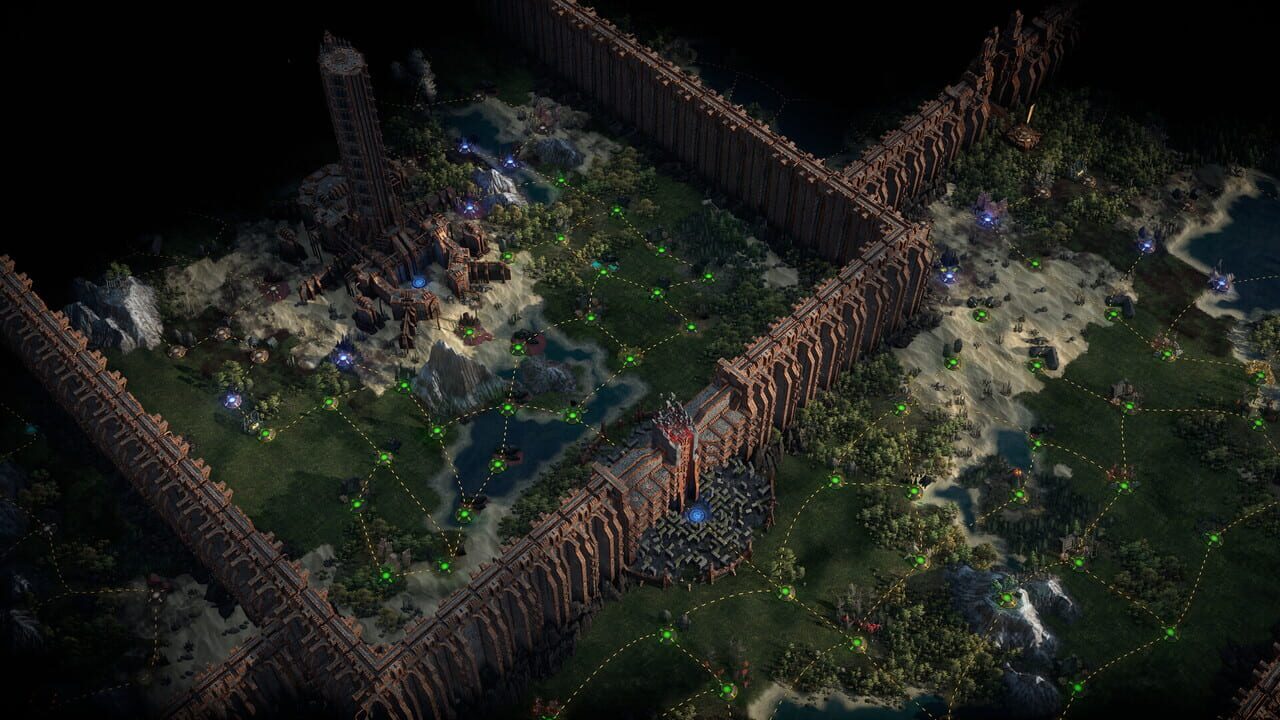
- The Atoll — a zone-based endgame area with escalating difficulty tiers.
- Sacrifice mechanics — a new endgame progression system tied to defeating escalating boss encounters.
- Map system — returned from PoE 1 with modifications, offering varied modifier combinations.
- Arena of Annihilation — the dedicated PvP arena mode available in selected leagues.
Troubleshooting
- Game won’t launch — verify Steam cache, update graphics drivers, run as administrator.
- Login validation errors — wait and retry. GGG patches these within hours during launch weekends.
- Stuttering or FPS drops — lower shadow and terrain detail settings first. PoE 2 is CPU-intensive on zone generation.
- Currency not showing — check if you are on the correct realm. Seasonal and Standard currencies do not mix until unified.
- Co-op connection issues — ensure all players are on the same league and region. Party invite system is accessed through the social panel.
FAQ
Is Path of Exile 2 free-to-play? No. It is a paid Early Access title. Free-to-play weekends occur periodically around seasonal launches.
Does PoE 2 share characters with PoE 1? No. The two games are completely standalone with separate servers and progression.
Can I play with friends? Yes. PoE 2 supports 2-player co-op. Both players need the game purchased.
Is there PvP in Path of Exile 2? Yes. The Arena of Annihilation provides player-vs-player combat in designated areas.
How does trading work? Through NPC trade posts in major towns and the external POE.trade website. There is no in-game player-to-player chat trading system.
What happens to my seasonal character after the league ends? It moves to Standard with all progress, items, and currency intact.
Do free-to-play weekend characters carry over? Yes. If you create a character during an F2P weekend and later purchase the game, that character persists.
Is the game optimized for lower-end PCs? It runs on a range of hardware but is CPU-heavy during zone transitions. Adjusting shadow and terrain settings helps significantly.
Discussion
0 commentsNo comments yet. Be the first!