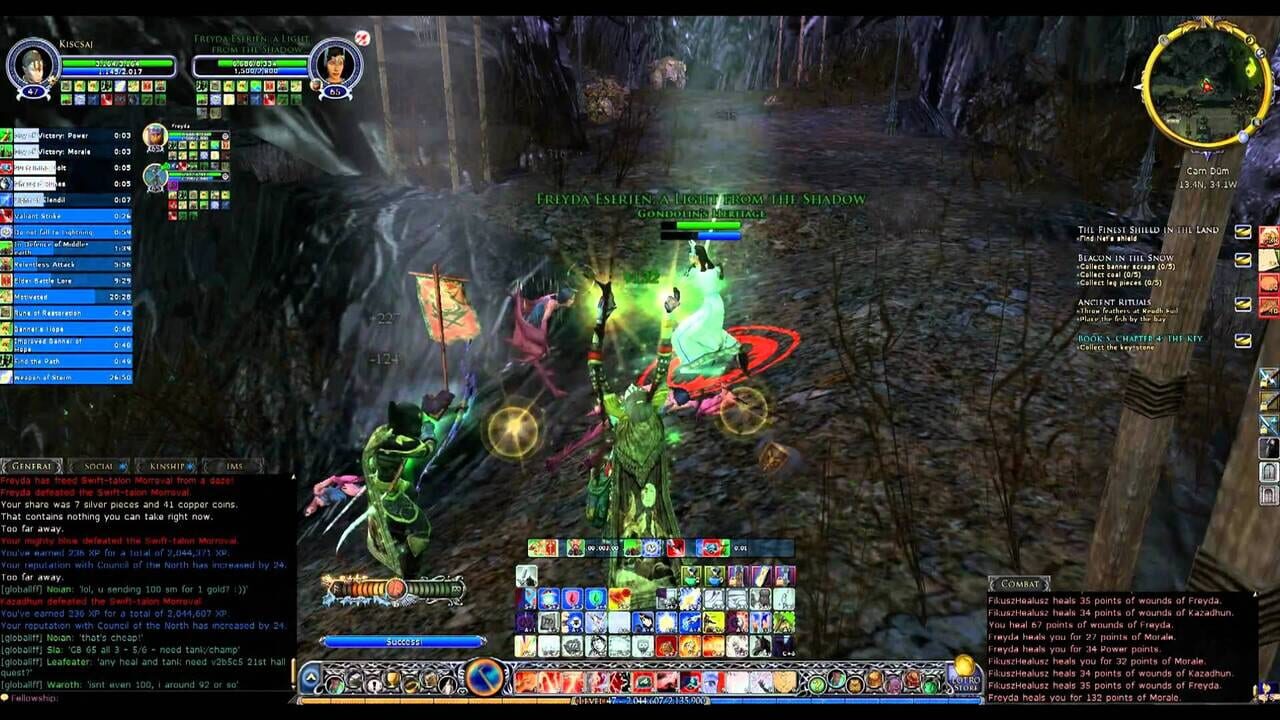
Player housing in Lord of the Rings Online lets you own a home in one of several dedicated neighborhoods, decorate it with trophies and furniture, store items, and set up a personal retreat. Housing neighborhoods are instanced communities of roughly 50–100 individual homes with shared public spaces.
Note: Verified as of July 2026. Check official patch notes for updates.
Neighborhood Themes
There are six main housing neighborhoods, each set in a different cultural region:
| Neighborhood | Theme | Location |
|---|---|---|
| Bree-land Homesteads | Human / Bree-town aesthetic | Bree-land |
| The Shire Homesteads | Hobbit holes, rolling hills | The Shire (Buckland area) |
| Ered Luin Homesteads | Dwarven and Elvish stone homes | Ered Luin |
| Falathlorn Homesteads | Elven arboreal housing | Falathlorn, Ered Luin |
| Belfalas Homesteads | Gondorian/coastal stone villas | Dol Amroth, Gondor |
| Minas Tirith Homesteads | Iconic white city district housing | Minas Tirith |
Belfalas and Minas Tirith housing are premium neighborhoods with larger homes and more prestigious aesthetics. They require either VIP membership or LOTRO Point purchases.
House Types and Costs
Each neighborhood offers houses at different price tiers:
| Type | Upfront Cost (Approximate) | Size | Notes |
|---|---|---|---|
| Standard | 1 silver (small plot) | Small | Basic decoration hooks |
| Deluxe | 3–5 silver | Medium | More interior hooks |
| Master/Large | 8–10 silver | Large | Maximum decoration space |
| Kinship House | 10+ silver | Guild-sized | Requires an active Kinship |
Prices are paid in standard LOTRO silver/gold. Exact pricing can vary slightly by server economy. All purchases are made directly from the housing NPC at the neighborhood entrance.
How to Purchase a Home
Buying your first house follows a straightforward process:
- Travel to your chosen neighborhood (each is accessible via fast travel or walking from major cities)
- Speak with the Housing NPC at the neighborhood entrance
- Select the type of home you want to purchase
- Confirm the upfront cost and weekly upkeep amount
- Pay in silver from your character’s funds
If you cannot afford a home outright, the Auction House sometimes has players selling pre-owned houses with furniture already placed. Buying a secondhand home can save time, though you will need to repurchase or relist any stored items.
Upkeep Costs and Abandonment
All player homes require weekly upkeep payments in LOTRO silver. If you fail to pay upkeep for a prolonged period, the home enters a grace period and may eventually be repossessed.
Before a house is repossessed:
- You receive in-game mail warnings
- During the grace period you can still pay the overdue amount
VIP (premium) players have their upkeep costs covered as part of their subscription.
Avoiding Repossession
To prevent losing your home:
- Set a calendar reminder for weekly upkeep
- Enable auto-pay through your account settings if available
- Log in regularly to check for housing mail notifications
- Consider upgrading to VIP if housing costs become burdensome
Once a home is officially abandoned, all items inside are lost, and decorations reset. Act quickly if you miss a payment window.
Decoration: Hooks System
Housing decoration in LOTRO uses a hook system — each hook accepts a specific category of item (furniture hook, wall hook, floor hook, exterior hook, etc.). The number of hooks determines how many decorations you can place.
Hook categories:
- Interior Small — Candles, small furniture, books, cups
- Interior Large — Tables, chairs, beds, fireplaces
- Wall — Paintings, mounted trophies, tapestries
- Floor — Rugs, display pedestals
- Exterior — Garden items, yard decorations, statues
Premium housing (Belfalas, Minas Tirith) has significantly more hooks than standard homes.
Hook Placement Tips
- Match hook type to item size — large furniture requires Large Interior hooks
- Wall hooks work for hanging pictures, weapons, and shields
- Floor hooks accept area rugs and standalone pedestals
- Exterior hooks allow garden customization outside your front door
- Some items may use multiple hook types depending on placement orientation
Experiment with different arrangements before committing to a final layout. You can rearrange decorations freely at any time by clicking and dragging them in edit mode.
Trophies and How to Display Them
Trophies are special housing items earned by defeating raid bosses, completing deeds, and reaching reputation milestones. They display permanently on your wall hooks and serve as a visible record of your accomplishments.
Many players consider trophy walls a key motivation for completing older content. You cannot sell or trade most trophy items — they’re Bound on Acquire.
Best Trophy Displays
Create dedicated trophy rooms or hallway walls to showcase your achievements. Organize by content type — raids on one wall, deeds on another, reputation rewards grouped separately. This makes visiting your home feel like a museum of your journey through Middle-earth.
Home Storage
All houses come with a chest that provides storage space beyond your regular bags and vault. The size of storage depends on house tier:
- Standard: Small chest (~30–50 slots)
- Deluxe: Medium chest
- Large/Master: Larger chest
Additional storage can be added by purchasing Furniture Chest storage items from the LOTRO Store.
Kinship Houses also have a shared storage chest accessible to all kinship members with appropriate permissions.
Kinship Houses
A Kinship House is a group-owned home for your guild (Kinship). Requirements:
- Your Kinship must have at least a certain number of members
- A Kinship officer or leader purchases the house
- Located in the same neighborhoods as personal homes
Kinship houses have extra-large interior spaces and shared storage. Visiting Kinship members can see trophies and decorations set up by officers.
Managing a Kinship House
Assign trusted officers to handle upkeep payments and decoration permissions. Set clear guidelines about who can place or remove items to maintain organization. Kinship houses often become social hubs where members gather for roleplay or casual hangouts.
Premium Housing (Belfalas and Minas Tirith)
Belfalas Homesteads (introduced with Gondor content) offer large coastal villas with separate outdoor grounds. They have significantly more decoration hooks than standard housing and are set within sight of the bay.
Minas Tirith Homesteads allow housing within the famous layered city. Districts of the city contain small apartments. These are among the most visually distinctive housing in any MMO, given the iconic setting.
To purchase premium housing:
- You can use LOTRO Points (from the cash shop) to purchase the right to own in these neighborhoods
- Alternatively, a VIP subscription grants access to these neighborhoods
Getting Furniture
Furniture in LOTRO comes from several sources:
- Housing Crafting — The Housing profession lets you craft items using Housing Resources and Patterns. Any character can learn it.
- LOTRO Store — Premium furnishings available for LOTRO Points
- Reputation vendors — Many factions sell unique decorations as you increase standing
- Deed rewards — Completing regional deeds sometimes awards decorations
- Festival vendors — Seasonal festivals (Spring Festival, Harvest, Yule) have exclusive furniture
Crafted furniture is generally inexpensive on the Auction House if you don’t want to craft it yourself. Festival furniture is only available during specific in-game seasons.
Visiting Other Players’ Homes
You can visit any public neighborhood and walk into homes that aren’t locked. Clicking on displayed items sometimes shows their source, which is helpful for collectors.
Some players open their houses as libraries, display rooms, or roleplay spaces. This is a major part of LOTRO’s social scene, especially on roleplay servers like Landroval.
Etiquette for Visiting
- Respect locked homes by not attempting to enter
- Do not move or touch decorations unless invited
- Chat with homeowners to learn about their displays
- Leave feedback in the Housing Discord or community forums if you spot technical issues
Tips for New Homeowners
- Buy a Deluxe home if you can afford it — the extra hooks make a substantial difference
- Pay upkeep at least monthly to avoid the repossession cycle
- Craft or buy cheap furniture first to fill hooks before investing in premium items
- Display quest/deed trophies as soon as you earn them — they provide no benefit sitting in bags
- Check the Auction House for festival furniture from past seasons — it often sells at fair prices
Advanced Decorating Advice
- Use the same color palette throughout a room for cohesion
- Layer lighting with candles, lanterns, and fireplaces for ambiance
- Create conversation areas with chairs arranged around a central piece
- Balance visual weight — avoid clustering all heavy furniture on one side
- Save screenshots of your favorite layouts for reference or inspiration sharing
FAQ
Q: How much does the cheapest house cost? A: A Standard small-plot house costs 1 silver upfront in most neighborhoods.
Q: Does VIP cover housing upkeep? A: Yes, VIP members have their weekly housing upkeep automatically covered.
Q: Can I trade or sell trophies? A: No. Most trophies are Bound on Acquire and cannot be traded or sold.
Q: What crafting profession makes housing furniture? A: The Housing profession. Any character can learn it regardless of their primary crafting skill.
Q: How do I get access to Belfalas or Minas Tirith housing? A: Purchase with LOTRO Points from the cash shop, or maintain an active VIP subscription.
Q: Can I visit homes on other servers? A: No. Housing neighborhoods are server-specific. You can only visit homes on your own server.
Q: What happens if I delete a house? A: Deleting a home permanently removes it and all contents. There is no undo option, so confirm before proceeding.
Discussion
0 commentsNo comments yet. Be the first!