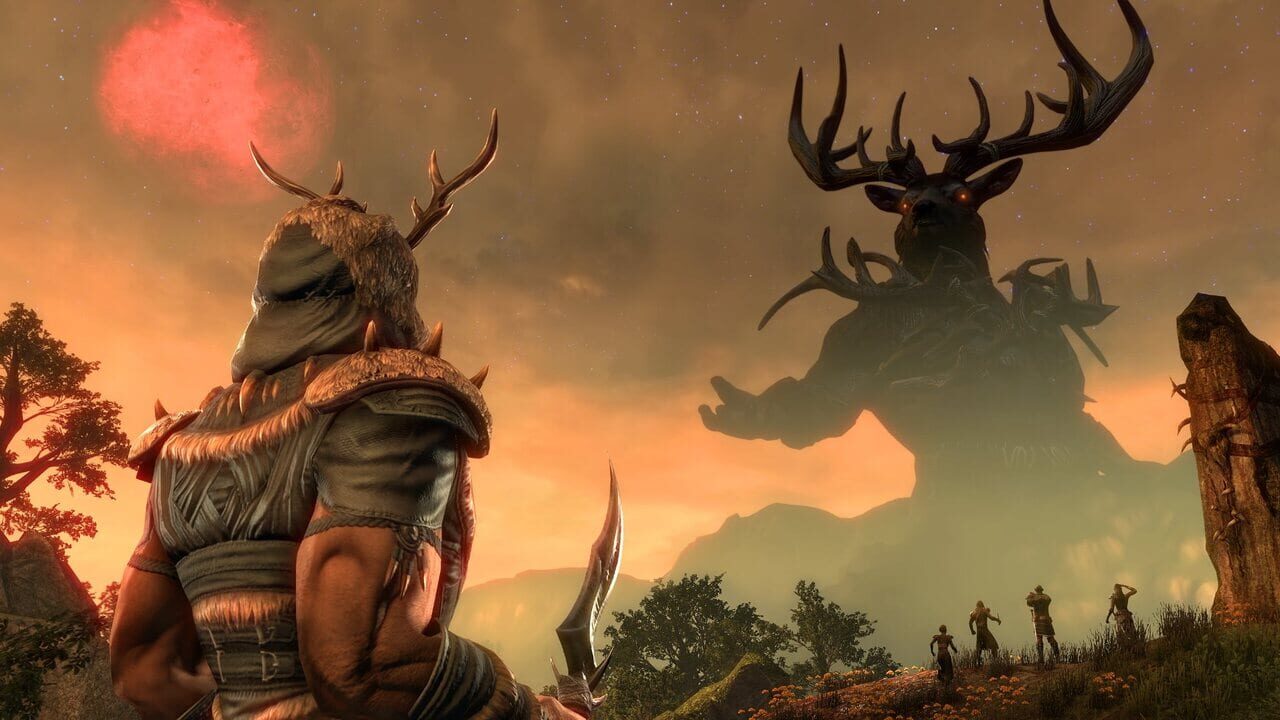
The big Season Two headline for solo players is that you can now run the top group dungeons by yourself. ESO’s Solo Dungeons let you play Moon Hunter Keep and March of Sacrifices without assembling a full four-player party — the encounters are reworked, you get optional NPC companions to stand in for your missing teammates, and you can dial up extra difficulty settings for a tougher challenge. Season Two’s Solo Dungeons launched October 21, 2026 and run through January 27, 2027, so you’ve got a solid window to farm them.
Note: Solo Dungeons are a Season Two feature, live from October 21, 2026 to January 27, 2027. The first two solo reworks — Moon Hunter Keep and March of Sacrifices — are what’s available now; reworked solo versions of more group dungeons arrive later.
What Solo Dungeons Are
Solo Dungeons are reimagined versions of the existing group dungeons, rebuilt so a single player can clear them. Instead of needing a full party, the encounters are tuned down or restructured, and you bring NPC companions to fill the roles you can’t cover alone — a healer, a tank, or an extra damage source standing in where your missing teammates would be.
| Feature | What it means |
|---|---|
| Reworked encounters | The fights are adjusted so one player (plus companions) can handle them |
| NPC companions | Optional AI allies that stand in for your absent party members |
| Difficulty settings | Extra difficulty options for players who want a bigger challenge |
| First two | Moon Hunter Keep and March of Sacrifices |
| Timebox | Season Two: October 21, 2026 – January 27, 2027 |
The pitch is simple: you want the dungeon’s loot and progression, but you can’t get three friends online at the same time. Solo Dungeons remove the matchmaking bottleneck without removing the content.
The Two Available Now
Both of the current Solo Dungeons are reworks of well-known group content:
- Moon Hunter Keep — one of the later group dungeons. Its solo rework adjusts the boss and trash structure so a solo player with companions can progress through it.
- March of Sacrifices — the other of the first pair. Same idea: a group dungeon rebuilt around a single player’s load.
The key point for both is that the encounters are reworked, not just scaled. That means the mechanics have been rethought for solo play — you’ll interact with them differently than you would in a four-player group, so going in with group-dungeon instincts is a mistake.
How to Enter
Getting into a Solo Dungeon is straightforward:
- Confirm you’re in Season Two. Solo Dungeons launched with the season on October 21, 2026, so the feature is active across the season window.
- Travel to the dungeon the same way you would a normal group dungeon — the entrances are the familiar ones.
- Select the solo mode / difficulty setting. Rather than a party-formation queue, you set up the solo run, including any extra difficulty options you want to enable.
- Pick your companions. Choose the NPC companions that cover the roles you need — healing, tanking, or added damage — to stand in for your missing party.
- Enter and play the reworked encounter. You’ll fight the restructured version of the dungeon, not the group version.
The whole design goal is that you should be able to queue yourself in without waiting on others and run it on your own schedule.
Companions: How They Work
The NPC companions are the mechanic that makes this whole thing function. They’re your substitute party:
- They fill the role gap. In a group dungeon, the healer and tank are separate people. Here, your companions hold those positions so you don’t have to multitank and self-heal everything.
- They’re optional. You can bring them in when the fight needs coverage, and the experience adapts to how many you bring.
- Pick them to match the encounter. A boss that needs heavy sustained healing wants your healer companion prioritized; a trash-heavy section wants the extra damage source.
The strategy layer here is which companions to bring and how to manage them through the fight — it’s the closest thing to “building your party” in a solo context.
Difficulty Settings
For players who clear the base solo version quickly, ESO adds extra difficulty options on top of the standard solo tuning. This is the way to keep these dungeons relevant as a farming target:
- Higher difficulty, better rewards. The extra settings exist so that a well-prepared player can keep getting value out of the same dungeon instead of it feeling trivial after a few clears.
- They matter for endgame farming. If you’re farming the dungeon’s rewards on a loop, the difficulty setting is where you tune how hard — and how rewarding — each run is.
- Match the setting to your gear. Push difficulty only when your character and build are set up for it; a too-aggressive setting just turns a farming run into a death loop.
The practical approach: clear the base solo version until you’re comfortable, then step the difficulty up one level at a time and see where your build holds.
Rewards and Farming
The reason to run these at all is the same reason you’d run the group version: the dungeon rewards. Solo Dungeons keep that loop — clearing the reworked encounter earns the same class of loot and progression — but lets you do it on your own time.
- No matchmaking wait. The biggest farming value is schedule freedom: run when you’re up, not when three friends are.
- Difficulty scales the payout. Stepping up the difficulty setting is how a strong character keeps the loop rewarding over repeated clears.
- Timeboxed by the season. Because this is a Season Two window (ending January 27, 2027), the two solo dungeons are the current targets — plan your farming around the window and what’s available now.
Tips and Mistakes to Avoid
- Don’t run group instincts. The encounters are reworked, not just scaled — learn the solo version of the mechanics before you commit to a high difficulty.
- Companion choice is a build decision. Bring the companions that cover the roles the fight actually demands, not the ones you prefer.
- Step difficulty one level at a time. Jumping straight to the hardest setting with an under-prepared build just makes for a long death loop.
- Farm on your schedule. That’s the whole point of the feature — run it when you’re free, not when a full party lines up.
- Mind the season window. These two solo dungeons are live through January 27, 2027; plan your farming before the season turns over.
- Watch for the next reworks. More group dungeons get solo versions as the season progresses, so the menu will grow — what’s available now is the first pair.
FAQ
Q: How do I play the Solo Dungeons in Season Two?
A: Travel to the dungeon the normal way, then select the solo mode and its difficulty setting instead of forming a group party. You can bring optional NPC companions to stand in for your missing teammates, then clear the reworked encounter on your own.
Q: Which dungeons are available as Solo Dungeons right now?
A: The first two are Moon Hunter Keep and March of Sacrifices, both live for Season Two from October 21, 2026. Reworked solo versions of additional group dungeons are expected later in the season.
Q: Do I need a full party for Solo Dungeons?
A: No — that’s the whole point of the feature. You play them solo, with optional NPC companions filling the roles a real party would cover.
Q: What are the difficulty settings for?
A: They let a well-prepared player push a harder version of the solo encounter for better rewards, so the dungeon keeps being worth farming across repeated clears instead of trivializing quickly.
Q: How long do Solo Dungeons last?
A: For Season Two, the solo dungeon window runs from October 21, 2026 to January 27, 2027.
Keep exploring
- Elder Scrolls Online on MMOKB — the ESO game hub has the full knowledge base, tools and guides.
- Read the ESO knowledge base — Classes, Dungeons, Endgame.
- Use the ESO tools — Class Tier List, Build Planner.
- More ESO guides — Elder Scrolls Online Beginner Guide 2026, ESO Solo Play Guide, ESO Best Builds & Farming Tips, ESO Dungeon Guide.
- Browse the full library — all MMOKB guides
Reviewed & verified
| Covers | elder-scrolls-online |
| Last verified | November 4, 2026 |
| Accuracy | The game’s own numbers and rules — they change with patches; check in-game for live values. |
Discussion
0 commentsNo comments yet. Be the first!