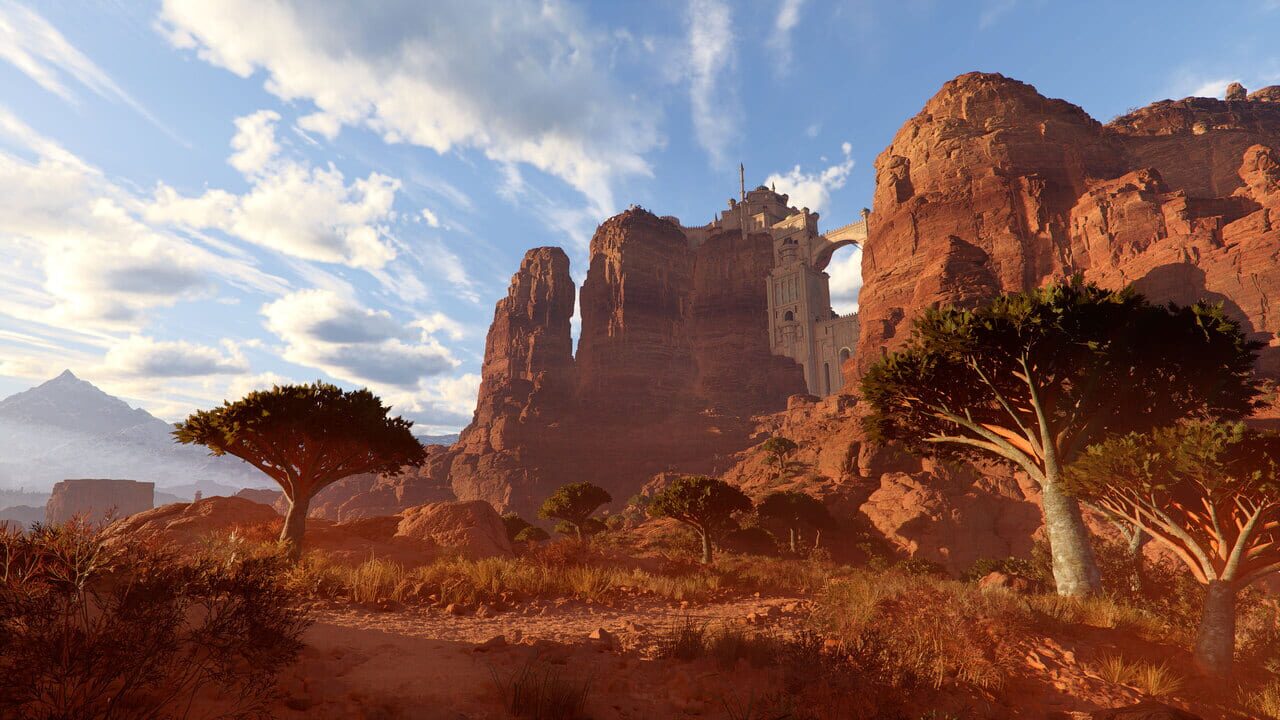
Crimson Desert finally launched on March 19, 2026 — nearly six years after its initial announcement at gamescom 2018. Pearl Abyss’s single-player open-world action-adventure (set in the same universe as Black Desert Online but a completely different experience) arrived to strong reviews and a massive concurrent player count on Steam.
Nearly three months post-launch, here is everything you need to know before dropping $69.99 to jump in.
Note: Verified as of July 2026. Check official patch notes for updates.
What Kind of Game Is Crimson Desert?
Crimson Desert is a single-player open-world action-adventure game — not an MMO, not an RPG with heavy stat grinding, and definitely not Black Desert Online 2. You play as Kliff, the stoic leader of the Greymane mercenaries, on a quest to rebuild your faction and protect the continent of Pywel from a looming darkness.
The combat draws comparisons to Dragon’s Dogma and The Witcher 3, with Pearl Abyss applying their signature visual polish. But what makes it stand out is the weight behind every swing, parry, and dodge. This is not a game where you can spam buttons and win. Timing matters. Positioning matters. Knowing your enemy matters.
The Good
- Combat — Deep, skill-based action with multiple weapon types, a parry system, dodges, and special moves. Boss fights are genuinely challenging and satisfying to overcome.
- World design — Seamless open world with no loading screens between zones. Biomes range from scorching deserts to dense forests to claustrophobic underground abysses.
- Graphics — Among the most visually impressive games of 2026. Pearl Abyss’s engine expertise is on full display every hour.
- Story — Full voice acting, cinematic presentation, and an emotional narrative about loyalty, betrayal, and loss.
- Performance — Well-optimized at launch. Solid framerates on PC and PS5 out of the box.
- Side content — Meaningful side quests, not just fetch tasks. Many NPCs have actual stories tied to them.
The Not-So-Good
- Not an MMO — If you were hoping for a multiplayer experience, look elsewhere. This is a strictly single-player game.
- Linear prologue — The early sections funnel you through a fairly narrow path before the world opens up in Chapter 1.
- Denuvo DRM — Denuvo anti-tamper is present on the PC version. Some players reported minor performance overhead, though it is generally negligible on recommended hardware.
- Price — $69.99 for the standard edition, which sits at the premium end for a single-player title.
- No New Game+ at launch — As of July 2026, there is no New Game+ mode available, which some players may find limiting for replay value.
Combat Mechanics Deep Dive
The Parry System
The heart of Crimson Desert’s combat is its parry mechanic. Unlike many action games that use a simple block button, Crimson Desert rewards precise timing. A well-timed parry interrupts the enemy’s attack, stuns them briefly, and opens them up for a counter-strike. Tap the parry button too early and you’ll still take damage; tap it too late and you’ll be hit outright. The sweet window is tight — roughly a half-second before the enemy’s attack connects.
Parrying also varies by weapon type. Heavier weapons have slower, more telegraphed attacks that give you more time to react but deal more damage if they connect. Lighter weapons are faster and harder to read but less punishing when they land. Learning to parry heavier enemies first is the best path to building muscle memory.
Stamina Management
Every action in combat — attacking, dodging, parrying, and even sprinting — drains your stamina bar. Running out of stamina leaves you in a brief recovery state where you cannot act, making you extremely vulnerable. This is one of the most common mistakes new players make: chaining together too many attacks in a row until they’re caught by an enemy counter.
A good rule of thumb is to treat stamina as your most important resource, more valuable than health. If you’re low on stamina, disengage and reset the fight rather than risking a costly mistake. Boss fights in particular demand disciplined stamina usage — watch the boss’s attack patterns and only commit to actions when you have enough stamina to recover.
Weapon Types and Playstyles
Crimson Desert offers several distinct weapon classes, each with its own move set and combat rhythm:
- Straight swords — Balanced speed and damage. Reliable for beginners who want a straightforward approach.
- Greatswords — Slow but devastating. Heavy attacks break through enemy guards more easily, making them effective against shielded foes.
- Dual blades — Fast combo-based combat with lower individual hit damage. Excels at wearing down enemies over time but leaves you exposed if combos break.
- Spears/lances — Long reach gives you keep-distance advantage. Great for kiting but vulnerable if enemies close the gap.
- Axes — High damage per swing with moderate speed. Excellent for punishing openings after parries.
Experiment with each weapon type in the earlier encounters — there are no permanent penalties for switching, and understanding how each feels will help you choose a main weapon by mid-game.
Enemy Telegraphs and Pattern Recognition
Almost every enemy in Crimson Desert telegraphs their attacks. A red flash on the enemy, a change in stance, or a specific wind-up animation signals an incoming strike. Learning to read these cues is the single most important skill in the game. Boss fights are essentially pattern-recognition tests — memorize the sequence, then punish after each completed attack string.
Some elite enemies and bosses have hidden combo links that only trigger under certain conditions, such as when their health drops below a threshold. Pay attention to shifts in behavior during tougher fights, and adjust your approach accordingly.
Tips for New Players
Early Game Priorities
- Explore freely — Once Chapter 1 opens up, the world is yours. Side content rewards exploration, and many hidden areas contain valuable gear and story beats.
- Master parrying — The combat system heavily rewards well-timed parries. You will die repeatedly if you rely on button mashing. Learn enemy attack patterns before engaging.
- Upgrade your gear — Regularly check merchants and workbenches. Upgrading weapons and armor early gives you a significant edge in tougher encounters.
- Talk to everyone — NPC dialogue is not filler. It ties into quests, reveals world-building details, and sometimes unlocks hidden content.
- Save before boss fights — The game does not always provide frequent manual save points. Use checkpoints deliberately, especially before major encounters.
Combat Fundamentals
- Every weapon type has a unique move set. Do not switch weapons mid-combat without understanding their differences.
- Stamina management is critical. Dodging, parrying, and attacking all consume stamina — overextending leaves you vulnerable.
- Enemy telegraphs matter. Most attacks have a brief wind-up. Watch, then react.
- Don’t be afraid to disengage. Running away to recover stamina or reposition is a valid tactic, not a sign of weakness.
- Learn to use the environment. Some encounters allow you to knock enemies into hazards or use terrain to limit their movement options.
World Exploration
- The map shrinks as you progress — discovering locations reveals more of the world rather than filling in blank space, which can feel unhelpful at first. Plan accordingly.
- Underground abysses are some of the most atmospheric sections. Bring light sources and stay alert.
- There are no fast-travel points early on. Travel time is part of the experience — embrace it.
- Look for out-of-place objects, unusual rock formations, or distant sounds — these often mark hidden paths or secret areas.
- Side quests frequently lead to unexpected rewards, including rare gear and lore discoveries. Do not rush past them.
Technical Performance
On PC, Crimson Desert runs well on mid-range hardware. Recommended specs: NVIDIA RTX 2070 / AMD Ryzen 5 3600 or better. The game scales gracefully across hardware tiers, with high-end rigs pushing well above 60fps at 1440p.
On PS5, the game targets 60fps in performance mode with dynamic resolution scaling. The balance between visual fidelity and smooth frame rates is well-executed.
Denuvo anti-tamper is present but does not meaningfully impact performance on recommended or better specs. If you are running lower-end hardware, expect to adjust settings rather than blame DRM.
Verdict
Crimson Desert delivers on its promise. It is a visually stunning, mechanically satisfying open-world action game with a strong narrative backbone. It is not an MMO, and it never was — Pearl Abyss made that clear years ago. If you judge it for what it actually is (a single-player action RPG), it is one of the best releases of 2026.
Worth it? Yes — if you want a story-driven action game with deep combat and a beautiful world. Skip it? If you are looking for multiplayer, MMO mechanics, or a light, casual experience, this is not the game for you.
FAQ
| Question | Answer |
|---|---|
| Is Crimson Desert an MMO? | No. It is a strictly single-player open-world action-adventure game. |
| Does Crimson Desert have co-op? | No. There is no multiplayer or co-op mode in the base game as of July 2026. |
| Is there PvP in Crimson Desert? | No. The game has no player-vs-player combat or PvP arena features. |
| What is the story about? | You play as Kliff, leader of the Greymane mercenaries, rebuilding your faction and protecting the continent of Pywel from a rising threat. |
| How long is the main story? | Approximately 20-25 hours for the main campaign, with 40-60+ hours for 100% completion. |
| Is there crafting or trading? | Crimson Desert includes crafting systems (farming, equipment upgrades, housing customization) and trading features. Patch 1.16.00 added Trading Content Improvements. There is no player-to-player auction house, but in-game trading and item exchange systems are available. |
| What are the recommended PC specs? | RTX 2070 / Ryzen 5 3600 or better for solid 60fps performance. |
| Is there New Game+? | No. As of July 2026, there is no New Game+ mode available. |
| Does the game use Denuvo? | Yes. Denuvo anti-tamper is present on the PC version. |
| What is the price? | $69.99 for the standard edition. |
| How do I learn enemy attack patterns? | Start with weaker enemies in open areas where you can afford to die and reset. Watch the wind-up animations and red flashes, practice parrying in safe encounters, and gradually work your way up to tougher foes. Boss arenas are the best place to study patterns since there are no adds to distract you. |
| Should I focus on one weapon or try all of them? | Try all of them early on — there is no penalty for switching. Each weapon feels fundamentally different, and understanding their ranges and stamina costs will make you a better combatant overall. Commit to a primary weapon once you find one that fits your playstyle, but keep using others for situations where their strengths shine. |
Sources: Steam Page — Crimson Desert, Official Pearl Abyss Website, IGN Review
Discussion
0 commentsNo comments yet. Be the first!