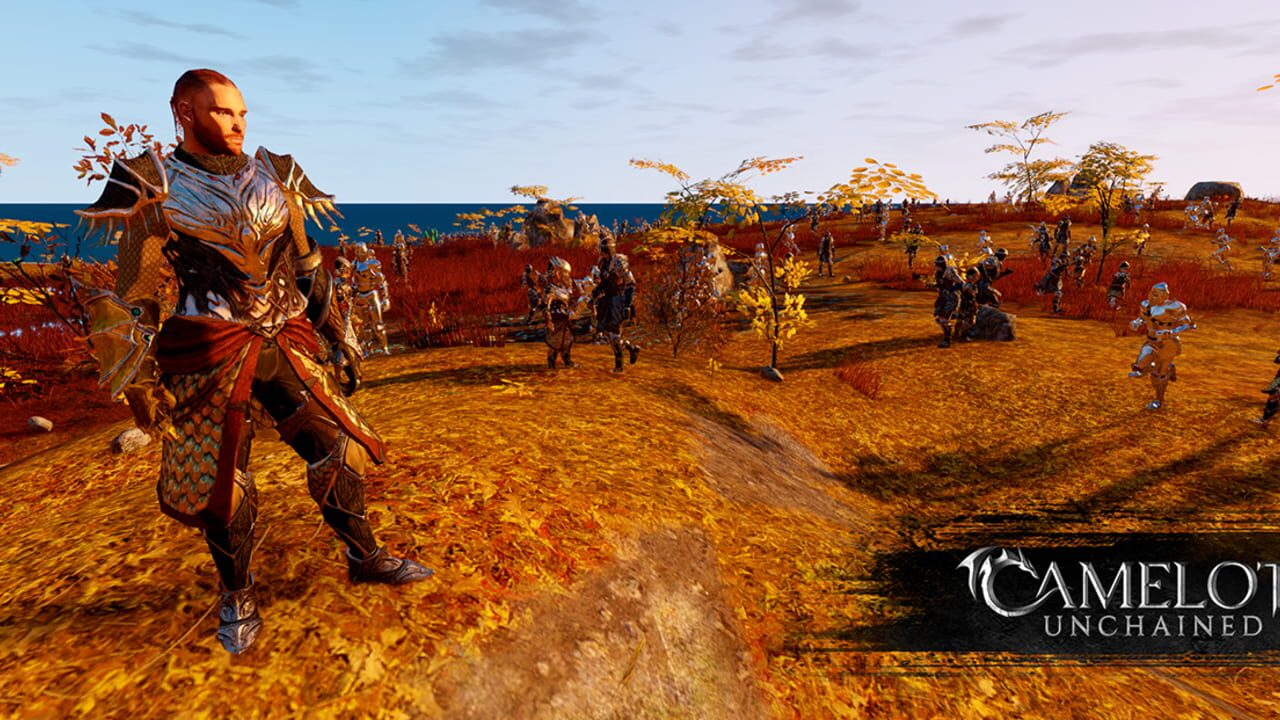
What Is Camelot Unchained and Why It Matters
Camelot Unchained is a realm vs. realm (RvR) sandbox MMORPG developed by City State Entertainment. It is the long-awaited spiritual successor to Dark Age of Camelot, the legendary three-way faction PvP MMO that first launched in 2001. The core philosophy is uncompromising: this game exists entirely for large-scale faction warfare. There is no solo PvE raiding endgame. There is no story-driven campaign to push through alone. The living world itself is the battlefield, and every system is built to serve the war.
The project was Kickstarted back in 2013 and spent years under tightly controlled, NDA-bound testing. On June 2, 2026 at 2:00 PM EDT, Camelot Unchained finally enters Steam Early Access with the NDA lifting at the same moment. That means you can publicly share screenshots, recordings, and your honest opinions without legal risk. This guide covers everything you need to know before you spend a single dollar.
Launch Details: Everything Locked Down
| Detail | Information |
|---|---|
| Release Date | June 2, 2026 |
| Release Time | 2:00 PM EDT |
| Platform | Steam Early Access |
| Price | Not yet announced |
| NDA Status | Lifts at launch |
| Access Schedule | Weekend-only (Early Access) |
| Backer Steam Keys | Not available |
| Developer | City State Entertainment |
How to get in: The game will appear on store.steampowered.com/app/2278950. Purchase directly through Steam when the storefront goes live. Existing early access players can continue using the Unchained Entertainment launcher — no repurchase required.
Critical detail for backers: Kickstarter tier keys only work on the City State storefront, which has not reopened for new purchases. If you backed this game and want a Steam key, there is currently no official path to get one. The studio has not published any statement resolving this issue. Factor this into your decision carefully.
The Three Realms: Faction Warfare Explained
Camelot Unchained pits three factions against each other in persistent, territory-driven conflict. Every mechanic, every class, every system is designed in service of the RvR loop. Here is how the war works in practice:
Kingdoms fight for ground. Control of castles, keeps, and strategic chokepoints drives the entire game. Fortifications are built, defended, and destroyed in real time by players. This is not a loop where you grind mobs for XP and craft gear. You earn influence through combat and spend it on war infrastructure.
No safe zones anywhere. The entire map is open conflict. There are no designated “PvP zones” because the whole world functions as one. Step outside your keep, and you are immediately in contested territory.
Siege warfare is the centerpiece. The game revolves around massive castle sieges. The voxel-based destruction system means walls can be tunneled under, breached, or collapsed entirely. Fortifications are not permanent barriers — they are player-built structures that require constant maintenance and investment.
Voxel Building: The Signature System
The most-discussed feature of Camelot Unchained is its voxel-based building and destruction system. This is not cosmetic — it is fundamental to every encounter.
Build it, defend it, lose it. Players construct fortifications using in-world materials. These structures persist until enemies tear them down. Rival factions can besiege your keeps, dig tunnels beneath walls, or bring down towers with sustained attacks. Every structure is both a tool and a target.
Durability applies to everything. Equipment breaks under sustained combat use. Walls crack, buckle, and fall apart. This is not a game where you build something once and never think about it again. Maintenance is constant, expensive, and essential.
Pre-launch patches have introduced equipment durability mechanics, overhauled the water system, and refined how ranged NPC defenders operate during key point sieges. The team has been patching on a near-weekly cadence leading up to Early Access.
How This Differs From Dark Age of Camelot
You cannot talk about Camelot Unchained without comparing it to its predecessor. Here is a direct comparison:
| Feature | Dark Age of Camelot | Camelot Unchained |
|---|---|---|
| Release Year | 2001 | 2026 (EA) |
| Factions | 3 | 3 |
| PvE Content | Substantial | Minimal to none |
| Building | None | Voxel-based |
| Destruction | None | Full voxel destruction |
| Pricing Model | Subscription | TBD (one-time purchase) |
| Access Schedule | Full-time | Weekend-only (EA) |
| NDA | None | Lifted at launch |
The lineage is unmistakable, but the differences are significant. Camelot Unchained strips away everything that does not directly serve RvR and replaces it with a voxel building and destruction system that did not exist in the original. You trade content breadth for mechanical depth around siege warfare.
The Weekend-Only Early Access Problem
This is the single biggest friction point for anyone considering buying. Camelot Unchained’s Early Access runs on a weekend-only schedule. Some Wednesday sessions have occurred historically, but the dominant pattern is Saturday and Sunday play windows.
Why this matters: Paying for a game you can only access two or three days per week is a steep value proposition. MMOs traditionally thrive on daily engagement and habit formation. A weekend-only model disrupts that entirely. This is not a minor scheduling quirk — it is a fundamental design choice that sets Camelot Unchained apart from nearly every other MMO released today.
What to expect: During open play windows, the realms will be live and active. Between windows, servers go dark. Your progress persists, but you cannot log in. This pattern has existed since the earliest testing phases over a decade ago. There is no public indication this will change after the Steam launch.
Community Sentiment: Cautious but Curious
The MMO community response has been measured and thoughtful. Here is what players are saying and what you should weigh before committing:
Concerns raised:
- Weekend-only access makes the value proposition questionable at virtually any price
- Backers receive no Steam keys — a genuine grievance the studio has not addressed
- No price announced, making it impossible to judge whether the game is worth the wait
- Over a decade of development raises legitimate questions about polish and completeness
- Zero PvE content means the game has no appeal to players who do not enjoy PvP
Positive signals:
- The NDA lift finally allows unfiltered, player-captured footage to circulate freely
- Active patching cadence shows the team remains deeply engaged
- The voxel building system is genuinely unique within the MMO space
- City State has a track record of delivering ambitious projects (Dark Age of Camelot)
- The three-realm RvR model has a dedicated fanbase that has waited 13 years for this
Verdict: This is a niche game built for a specific type of player. If large-scale faction warfare excites you, Camelot Unchained is absolutely worth a look. If you want daily content drops, raids, or a solo-friendly experience, look elsewhere.
What Changed Before Launch
The development team has been actively patching in the months leading up to the Steam release. Verified changes include:
- Character bug fixes across multiple classes
- Water system improvements affecting movement and visuals
- Dynamic encounter designs for key point defenses, including ranged NPC AI
- Equipment durability mechanic — gear degrades under sustained use
FAQ
Q: When does Camelot Unchained launch on Steam? A: June 2, 2026 at 2:00 PM EDT. The game enters Steam Early Access on that date and time.
Q: Is the NDA lifted at launch? A: Yes. The NDA lifts simultaneously with the Steam Early Access launch, so you can share content publicly.
Q: Will there be a full-time release? A: Early Access is weekend-only. There is no confirmed timeline or promise for a full-time release.
Q: Do Kickstarter backers get Steam keys? A: No. Backer keys only function on the City State storefront, which has not reopened for new purchases.
Q: What is the price? A: Not yet announced. The studio has not revealed pricing information.
Q: Is there PvE content in the game? A: Minimal to none. Camelot Unchained is focused entirely on RvR faction warfare.
Q: Can I use the Unchained launcher after launch? A: Yes. Existing early access players can continue using the Unchained Entertainment launcher without repurchasing.
Q: What is voxel building? A: It is the game’s signature system where players construct and destroy fortifications in a fully destructible voxel environment. Walls, towers, and keeps can be built, maintained, and demolished in real time during sieges.
Discussion
0 commentsNo comments yet. Be the first!